TRAI AI Guidelines for Telecom Accountability and Security
Source:Indian Express ↗
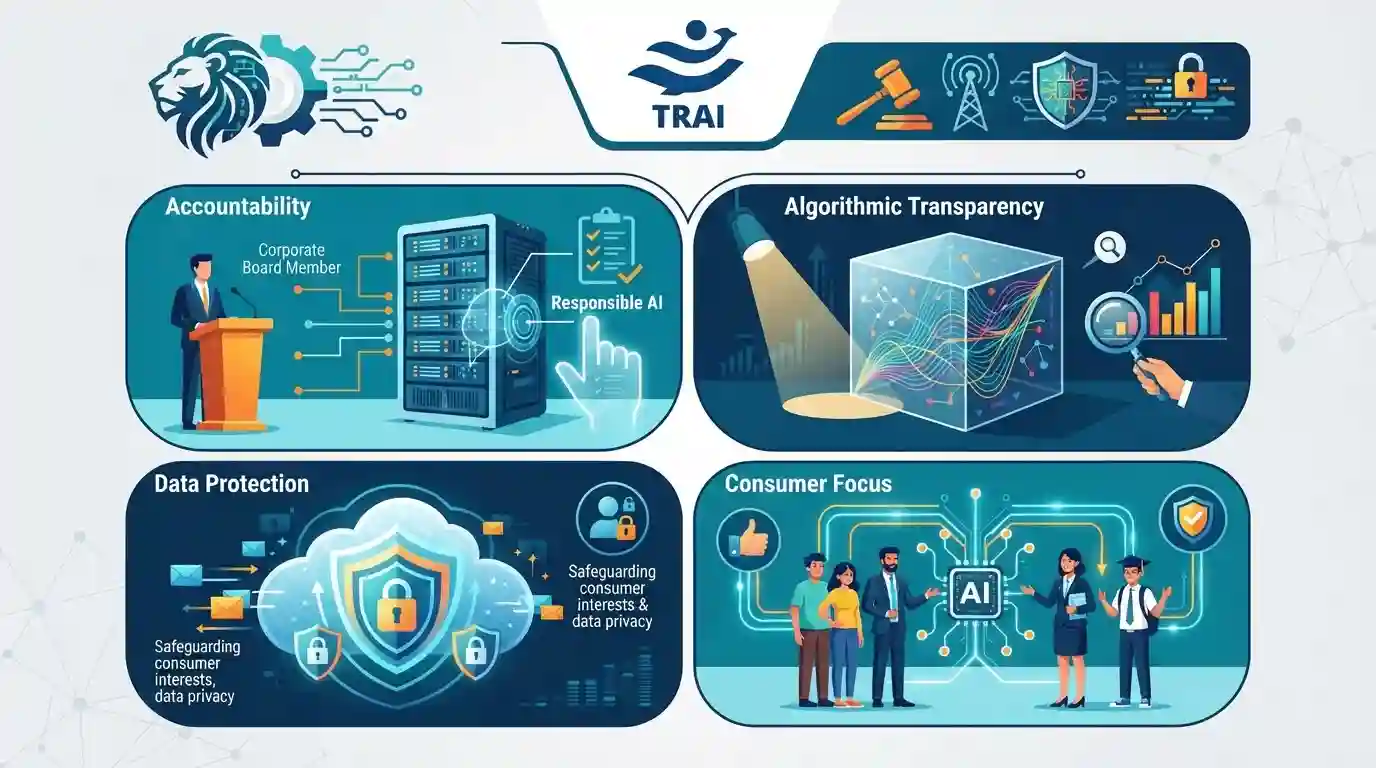
Why It Matters
Relevant for GS Paper 3 (Science and Technology, Cyber Security) and GS Paper 2 (Regulatory bodies and governance), providing insights into how India is shaping compliance and accountability frameworks for emerging technologies like AI in critical infrastructure sectors.
Summary
The Telecom Regulatory Authority of India (TRAI) has introduced draft guidelines concerning the deployment of Artificial Intelligence (AI) by telecom service providers. The initiative focuses on fixing accountability, ensuring algorithmic transparency, data protection, and safeguarding consumer interests as AI becomes deeply integrated into telecom infrastructure.
Key Points
- TRAI has proposed guidelines for telecom companies focusing on AI deployment, accountability, and safety.
- The framework addresses transparency, ethical AI usage, and mitigating risks associated with automated telecom services and customer data.
- It underscores the need for regulatory oversight in critical digital and telecom infrastructure as AI adoption scales.
- Emphasizes defining liability and accountability of telecom service providers when utilizing third-party or proprietary AI systems.
Important Terms
Telecom Regulatory Authority of India

Statutory body established under the TRAI Act, 1997, to regulate the telecommunications sector in India, ensuring fair competition, protecting consumer interests, and recommending tariff policies.
UPSC context
GS Paper II / III (Governance, Regulation of Sectors, Science & Technology). Tests regulatory frameworks and governance in critical digital infrastructure.
TRAI AI Guidelines
Proposed governance framework by TRAI requiring telecom operators to adopt board-approved AI policies, risk-based classifications, and vendor accountability for AI deployments.
UPSC context
GS Paper III (Science & Technology, Cyber Security, Artificial Intelligence Regulation). Tests emerging policy responses to AI integration in telecom networks.
Prelims Trap
TRAI independently issues mandatory statutory licenses and penalizes telecom operators directly without DoT involvement.
TRAI issues statutory recommendations, guidelines, and tariff orders under the TRAI Act, but licensing and final executive enforcement in telecom rest with the Department of Telecommunications (DoT), Ministry of Communications.
Static Concepts Connected
What are the statutory powers and functions of the Telecom Regulatory Authority of India (TRAI)?
- Statutory Origin: Established in 1997 through TRAI Act, 1997, to regulate telecommunication services and tariffs in India.
- TDSAT Split: Amended in 2000 to establish the Telecom Disputes Settlement and Appellate Tribunal (TDSAT) to adjudicate disputes.
- Core Functions: Empowered to make recommendations on telecom license terms, introduce service regulations, and protect consumer interests.
Cross-Topic Patterns
AI Liability & Telecom Intermediary Accountability
TRAI's liability framework for third-party AI mirrors global debates on intermediary liability and software supply chain security under IT Act rules and Digital Personal Data Protection Act.
Risk-Based AI Governance & Global Standards
Risk-based categorization of AI systems aligns with the EU AI Act approach, testing India's ability to balance indigenous innovation with stringent regulatory compliance.

Expect matching questions pairing sector regulators (TRAI, SEBI, RBI) with their respective AI governance frameworks and risk classifications.
Linked PYQs · 2
Linked PYQs · 2
- 2022MainsGS3
What are the different elements of cyber security ? Keeping in view the challenges in cyber security, examine the extent to which India has successfully developed a comprehensive National Cyber Security Strategy.
- 2023MainsGS2
e-governance, as a critical tool of governance, has ushered in effectiveness, transparency and accountability in governments. What inadequacies hamper the enhancement of these features ?
