IT Rules regulations on artificial intelligence imagery and speech
Source:The Hindu ↗
Why It Matters
The regulation of emerging technologies like AI and deepfakes alongside intermediary liability rules is a critical GS3 and GS2 intersection. Aspirants must understand how state regulations on social media platforms (like the IT Rules 2026) attempt to balance national security and misinformation with fundamental rights such as freedom of speech and expression.
Summary
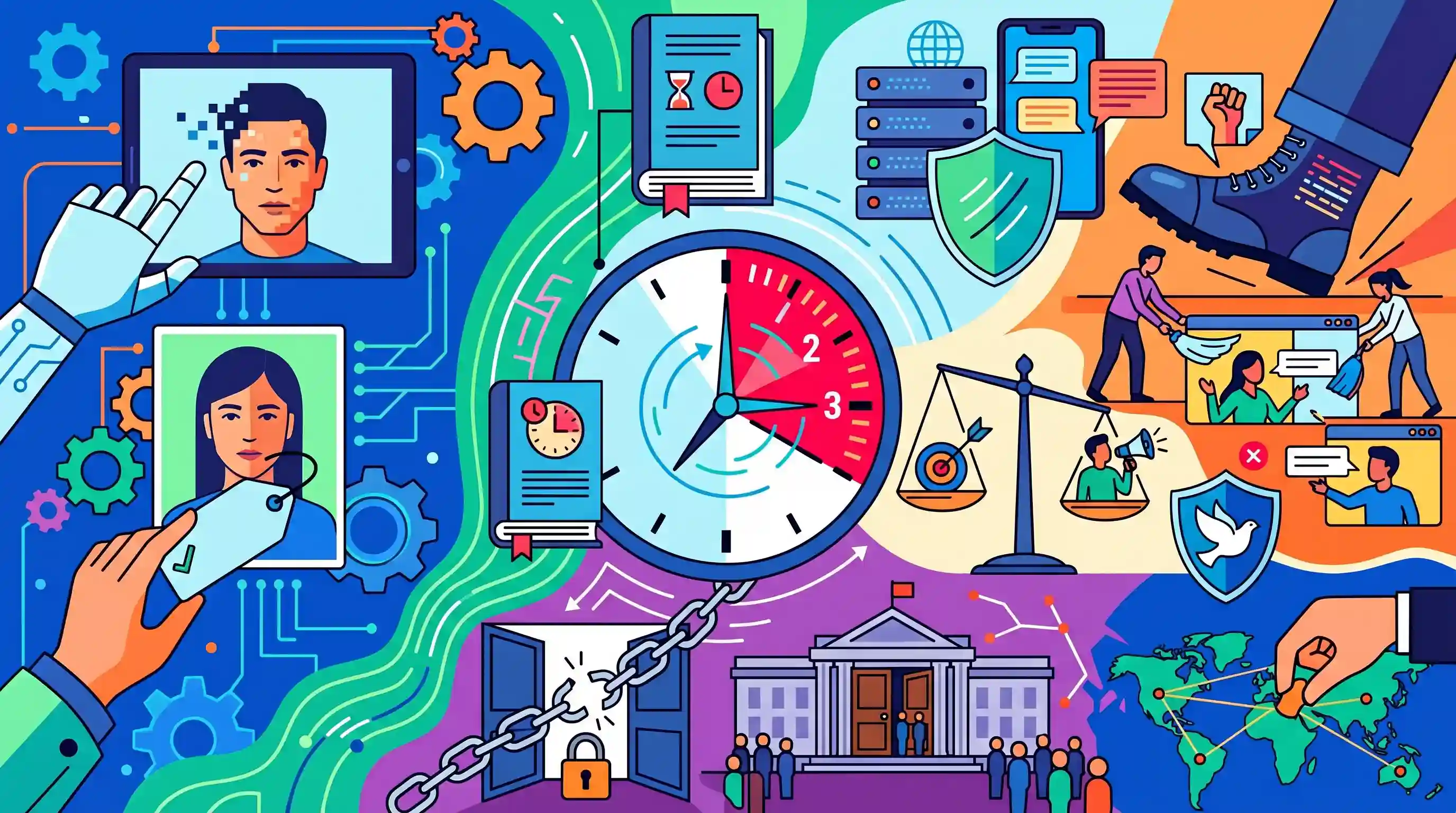
The editorial evaluates the recent amendments to the Information Technology Rules, 2026, which mandate the labelling of AI-generated imagery on social media. While welcoming this step to combat synthetic media, the article heavily criticizes the unannounced reduction of content take-down timelines to a mere two to three hours. Such stringent compliance deadlines may force platforms to proactively remove content to preserve their safe harbour status, potentially undermining freedom of expression. The lack of open consultation and parliamentary debate regarding these significant intermediary liability changes raises concerns about arbitrary tech governance and its disproportionate impact on an open Internet.
Key Points
- The IT Amendment Rules, 2026 mandate social media platforms to prominently label AI-generated imagery, ensuring users can identify synthetically generated content.
- A critical concern is the unannounced reduction of the content take-down timeline to just 2-3 hours, forcing platforms to act hastily.
- This shortened window pressures platforms into a 'take-down-first' approach to maintain their safe harbour protections, posing a threat to freedom of expression.
- The sudden amendments were introduced without adequate public consultation or parliamentary debate, raising transparency and digital rights concerns.
Important Terms
Information Technology (Intermediary Guidelines and Digital Media Ethics Code) Amendment Rules, 2026

2026 amendments to the 2021 IT Rules, mandating prominent labeling of AI-generated content and reducing content takedown timelines to 2–3 hours for intermediaries.
UPSC context
GS Paper 2: Governance/Statutory Rules. Tests understanding of digital regulation, cyber-security, and impact on fundamental rights like freedom of expression.
Safe Harbour Status
Legal immunity under Section 79 of the IT Act, 2000, shielding digital platforms from liability for third-party content provided they follow prescribed due diligence.
UPSC context
GS Paper 2 & 3: IT Act. Critical for debates on platform accountability versus censorship and the ease of doing business for tech.
Intermediary Liability
The legal responsibility of online platforms (intermediaries) for content posted by their users, which is increasingly subject to stricter proactive monitoring requirements.
UPSC context
GS Paper 3: Cyber Security. Focuses on the balance between preventing misinformation and protecting the open nature of the internet.
AI Impact Summit
A 2026 global forum in New Delhi focused on inclusive AI, responsible intelligence, and Global South leadership in shaping international AI governance frameworks.
UPSC context
GS Paper 2: International Relations. Relevant to India’s role in global digital diplomacy and the 'AI for All' mission.
Synthetic Media
Digitally created or manipulated audio-visual content (e.g., deepfakes) that mimics reality; formally defined in the 2026 IT Rules as 'Synthetically Generated Information' (SGI).
UPSC context
GS Paper 3: Science & Technology. Concerns the ethical and security challenges posed by generative AI and deepfakes.
Ministry of Electronics and Information Technology (MeitY)
The nodal ministry responsible for IT policy, cyber security, and digital governance in India, including the notification and enforcement of the IT Rules.
UPSC context
GS Paper 2: Government Policies. Essential for questions on digital initiatives and executive rulemaking in the tech sector.
Prelims Trap
Platforms must proactively monitor and remove unlawful AI content to retain Safe Harbour status.
Under the landmark Shreya Singhal judgment (2015), intermediaries only need to take down content upon receiving a court order or official government notification.
Static Concepts Connected
What is 'Safe Harbour' protection under Section 79 of the IT Act?
- Immunity provision: Shields digital intermediaries (like social media platforms) from legal liability for third-party user-generated content hosted on their networks.
- Conditional protection: To retain immunity, platforms must not initiate the transmission and must follow government-mandated due diligence (IT Rules).
- Shreya Singhal (2015): The Supreme Court ruled that intermediaries are legally obligated to remove content only after receiving an official government notification or court order.
What are the checks on Delegated Legislation in India?
- Delegated Legislation: Parliament delegates power to the Executive to frame detailed rules (like the IT Rules) under a parent Act.
- Committee on Subordinate Legislation: Examines if the Executive has exceeded the authority granted by the parent statute or bypassed parliamentary intent.
- Judicial Review: Courts can strike down these executive rules if they are unconstitutional, arbitrary, or violate the Fundamental Rights (like Article 19).
Cross-Topic Patterns
Delegated Legislation & Tech Governance
Executive IT Rules bypassing parliamentary debate highlight the recurring Polity theme of subordinate legislation expanding state power without legislative scrutiny.
AI Deepfakes & Internal Security
Synthetic media is not just a digital rights issue; it directly connects to GS3 internal security challenges, where non-state actors use deepfakes to disrupt elections or incite violence.

Safe Harbour, Shreya Singhal guidelines, and AI regulation will likely merge into a complex multi-statement Prelims question in 2026.
Linked PYQs · 4
Linked PYQs · 4
- 2024MainsGS3
Social media and encrypting messaging services pose a serious security challenge. What measures have been adopted at various levels to address the security implications of social media? Also suggest any other remedies to address the problem.
- 2023MainsGS3
Introduce the concept of Artificial Intelligence (AI). How does Al help clinical diagnosis? Do you perceive any threat to privacy of the individual in the use of Al in healthcare?
- 2016MainsGS3
Use of Internet and social media by non-state actors for subversive activities is a major security concern. How have these been misused in the recent past? Suggest effective guidelines to curb the above threat.
- 2014MainsGS2
What do you understand by the concept "freedom of speech and expression"? Does it cover hate speech also ? Why do the films in India stand on a slightly different plane from other forms of expression ? Discuss.
