IARC Classification of Medicines and Public Health Risk Assessment
Source:The Hindu ↗
Why It Matters
Global health classifications by bodies like the WHO/IARC can trigger unwarranted panic if not properly communicated. For UPSC aspirants, this highlights the intersection of international health guidelines, domestic pharmaceutical regulation, and the critical role of risk-benefit analysis in public healthcare policy.
Summary
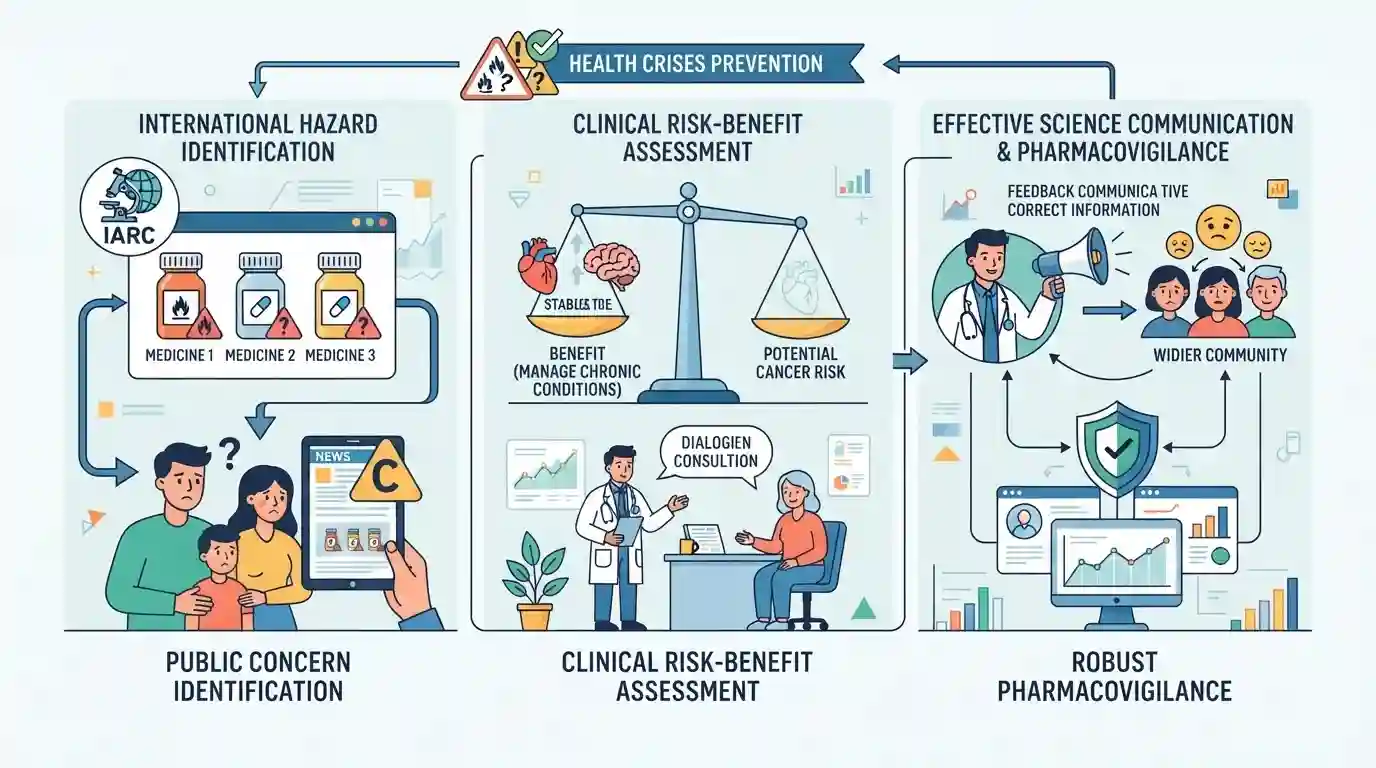
The International Agency for Research on Cancer (IARC) recently classified three commonly prescribed medicines as potentially carcinogenic, prompting public concern. Medical experts have strongly advised patients against stopping their prescribed treatments without consultation, warning that the abrupt cessation of critical medications poses a far greater and more immediate health risk than the theoretical possibility of cancer. IARC classifications evaluate hazard rather than real-world risk at clinical dosages, meaning the therapeutic benefits of these drugs in managing chronic conditions vastly outweigh the potential dangers. The situation underscores the importance of effective science communication, robust pharmacovigilance by domestic regulators, and clinical risk-benefit assessments to prevent health crises driven by panic.
Key Points
- The IARC (a WHO body) recently classified three widely used medicines as potentially carcinogenic, raising concerns among the general public.
- Medical experts caution against abruptly discontinuing these medications, as the proven benefits in treating critical chronic conditions far outweigh the theoretical cancer risks.
- IARC classifications indicate whether a substance is capable of causing cancer (hazard) but do not assess the likelihood of cancer occurring at standard clinical doses (risk).
- The development highlights the necessity of contextualized risk-benefit analyses by healthcare providers when prescribing drugs.
- It underscores the need for robust public health communication and pharmacovigilance to prevent patient panic and ensure continuity of essential treatments.
Important Terms
International Agency for Research on Cancer (IARC)

The specialized cancer agency of the World Health Organization (WHO) that conducts research and evaluates environmental, chemical, and pharmaceutical cancer hazards in humans.
UPSC context
GS Paper II (Global Bodies) & GS Paper III (Public Health). Tests understanding of global health agencies.
World Health Organization (WHO)
A specialized agency of the United Nations responsible for international public health, coordinating global disease response, and setting global health guidelines.
UPSC context
GS Paper II (Global Groupings). Tests knowledge of international health infrastructure and multilateral treaties.
Central Drugs Standard Control Organisation (CDSCO)
India's National Regulatory Authority (NRA) for pharmaceuticals, medical devices, and cosmetics, functioning under the Ministry of Health and Family Welfare.
UPSC context
GS Paper II (Regulatory Bodies). Tests knowledge of Indian drug regulation, safety approvals, and administrative mechanisms.
Pharmacovigilance
The scientific monitoring, detection, assessment, and prevention of adverse effects or any other issues related to pharmaceutical products to ensure patient safety.
UPSC context
GS Paper III (Science & Tech). Tests awareness of medical safety, post-market drug surveillance, and risk-benefit policies.
Prelims Trap
An IARC Group 1 classification indicates that a medicine poses an immediate, high risk of causing cancer at regular clinical doses.
IARC classifications only identify carcinogenic hazards (whether an agent CAN cause cancer under any circumstance) rather than actual risk (the likelihood of cancer at standard therapeutic clinical dosages and exposure levels).
Static Concepts Connected
What is the structure and mandate of the Pharmacovigilance Programme of India (PvPI)?
- Administrative Hub: Operationalized in 2010, the National Coordination Centre is located at the autonomous Indian Pharmacopoeia Commission in Ghaziabad.
- Primary Objective: Monitors and collects Adverse Drug Reaction data from across India to identify safety signals and formulate risk-minimization strategies.
- Regulatory Interface: Collated data and recommendations are shared with the Central Drugs Standard Control Organisation for regulatory action and enforcement.
How does the WHO Model List of Essential Medicines (EML) operate?
- Nature & Frequency: It is a non-binding, advisory registry updated biennially since 1977 to guide nations on essential drug priorities.
- Two-Tier Structure: Divided into a Core List for basic healthcare systems and a Complementary List requiring specialized clinical facilities.
- Indian Adaptation: Serves as the foundation for India's National List of Essential Medicines to ensure affordable, nationwide drug access.
Cross-Topic Patterns
Pharmacovigilance + Global Trade Dynamics
Post-market safety surveillance under PvPI directly safeguards India's export reputation as the 'pharmacy of the world' against non-tariff barriers and quality compliance challenges.
Article 47 + Science Communication
Misinterpretation of hazard classifications highlights the state's obligation under Article 47 to build risk-communication channels that prevent infodemics and sudden medical disruptions.

2026 Prelims may test PvPI's institutional setup (IPC Ghaziabad vs CDSCO) alongside the scientific distinction between chemical hazard and risk.
Linked PYQs · 3
Linked PYQs · 3
- 2020MainsGS2
Critically examine the role of WHO in providing global health security during the Covid-19 pandemic.
- 2014MainsGS3
Can overuse and free availability of antibiotics without Doctor's prescription, be contributors to the emergence of drug-resistant diseases in India? What are the available mechanisms for monitoring and control? Critically discuss the various issues involved.
- 2020MainsGS2
In order to enhance the prospects of social development, sound and adequate health care policies are needed particularly in the fields of geriatric and maternal health care. Discuss.
