Gendered Impact of Extreme Heat and Climate Vulnerability
Source:The Hindu ↗
આ શા માટે મહત્વનું છે
Highlights the intersectionality of climate change and gender, a crucial concept for GS1 (Society/Geography) and GS2 (Social Justice/Health). It provides specific socio-economic and physiological arguments for why disaster management and climate adaptation policies must be gender-sensitive.
સારાંશ
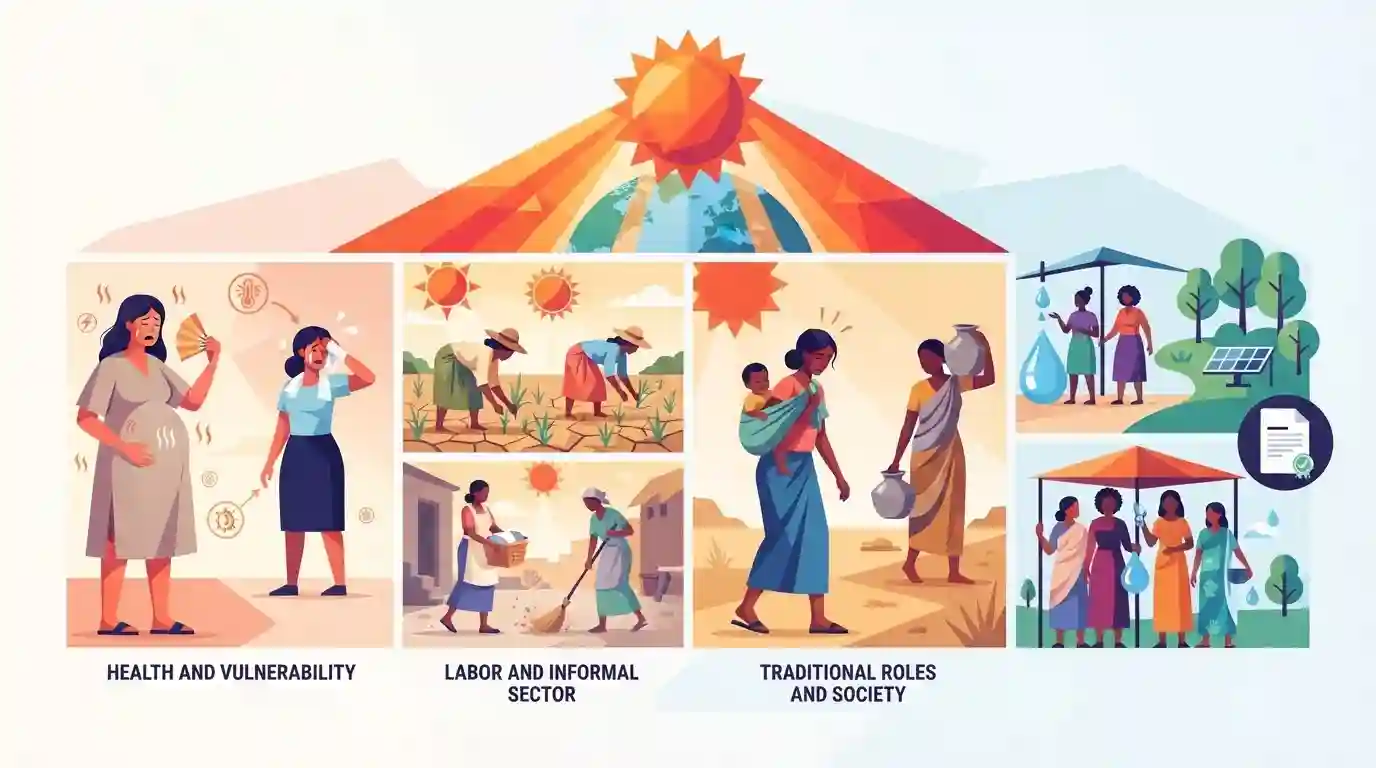
The article underscores the disproportionate toll of extreme heat on women, framing it as a critical intersection of climate change, public health, and social inequality. Women face unique physiological vulnerabilities, especially during pregnancy, which amplify heat-related health risks. Furthermore, socio-economic factors such as their high concentration in the informal workforce (including agriculture and domestic labor) and their traditional roles as caregivers and water fetchers expose them to prolonged, unprotected heat. The narrative advocates for urgent, gender-responsive climate and health policies to mitigate these impacts, ensuring equitable adaptation measures that protect vulnerable female populations from worsening climate extremes.
મુખ્ય મુદ્દા
- Extreme heat events driven by climate change disproportionately impact women due to interwoven physiological, social, and economic vulnerabilities.
- Physiologically, pregnant women face heightened risks of heat stress, complications, and adverse birth outcomes, while women generally have different thermoregulatory responses than men.
- Economically, a vast majority of women in developing nations are engaged in the informal sector, particularly agriculture and domestic work, forcing them to toil outdoors or in unventilated spaces during peak temperatures without social protection.
- Traditional gender roles exacerbate exposure, as women bear the burden of household chores, fetching water, and cooking over heat-generating stoves, often in poorly cooled housing.
- There is an urgent need for gender-responsive climate adaptation strategies, encompassing occupational safety regulations, targeted healthcare policies, and better access to cooling infrastructure.
પ્રિલિમ્સ ટ્રેપ
"Indian Heat Action Plans (HAPs) legally mandate gender-specific wage compensations and maternity risk surveillance."
HAPs in India are decentralized and mostly advisory. Experts heavily criticize current HAPs for being "gender-blind" rather than containing statutory gender mandates.
સંલગ્ન સ્થિર ખ્યાલો
What is 'Time Poverty' in the context of gender economics?
- Definition: The severe lack of discretionary time due to overwhelming unpaid care and domestic responsibilities.
- Economic Impact: Restricts women's capacity to participate in formal paid employment, skill development, or political activities.
- Climate Link: Environmental stress (heat/drought) exacerbates this by forcing women to spend more hours fetching water and fuel.
What is the institutional framework for Heat Action Plans (HAPs) in India?
- Authority: Formulated by state, district, and municipal governments based on overarching NDMA guidelines.
- Key Pillars: Early warning systems, inter-agency coordination, capacity building for healthcare, and public awareness.
- Current Limitations: Frequently criticized for lacking dedicated funding mechanisms and failing to target micro-vulnerabilities like gender or informal labor.
આંતર-વિષય પેટર્ન
Climate Change + Unpaid Care Work
Rising temperatures dry up local water sources, drastically increasing the 'time poverty' of rural women who must walk further, directly limiting their economic and educational opportunities.
Informal Labor + Disaster Vulnerability
Women dominate agriculture and domestic work. Lacking statutory protections like the Factories Act or ESI, they face unprotected occupational heat exposure and wage losses during extreme weather.

The 'gendered impact of climate change' (time poverty, HAP blindspots) is prime for a 2026 GS1 Mains or Prelims multi-statement question.
સંલગ્ન PYQ · 4
સંલગ્ન PYQ · 4
- 2024MainsGS1
Distinguish between gender equality, gender equity and women's empowerment. Why is it important to take gender concerns into account in programme design and implementation?
- 2017MainsGS3
'Climate change' is a global problem. How India will be affected by climate change? How Himalayan and coastal states of India will be affected by climate change?
- 2020MainsGS2
In order to enhance the prospects of social development, sound and adequate health care policies are needed particularly in the fields of geriatric and maternal health care. Discuss.
- 2012MainsGS1
Keeping in view the informal sector's share in the total workforce of the country, critically examine the relevant inclusive measures initiated by the Government of India and their effectiveness.
