जलवायु वार्ताओं में ग्लोबल साउथ का दृष्टिकोण
स्रोत:द हिंदू ↗
क्यों मायने रखता है
जलवायु परिवर्तन के भू-राजनीतिक और आर्थिक आयामों को समझना UPSC उम्मीदवारों के लिए अत्यंत महत्वपूर्ण है। भारत अक्सर UNFCCC जैसे बहुपक्षीय मंचों पर खुद को Global South की आवाज़ के रूप में पेश करता है, और जलवायु न्याय (climate justice), समानता (equity) और वित्त (finance) के लिए जोर देता है। यह विषय GS2 (अंतर्राष्ट्रीय संबंध) और GS3 (पर्यावरण एवं ऊर्जा) दोनों के साथ गहराई से जुड़ा है।
सारांश
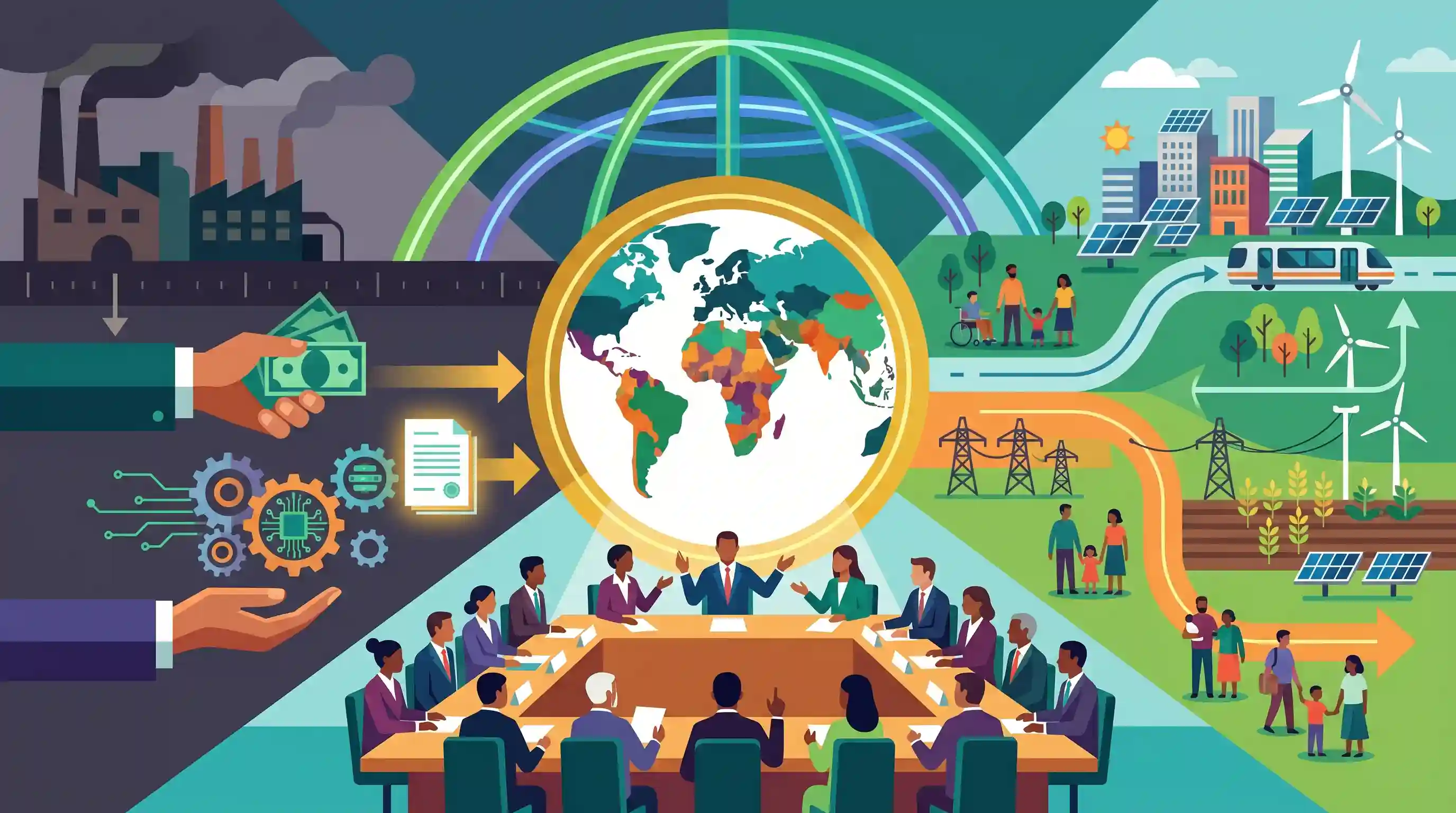
The article argues for prioritizing the perspectives and needs of the Global South in global energy and environmental policies. It underscores the ongoing challenges developing nations face in balancing rapid economic growth and poverty eradication with the transition to clean energy. A central theme is the call for climate justice, emphasizing that developed nations must honor their historical responsibilities by providing substantial climate finance and facilitating technology transfer. By placing the Global South at the center of climate negotiations, international frameworks can better reflect the principles of equity and Common But Differentiated Responsibilities (CBDR), ensuring a just transition for vulnerable populations.
मुख्य बिंदु
- The discourse highlights the critical need to place the Global South at the center of international energy and climate negotiations, ensuring equitable distribution of the global carbon budget.
- विकासशील देश 'साझा लेकिन अलग-अलग जिम्मेदारियों' (CBDR) के सिद्धांत पर जोर देते हैं, और औद्योगिक राष्ट्रों की ऐतिहासिक जवाबदेही की वकालत करते हैं।
- ग्लोबल साउथ की विकासात्मक अनिवार्यताओं से समझौता किए बिना नवीकरणीय ऊर्जा की दिशा में उनके संक्रमण को सुगम बनाने के लिए अनुमानित, पर्याप्त जलवायु वित्त और प्रौद्योगिकी हस्तांतरण की तीव्र मांग है।
- यह लेख वैश्विक जलवायु ढांचे को पुनर्गठित करने का आह्वान करता है ताकि विकासशील देशों की विशिष्ट संवेदनशीलता (vulnerabilities) को दूर किया जा सके, जिसमें 'लॉस एंड डैमेज' तंत्र को क्रियान्वित करना और अनुकूलन निधि (adaptation funds) को बढ़ाना शामिल है।
महत्वपूर्ण शब्द
जलवायु परिवर्तन पर संयुक्त राष्ट्र फ्रेमवर्क कन्वेंशन (UNFCCC)

1992 के रियो अर्थ समिट (Rio Earth Summit) में अपनाई गई, यह आधारभूत संधि ग्रीनहाउस गैसों की सांद्रता को स्थिर करने का लक्ष्य रखती है। यह वैश्विक जलवायु वार्ताओं के लिए रूपरेखा (framework) प्रदान करती है, जिसमें क्योटो प्रोटोकॉल और पेरिस समझौता शामिल हैं।
UPSC context
GS Paper III (Environment) & II (IR). Tests global environmental governance and India's role in international climate negotiations.
क्योटो प्रोटोकॉल
A 1997 UNFCCC extension that mandated legally binding emission reduction targets for industrialized nations. It operationalized the principle of historical responsibility, exempting developing nations from initial binding cuts.
UPSC context
GS Paper III (Environment). Understanding the evolution of binding climate commitments and the 'Polluter Pays' principle.
पेरिस समझौता
A 2015 legally binding treaty aimed at limiting global warming to well below 2°C, preferably 1.5°C. It uses self-determined, 'bottom-up' climate action plans called Nationally Determined Contributions (NDCs).
UPSC context
GS पेपर III (पर्यावरण)। भारत की NDC प्रतिबद्धताओं और नेट-जीरो लक्ष्यों की ओर वैश्विक प्रगति पर केंद्रित।
International Solar Alliance (ISA)
An India-France initiative launched in 2015 to promote solar energy. It aims to mobilize $1 trillion in investment by 2030, specifically supporting 'sunshine countries' in the Global South.
UPSC context
GS Paper II (IR) & III (Energy). Highlights India’s soft power and leadership in South-South renewable energy cooperation.
साझा लेकिन विभेदित जिम्मेदारियां (CBDR)
A principle establishing that all states must address climate change, but developed nations bear a greater burden due to historical emissions and superior financial/technological capacities.
UPSC context
GS पेपर III (पर्यावरण/नीतिशास्त्र)। जलवायु न्याय, समानता और वार्ताओं में उत्तर-दक्षिण विभाजन से संबंधित बहसों का केंद्र।
Climate Finance
विकासशील देशों को जलवायु शमन (mitigation) और अनुकूलन (adaptation) के लिए प्रदान किए गए वित्तीय संसाधन। यह 'न्यायसंगत संक्रमण' (just transition) के लिए अत्यंत महत्वपूर्ण है और विकसित देशों की ऐतिहासिक जिम्मेदारियों को दर्शाता है।
UPSC context
GS पेपर III (पर्यावरण/अर्थव्यवस्था)। ग्रीन क्लाइमेट फंड और $100 बिलियन के वार्षिक लक्ष्य जैसे वित्त पोषण तंत्रों (funding mechanisms) के ज्ञान का परीक्षण करता है।
प्रारंभिक ट्रैप
लॉस एंड डैमेज फंड की मेजबानी और प्रबंधन सीधे UNFCCC सचिवालय द्वारा किया जाता है।
The Loss and Damage Fund is not an independent UN entity; it was operationalized at COP28 with the World Bank acting as the interim host for four years.
संबंधित अवधारणाएँ
What is the principle of CBDR under the UNFCCC framework?
- मुख्य आधार: All states share responsibility for environmental protection, but developed nations bear a heavier burden due to their disproportionate historical greenhouse gas emissions.
- उत्पत्ति: इसे 1992 के रियो अर्थ समिट (Rio Earth Summit) में रियो डिक्लेरेशन के सिद्धांत 7 के रूप में औपचारिक रूप दिया गया था।
- Paris adaptation: The Paris Agreement modified it to "CBDR with Respective Capabilities (CBDR-RC), in the light of different national circumstances."
UNFCCC के अंतर्गत प्रमुख वैश्विक जलवायु कोष कौन से हैं?
- Green Climate Fund: Established at COP16 (Cancun), it is the world’s largest dedicated climate fund, aiming to equally split funding between mitigation and adaptation.
- GEF: The Global Environment Facility operates as a financial mechanism not just for the UNFCCC, but also for biodiversity and desertification conventions.
- अडैप्टेशन फंड: Established under the Kyoto Protocol to finance concrete adaptation projects in vulnerable developing nations, primarily funded by a share of CDM proceeds.
अंतर-विषय पैटर्न
जलवायु वित्तपोषण + बहुपक्षीय बैंक सुधार
भारत का ग्लोबल साउथ जलवायु न्याय (climate justice) पर जोर सीधे तौर पर MDB सुधार एजेंडे (जैसे एन.के. सिंह समिति) से जुड़ा है, जिसका उद्देश्य ऋण संकट (debt distress) को बढ़ाए बिना रियायती जलवायु वित्त (concessional climate finance) को सुलभ बनाना है।
जस्ट ट्रांजिशन + कोर ऊर्जा निर्भरता
ग्लोबल साउथ की 'विकासात्मक स्थान' (developmental space) और न्यायसंगत कार्बन बजट की मांग, हाल के UN जलवायु शिखर सम्मेलनों में कोयले को पूरी तरह समाप्त करने (phasing out) के बजाय उसे चरणबद्ध तरीके से कम करने (phasing down) के भारत के रुख का सीधा आधार है।

Expect a multi-statement question in 2026 linking the NCQG targets with the Loss & Damage Fund's World Bank hosting and CBDR principles.
संबद्ध PYQ · 4
संबद्ध PYQ · 4
- 2025MainsGS3
Write a review on India's climate commitments under the Paris Agreement (2015) and mention how these have been further strengthened in COP26 (2021). In this direction, how has the first Nationally Determined Contribution intended by India been updated in 2022?
- 2021MainsGS3
Describe the major outcomes of the 26th session of the Conference of the Parties (COP) to the United Nations Framework Convention on Climate Change (UNFCCC). What are the commitments made by India in this conference?
- 2018MainsGS3
“Access to affordable, reliable, sustainable and modern energy is the sine qua non to achieve Sustainable Development Goals (SDGs).” Comment on the progress made in India in this regard.
- 2020MainsGS3
Explain intra-generational and inter-generational issues of equity from the perspective of inclusive growth and sustainable development.
