Circadian Rhythm Biology and Public Health Impacts of Sleep Aids
Source:The Hindu ↗
Why It Matters
Understanding the science behind the human biological clock (circadian rhythm) and the rising public health challenge of sleep deprivation is highly relevant for GS-3 (Science & Technology) and GS-2 (Health). Furthermore, the regulatory aspects of pharmaceutical sleep aids touch upon governance and health policies.
Summary
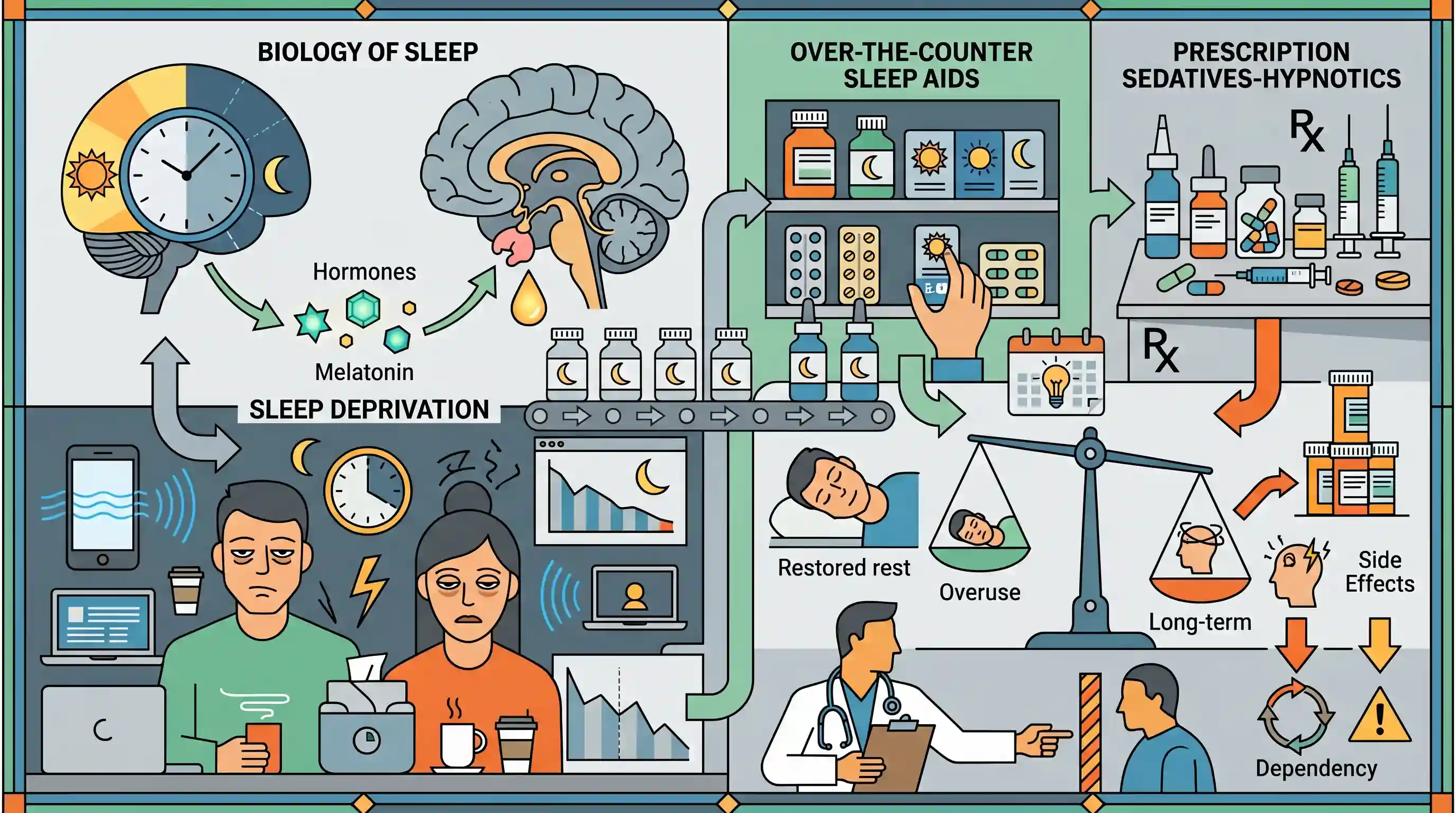
The article explores the biological mechanisms of sleep, emphasizing the role of the circadian rhythm and hormones such as melatonin. It addresses the growing public health challenge of sleep deprivation, largely driven by modern lifestyles and excessive screen time. Additionally, the piece examines the function, efficacy, and risks associated with various sleep aids—ranging from over-the-counter melatonin supplements to prescription sedative-hypnotics. It underscores the necessity of medical supervision to mitigate the risks of dependency and adverse side effects, drawing parallels to the broader issue of pharmaceutical overuse.
Key Points
- The human sleep-wake cycle is governed by the circadian rhythm, an internal biological clock influenced by environmental light and dark cues.
- Melatonin, a hormone secreted by the pineal gland, regulates sleep, but its natural production is often suppressed by artificial blue light from digital devices.
- Sleep deprivation has emerged as a major modern health challenge, linked to cognitive decline, metabolic disorders, and an increased risk of non-communicable diseases.
- While sleep aids can provide temporary relief for insomnia, the unregulated use of over-the-counter supplements and prescription sedative-hypnotics carries risks of tolerance, dependency, and adverse side effects.
Important Terms
Drugs and Cosmetics Act, 1940

India’s primary legislation regulating the import, manufacture, and distribution of medicines to ensure safety, efficacy, and quality standards.
UPSC context
GS II & III: Essential for pharmaceutical regulation, health governance, and ensuring drug safety in India.
Circadian Rhythm
An internal 24-hour biological cycle regulating sleep-wake patterns in response to environmental light and darkness.
UPSC context
GS III: Important biological concept; relevant for public health, lifestyle disorders, and S&T current affairs.
Melatonin
A natural hormone produced by the pineal gland that signals the body it is time to sleep in response to darkness.
UPSC context
GS III: Core biology (hormones) and health topic regarding pharmaceutical sleep aids and screen-time impacts.
Over-the-Counter (OTC) Drugs
Medicines sold directly to consumers without a prescription, generally considered safe for minor conditions when used as directed.
UPSC context
GS II: Relevant for drug regulation policies and preventing health risks associated with self-medication.
Central Drugs Standard Control Organisation (CDSCO)
India's national regulatory authority for pharmaceuticals and medical devices, responsible for new drug approvals and clinical trial oversight.
UPSC context
GS II: Apex statutory body for drug safety; critical for governance and public health monitoring.
Sedative-Hypnotics
A class of central nervous system depressants used to treat insomnia and anxiety, bearing risks of dependency and adverse effects.
UPSC context
GS III: Important for healthcare standards, pharmacology, and understanding public health challenges like drug overuse.
Prelims Trap
"Blue light from digital screens stimulates the pineal gland to produce melatonin."
UPSC often reverses biological effects. Blue light actually mimics daylight, suppressing—not stimulating—melatonin secretion from the pineal gland, thereby disrupting sleep.
Static Concepts Connected
How does the human body regulate the circadian rhythm?
- Pineal Gland: A tiny endocrine gland situated in the brain that synthesizes and secretes the hormone melatonin.
- Melatonin: Often called the 'sleep hormone', its levels naturally rise in darkness to induce sleep and fall during daylight hours.
- Suprachiasmatic Nucleus: The brain's master clock in the hypothalamus that processes light signals from the optic nerve to synchronize the body's cycle.
How are prescription and retail drugs regulated in India?
- Drugs & Cosmetics Act, 1940: The primary legislation governing the import, manufacture, distribution, and sale of drugs and cosmetics in India.
- Schedule H & H1: Classes of prescription drugs (like sedatives and antibiotics) that cannot be legally sold retail without a registered medical practitioner's prescription.
- OTC Regulation Gap: Unlike many Western nations, India currently lacks a dedicated, statutory definition for Over-The-Counter (OTC) medicines, complicating retail regulation.
Cross-Topic Patterns
LED technology and human biology
UPSC frequently links everyday tech with biological impacts, similar to past questions on LED emissions and their specific wavelength effects on human health.
Self-medication and regulatory gaps
The unregulated use of sleep aids mirrors the AMR crisis, connecting lifestyle health issues with regulatory failures under the Drugs and Cosmetics Act.

Expect a multi-statement Prelims question linking blue-light wavelengths from LEDs, pineal gland function, and melatonin suppression.
Linked PYQs · 3
Linked PYQs · 3
- 2014MainsGS3
Can overuse and free availability of antibiotics without Doctor's prescription, be contributors to the emergence of drug-resistant diseases in India? What are the available mechanisms for monitoring and control? Critically discuss the various issues involved.
- 2022MainsGS3
The increase in life expectancy in the country has led to newer health challenges in the community. What are those challenges and what steps need to be taken to meet them?
- 2021MainsGS2
“Besides being a moral imperative of a Welfare State, primary health structure is a necessary precondition for sustainable development.” Analyze.
