Right to Information Act and Institutional Erosion of Transparency
Source:The Hindu ↗
ఇది ఎందుకు ముఖ్యం
The RTI Act is a pillar of Indian democracy ensuring transparency and executive accountability. Analyzing its systemic erosion and shift toward institutional secrecy is vital for GS2 Governance and polity questions.
సారాంశం
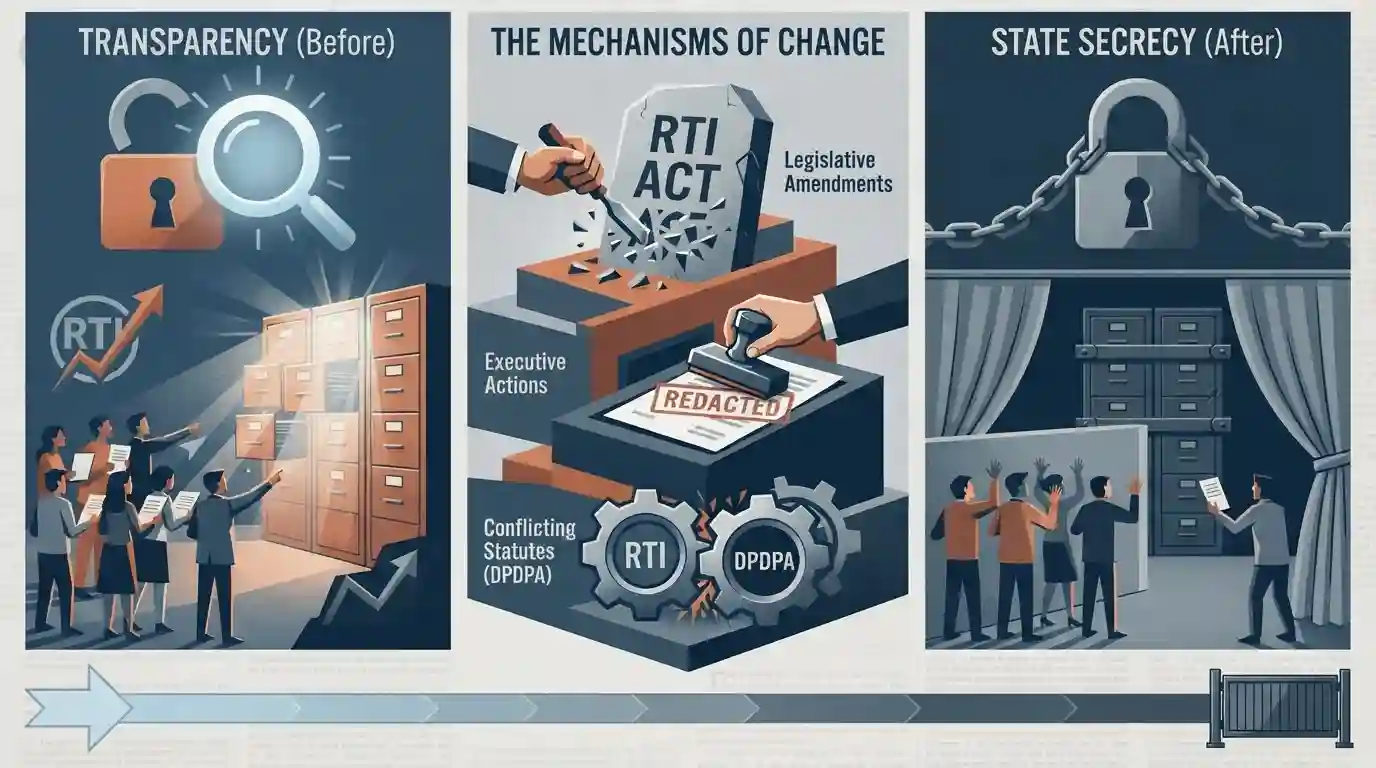
The article discusses the gradual transformation of the Right to Information (RTI) framework in India, arguing that legislative amendments, executive actions, and conflicting statutes like the Digital Personal Data Protection Act have converted the RTI from a tool of transparency into a mechanism for state secrecy and denial of information.
ముఖ్య అంశాలు
- The Right to Information (RTI) Act in India has increasingly witnessed a shift from ensuring transparency to facilitating a 'right to deny information'.
- Legislative changes, such as amendments exempting certain bodies and the interplay with laws like the Digital Personal Data Protection (DPDP) Act, have weakened proactive disclosure and citizen access.
- Institutional weakening of Information Commissions through vacancies and reduced autonomy hampers effective grievance redressal.
- Denial of information on grounds of privacy or broad exemptions undermines democratic accountability and administrative transparency.
ముఖ్యమైన పదాలు
Right to Information Act

A landmark 2005 Indian statute empowering citizens to request information from public authorities, designed to promote transparency, curb corruption, and ensure executive accountability in governance.
UPSC context
UPSC GS Paper II: Governance and Transparency. Tests understanding of statutory mechanisms safeguarding citizens' rights against state opacity.
Digital Personal Data Protection Act
Legislation enacted in 2023 to regulate digital personal data processing, which controversially amends the RTI Act by removing the public-interest override on personal data exemptions.
UPSC context
UPSC GS Paper II: Polity & Governance. Essential for questions balancing the Right to Privacy with the Right to Information.
Central Information Commission
The apex statutory body established under the RTI Act, 2005, tasked with entertaining appeals, reviewing decisions of public authorities, and ensuring compliance with transparency norms.
UPSC context
UPSC GS Paper II: Statutory Bodies. Important for questions evaluating the institutional health, independence, and effectiveness of oversight bodies.
Supreme Court of India
The highest constitutional court of India, responsible for interpreting fundamental rights such as free speech (Article 19) and adjudicating conflicts between transparency and state secrecy.
UPSC context
UPSC GS Paper II: Indian Constitution and Judiciary. Crucial for understanding judicial review over executive actions and legislative amendments.
ప్రిలిమ్స్ ఉచ్చు
The Digital Personal Data Protection Act completely nullified the RTI Act by abolishing personal information disclosure.
The DPDP Act did not completely repeal the RTI Act; rather, it amended Section 8(1)(j) of the RTI Act regarding personal data exemptions.
అనుసంధానమైన స్థిర భావనలు
What are the key exemptions and appellate mechanisms under the RTI Act, 2005?
- Exemptions: Section 8(1) outlines exemptions including sovereignty, security, cabinet papers, and personal privacy (though subject to public interest).
- Appellate Tier: First appeal lies with a senior officer within the same public authority; second appeal lies with the CIC or SICs.
- Schedule Exclusion: Intelligence and security organizations specified in the Second Schedule are generally exempt from the Act.
అంతర-అంశ నమూనాలు
RTI erosion vs. Article 19 Freedom of Speech
The broad exemptions under privacy laws like the DPDP Act clash with the constitutional freedom of speech and expression (Article 19).
Statutory Regulators and Executive Overreach
Weakening information commissions reflects a wider institutional pattern of executive dominance over independent statutory regulators.

DPDP Act's amendment to RTI Act (Section 8(1)(j)) and removal of Information Commissioners' fixed tenure will feature in GS-2 polity.
అనుసంధాన PYQలు · 2
అనుసంధాన PYQలు · 2
- 2020MainsGS2
Recent amendments to the Right to Information Act will have profound impact on the autonomy and independence of the Information Commission". Discuss.
- 2023MainsGS2
e-governance, as a critical tool of governance, has ushered in effectiveness, transparency and accountability in governments. What inadequacies hamper the enhancement of these features ?
