Interdisciplinary approach needed for studying Artificial Intelligence
Source:Indian Express ↗
Why It Matters
Provides critical insights into the intersection of technology and society. It underscores the importance of integrating ethics and social sciences into AI education, which is highly relevant for GS3 (Science and Technology) and GS4 (Ethics).
Summary
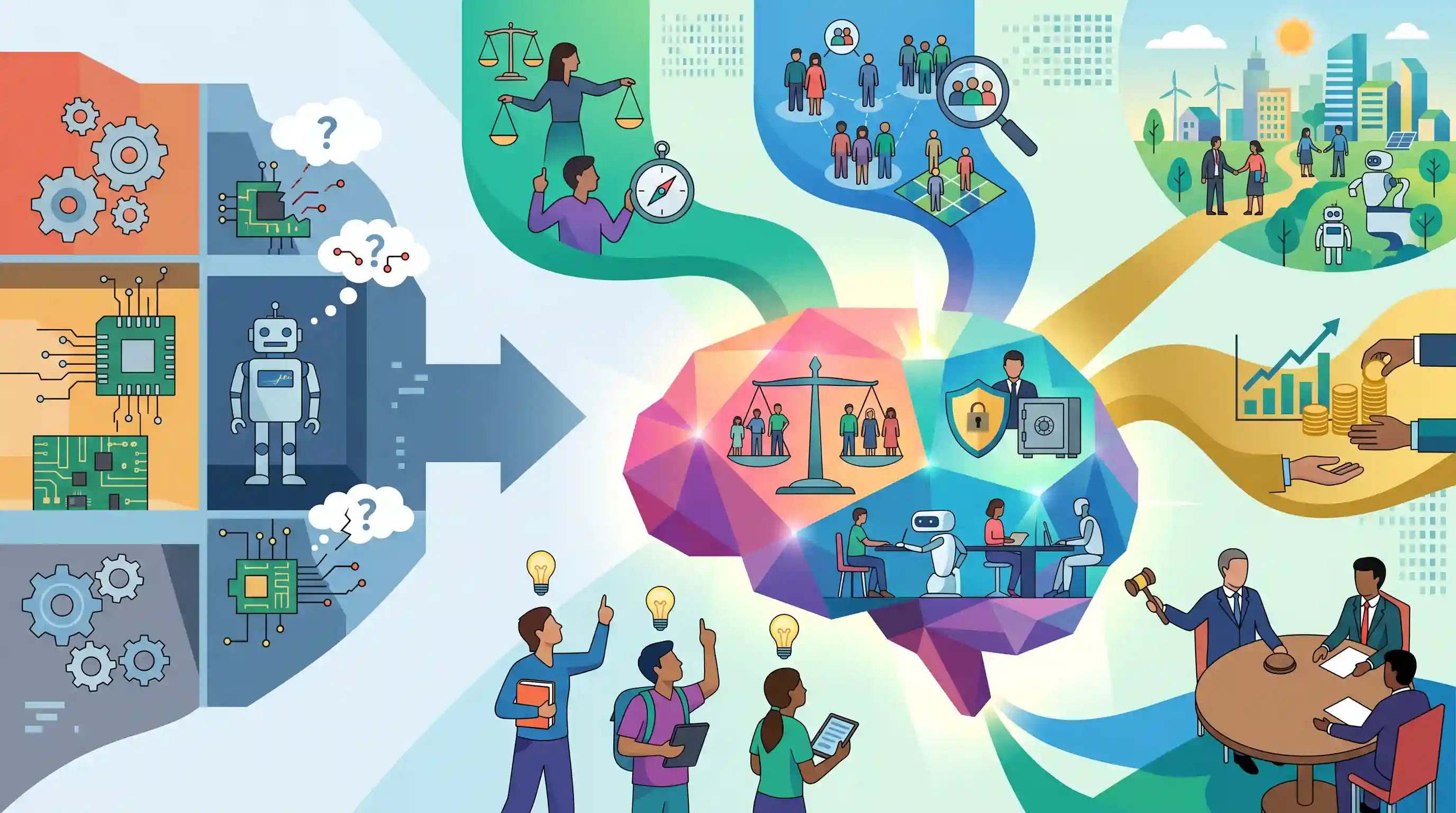
The article underscores the necessity of a holistic, interdisciplinary approach to studying Artificial Intelligence (AI). It argues that treating AI solely as a computer science or engineering discipline is insufficient given its pervasive impact on society. By integrating perspectives from ethics, sociology, and economics, the educational framework can better address complex socio-technical challenges such as algorithmic bias, privacy concerns, and the future of work. This comprehensive approach is essential for equipping students and policymakers with the critical thinking skills needed to ensure the ethical and responsible development of AI technologies.
Key Points
- Advocates for an interdisciplinary approach to studying Artificial Intelligence, combining technical computer science education with insights from the humanities and social sciences.
- Stresses that viewing AI purely as a technological issue ignores its profound societal, economic, and ethical implications.
- Highlights critical socio-technical challenges such as algorithmic bias, privacy infringements, and the impact of automation on employment.
- Urges educational institutions to revamp curricula to foster critical thinking about AI governance, ethical development, and responsible deployment.
Prelims Trap
"India regulates Artificial Intelligence under a dedicated, centralized Artificial Intelligence Act."
India lacks a specific AI law. It relies on a sectoral approach, using the IT Act 2000 and the DPDP Act 2023 to manage digital privacy and data processing.
Static Concepts Connected
What are the key ethical and technical challenges in AI governance?
- Algorithmic Bias: Occurs when AI models produce skewed outputs due to historically prejudiced training data, exacerbating social inequalities.
- Black Box Problem: AI systems whose internal decision-making processes are opaque, making it impossible to trace how they arrived at a specific conclusion.
- Accountability Gap: The inability to hold a specific individual or entity legally responsible for autonomous decisions made by opaque algorithms.
How does the DPDP Act 2023 impact AI development in India?
- Consent for Training: Mandates explicit user consent and purpose-limitation before processing personal data to train AI models.
- Right to Erasure: Creates a technical hurdle for AI companies, as completely 'unlearning' a specific user's data from a trained neural network is highly complex.
Cross-Topic Patterns
AI Ethics + Public Administration
The 'black box' nature of AI directly challenges foundational civil service values like transparency, accountability, and objectivity, making it a critical GS4 syllabus area.
AI Automation + Demographic Dividend
AI-driven job displacement threatens India's demographic dividend, shifting the GS3 focus from simple job creation to rapid upskilling and interdisciplinary STEM-plus-Humanities education.

Expect a 2026 question testing 'algorithmic bias' and the 'black box' problem alongside India's DPDP Act impact on AI model training.
Linked PYQs · 2
Linked PYQs · 2
- 2023MainsGS3
Introduce the concept of Artificial Intelligence (AI). How does Al help clinical diagnosis? Do you perceive any threat to privacy of the individual in the use of Al in healthcare?
- 2024MainsGS4
The application of Artificial Intelligence as a dependable source of input for administrative rational decision-making is a debatable issue. Critically examine the statement from the ethical point of view.
