Dani Rodrik Political Trilemma and Western Globalization Crisis
Source:The Hindu ↗
Why It Matters
Provides a vital theoretical framework (Rodrik's Trilemma) for analyzing contemporary geopolitical shifts, such as the retreat from globalization, the rise of sovereign nationalism, and protectionism. Highly relevant for GS2 and GS3 questions concerning the post-Cold War world order and challenges to multilateralism.
Summary
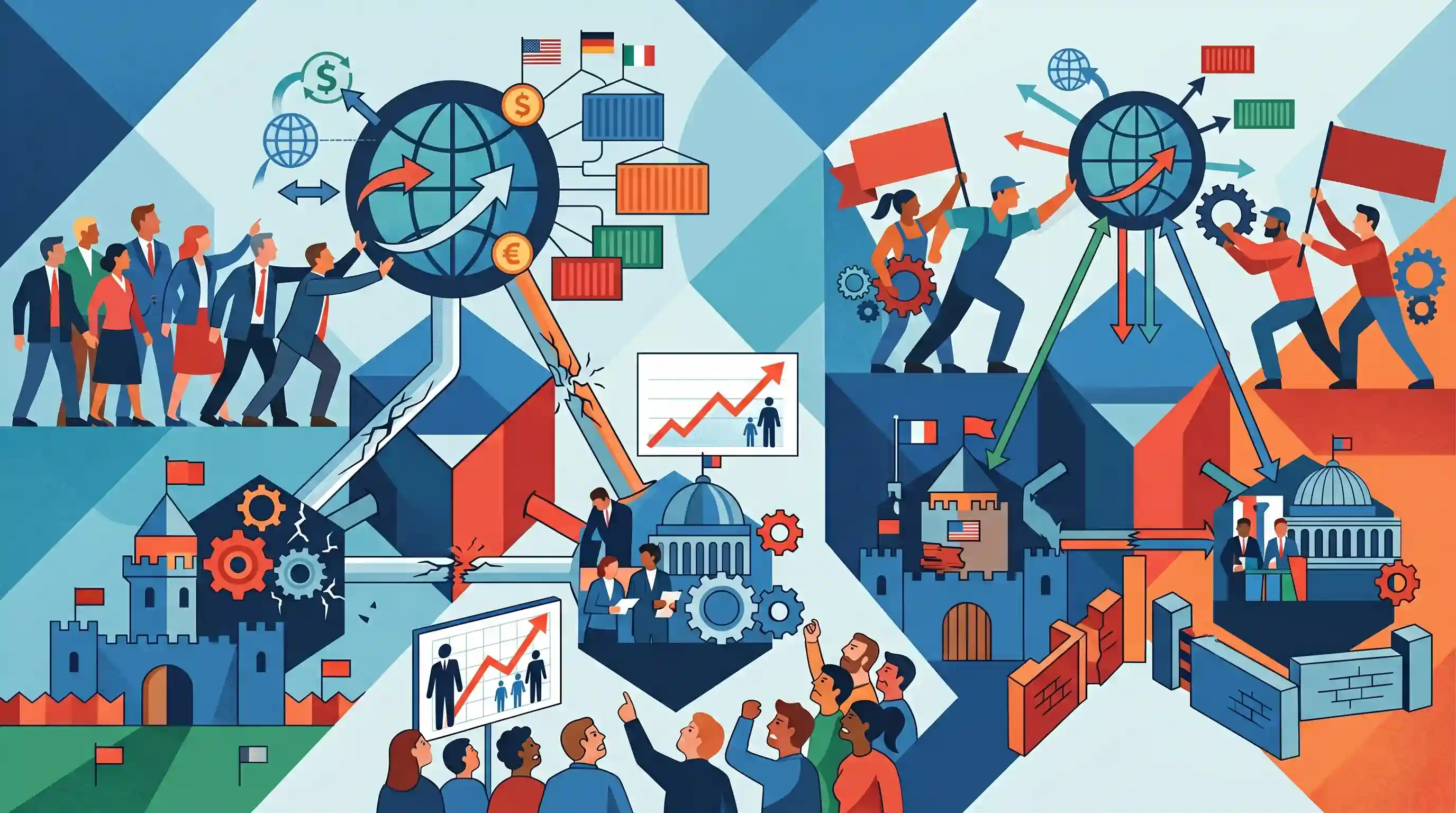
The article analyzes the ongoing political and economic crisis in Western nations through the lens of economist Dani Rodrik's 'political trilemma,' which posits that hyper-globalization, the nation-state, and democratic politics cannot simultaneously co-exist. By prioritizing hyper-globalization, Western nations eroded their own sovereign regulatory capacities and failed to address the economic grievances of their democratic populations. This marginalization of the working class and rising inequality have fueled a fierce populist backlash. Consequently, Western democracies are now retreating from free trade and multilateralism, pivoting instead toward protectionism and sovereign nationalism to reclaim democratic control over their economies.
Key Points
- Dani Rodrik's Political Trilemma asserts that it is impossible for a country to simultaneously maintain deep economic integration (hyper-globalization), the nation-state (national sovereignty), and democratic politics.
- The West's decades-long pursuit of hyper-globalization prioritized global economic integration over the regulatory autonomy of the nation-state, ultimately compromising democratic responsiveness to citizens' economic anxieties.
- This imbalance led to severe domestic inequalities, wage stagnation for the working class, and an erosion of trust in liberal democratic institutions.
- A populist backlash has ensued, characterized by Brexit and right-wing nationalism, demanding that the nation-state reclaim its sovereignty to protect domestic democratic interests over global markets.
- Consequently, the world is witnessing a structural shift from multilateralism and free trade toward protectionism, industrial policy, and sovereign nationalism, fragmenting the global economic order.
Prelims Trap
"Rodrik's Political Trilemma suggests that hyper-globalization, national sovereignty, and democracy must co-exist."
The trilemma is an impossibility theorem. It asserts that a nation can only maintain TWO of the three variables simultaneously, not all three. Aspirants often mistake it for a synergy model.
Static Concepts Connected
What is the macroeconomic equivalent (Impossible Trinity)?
- Free Capital Flow: Allowing money to freely enter and exit the country's economy without restrictions.
- Fixed Exchange Rate: Pegging the domestic currency's value to another major currency or asset.
- Independent Monetary Policy: The Central Bank's ability to set domestic interest rates independently. (A country can only achieve two of these three simultaneously).
What are the modern tools of state protectionism?
- Tariff Barriers: Imposing higher customs duties to make imported goods more expensive than domestic alternatives.
- Non-Tariff Barriers: Using quotas, strict sanitary/phytosanitary measures, and complex import licensing regimes to restrict foreign goods.
- Industrial Subsidies: Direct state financial support (e.g., India's PLI, US CHIPS Act) to boost domestic manufacturing and reduce foreign reliance.
Cross-Topic Patterns
Trilemma + Atmanirbhar Bharat
The West's retreat from hyper-globalization contextualizes India's Atmanirbhar Bharat and PLI schemes, showing a global, cross-ideological shift back to the nation-state and state-backed industrial policy.
Deglobalisation + WTO Crisis
The domestic populist backlash forces democratic nations to bypass multilateral platforms like the WTO in favor of unilateral protectionism, paralyzing dispute resolution and global free-trade consensus.

Expect a GS2/GS3 Mains question linking Rodrik's trilemma to rising protectionism and its impact on India's export-led growth strategy.
Linked PYQs · 2
Linked PYQs · 2
- 2025MainsGS2
"With the waning of globalization, post-Cold War world is becoming a site of sovereign nationalism.” Elucidate.
- 2025MainsGS3
What are the challenges before the Indian economy when the world is moving away from free trade and multilateralism to protectionism and bilateralism? How can these challenges be met?
