Photonic Computing Innovations and Energy Efficient AI Systems
Source:The Hindu ↗
Why It Matters
This topic perfectly bridges two major GS3 themes: the latest advancements in computing technology (AI, photonics) and environmental sustainability. It prepares aspirants to answer questions on the ecological impact of digital infrastructure and how emerging 'green technologies' can mitigate the carbon footprint of the Fourth Industrial Revolution.
Summary
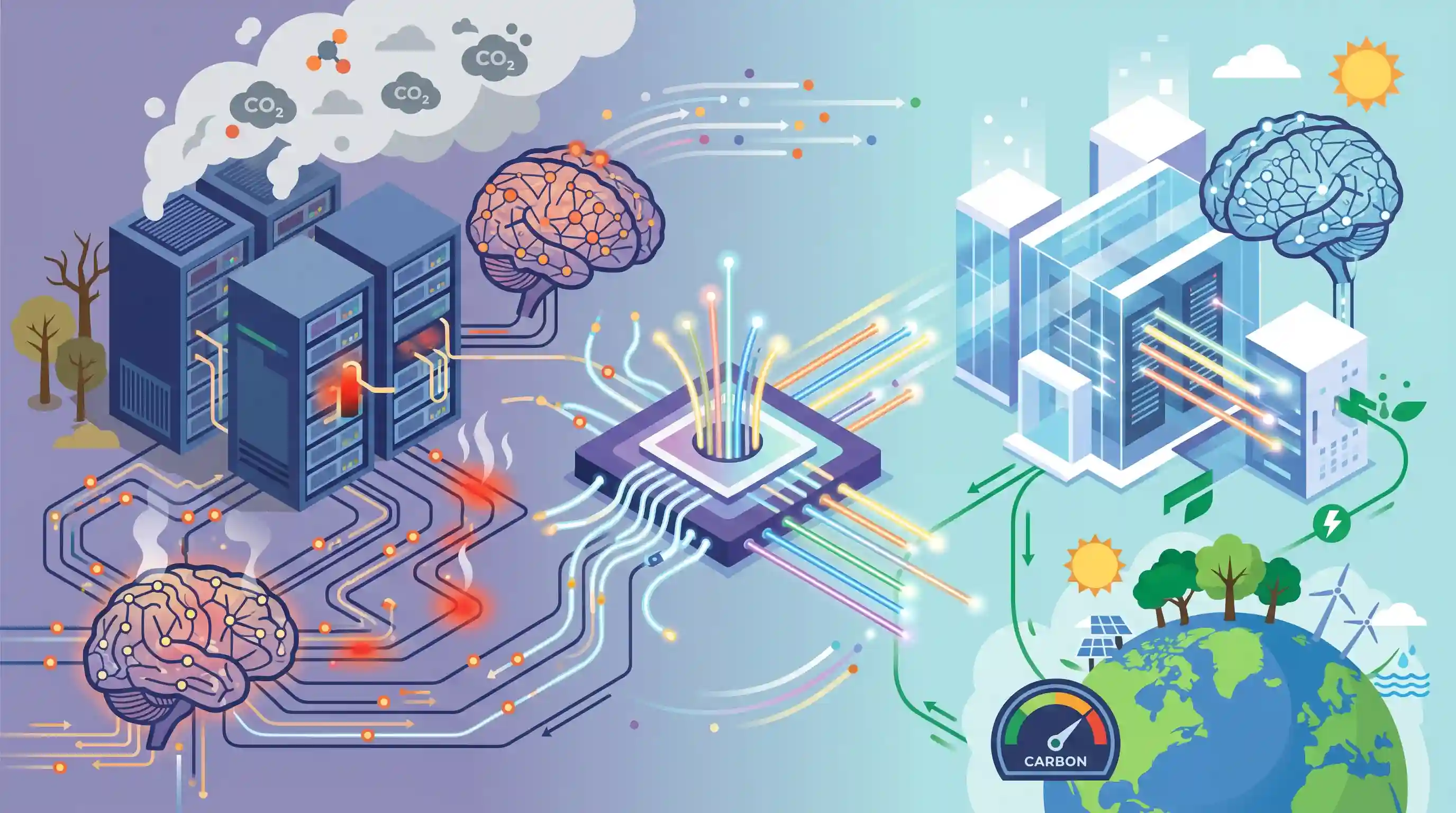
The article explores the emerging field of photonic (light-based) computing and its potential to revolutionize the physical infrastructure behind Artificial Intelligence (AI). Unlike traditional electronic circuits that move electrons through conductive materials, photonic computers use photons (light) to transmit and process data. This fundamental shift offers immense advantages: it operates at the speed of light, provides superior bandwidth, and completely bypasses the electrical resistance that causes traditional chips to overheat. This breakthrough is particularly crucial for the modern AI industry, as training Large Language Models requires vast, energy-guzzling data centers that significantly contribute to global greenhouse gas emissions. By adopting optical computing technologies, the tech sector can overcome current hardware limitations while drastically curbing the carbon footprint and cooling costs associated with AI development.
Key Points
- Photonic computing utilizes light (photons) instead of electricity (electrons) to perform computations, enabling data to be processed at the speed of light with much higher bandwidth.
- Traditional silicon-based electronic chips face physical limitations, notably electrical resistance, which generates immense heat and caps processing speeds.
- The rapid growth of sophisticated Artificial Intelligence (AI) models relies on energy-intensive data centers, creating a substantial and growing carbon footprint.
- Light-based processors generate virtually no heat and require minimal cooling, presenting a vital 'green technology' solution to drastically reduce the energy consumption of AI infrastructure.
- The commercialization of optical computing faces engineering challenges in optoelectronics, specifically the miniaturization of optical components and their integration with existing silicon-based electronic systems.
Prelims Trap
Photonic computing entirely replaces silicon chips and operates without any traditional electronic components.
Commercial optical computing relies on optoelectronics—hybrid systems integrating miniaturized optical components with existing silicon-based electronic architecture, not replacing silicon entirely.
Static Concepts Connected
How does Photonic Computing differ from Traditional Electronic Computing?
- Data Carrier: Uses photons (light) instead of electrons (electricity) to process and transmit information.
- Thermal Profile: Bypasses electrical resistance, meaning it generates virtually zero heat and eliminates 'thermal throttling'.
- Bandwidth & Speed: Operates near the speed of light, offering drastically higher bandwidth for parallel data processing.
What are the core environmental footprints of AI Data Centers?
- Energy Consumption: Training large AI models demands massive electricity, with 35-40% used strictly for cooling servers.
- Water Stress: Evaporative cooling uses millions of liters of freshwater annually, exacerbating urban water scarcity.
- Local Heat Islands: Concentrated server farms release immense heat, worsening micro-climates and the urban heat island effect.
Cross-Topic Patterns
AI's Carbon Footprint vs. Net Zero targets
The massive energy and water demands of LLM data centers conflict directly with climate goals, making green tech like optical computing a vital linkage for GS3 Environment questions.
Optoelectronics and India Semiconductor Mission
India's push for semiconductor self-reliance will eventually need to expand beyond traditional silicon fabs into compound semiconductors and integrated photonics to stay globally competitive.

Expect a Prelims question comparing the applications and physical mechanisms of Quantum, Neuromorphic, and Photonic computing in 2026.
Linked PYQs · 4
Linked PYQs · 4
- 2020PrelimsGS1
With reference to Visible Light Communication (VLC) technology, which of the following statements are correct? 1. VLC uses electromagnetic spectrum wavelengths 375 to 780 nm. 2. VLC is known as long-range optical wireless communication. 3. VLC can transmit large amounts of data faster than Bluetooth. 4. VLC has no electromagnetic interference. Select the correct answer using the code given below:
- 2023MainsGS3
Introduce the concept of Artificial Intelligence (AI). How does Al help clinical diagnosis? Do you perceive any threat to privacy of the individual in the use of Al in healthcare?
- 2016PrelimsGS1
With reference to 'LiFi', recently in the news, which of the following statements is/are correct? 1. It uses light as the medium for high-speed data transmission. 2. It is a wireless technology and is several times faster than 'WiFi'. Select the correct answer using the code given below.
- 2022PrelimsGS1
Which one of the following is the context in which the term "qubit" is mentioned ?
