Political Party Financing Transparency and Electoral Reforms
Source:The Hindu ↗
આ શા માટે મહત્વનું છે
Crucial for understanding the intersection of money power and democracy, electoral corruption, and governance reforms in India.
સારાંશ
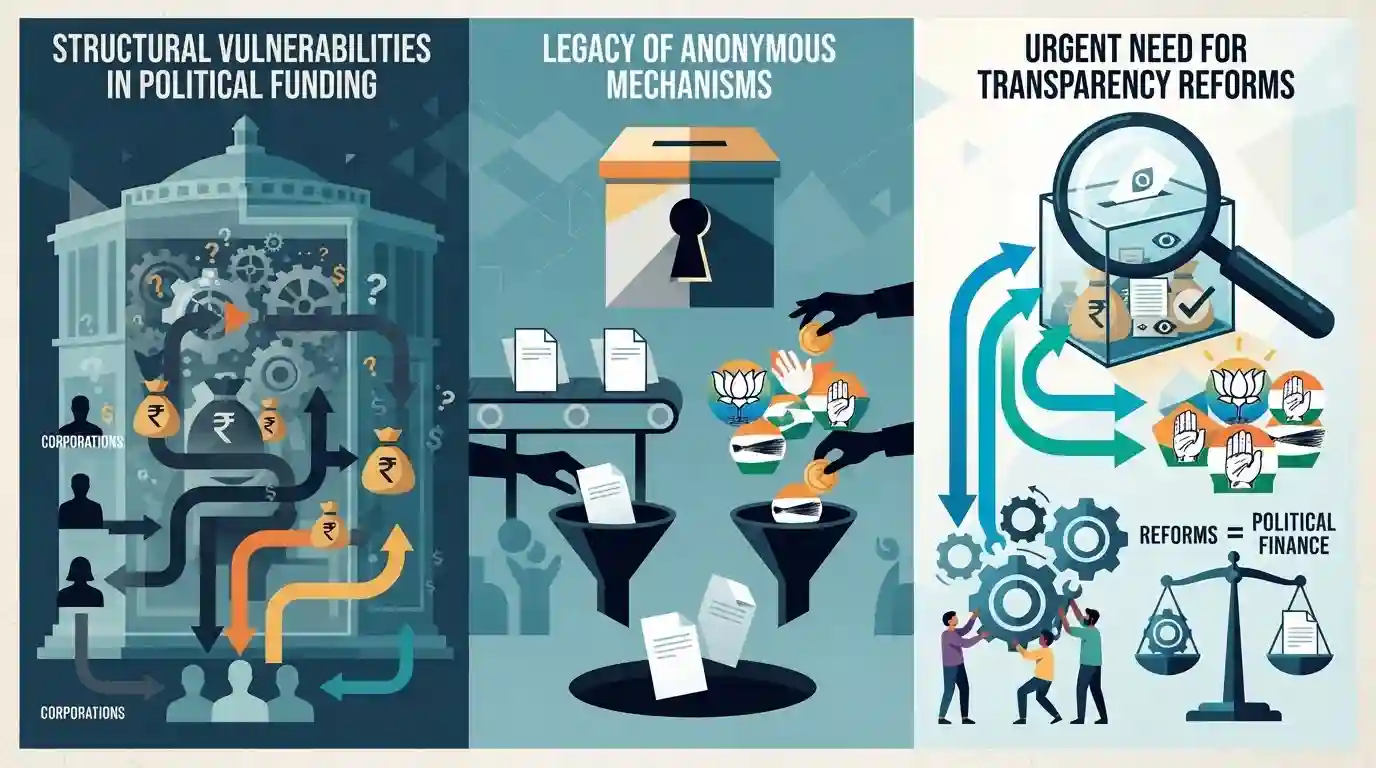
The article examines the opaque nature of political party finance in India, highlighting structural vulnerabilities, the legacy of anonymous funding mechanisms, and the urgent need for comprehensive electoral and financial transparency reforms.
મુખ્ય મુદ્દા
- Political party financing in India remains opaque, with reliance on anonymous donations, cash, and complex funding structures.
- The Supreme Court's striking down of the electoral bonds scheme highlighted transparency deficits, but loopholes persist regarding corporate funding and foreign donations.
- Reforms are needed in transparency, auditing of accounts by independent bodies, and stricter enforcement of disclosure norms by the Election Commission.
પ્રિલિમ્સ ટ્રેપ
complete transparency and statutory prohibition of all foreign or anonymous funding channels
Aspirants often assume political parties are fully covered under the RTI Act or that foreign donations have a total blanket ban without statutory loopholes or historical exemptions.
સંલગ્ન સ્થિર ખ્યાલો
What are the key legal frameworks governing political party registration and funding in India?
- RP Act 1951:: Governs registration of political parties under Section 29A, mandating adherence to the principles of socialism, secularism, and democracy.
- Income Tax Act:: Requires political parties to submit contribution reports detailing donations exceeding ₹20,000 to the Election Commission to claim tax exemption.
- FCRA 2010:: Regulates foreign source contributions to candidates, parties, and associations, ensuring foreign funds do not influence domestic electoral politics.
આંતર-વિષય પેટર્ન
Corporate Governance + Electoral Funding
Electoral trust transparency interacts directly with Companies Act rules on corporate political donations and foreign contribution regulations (FCRA).
RTI Act + Political Party Accountability
RTI Act applicability to political parties remains a contested frontier between information access and internal party autonomy.

Electoral reforms + Supreme Court judgements on transparency likely to feature in GS-2 polity statements or prelims match-the-act questions.
સંલગ્ન PYQ · 1
સંલગ્ન PYQ · 1
- 2025MainsGS2
Discuss the 'corrupt practices' for the purpose of the Representation of the People Act, 1951. Analyze whether the increase in the assets of the legislators and/or their associates, disproportionate to their known sources of income, would constitute 'undue influence' and consequently a corrupt practice.
