Geopolitical and Economic Impact of US-Iran Diplomacy
Source:The Hindu ↗
Why It Matters
The US-Iran geopolitical dynamic directly influences global crude prices, Middle Eastern stability, and India's strategic connectivity projects (like Chabahar Port). It is a core case study for UPSC aspirants to understand the intersection of foreign policy, energy security, and international relations.
Summary
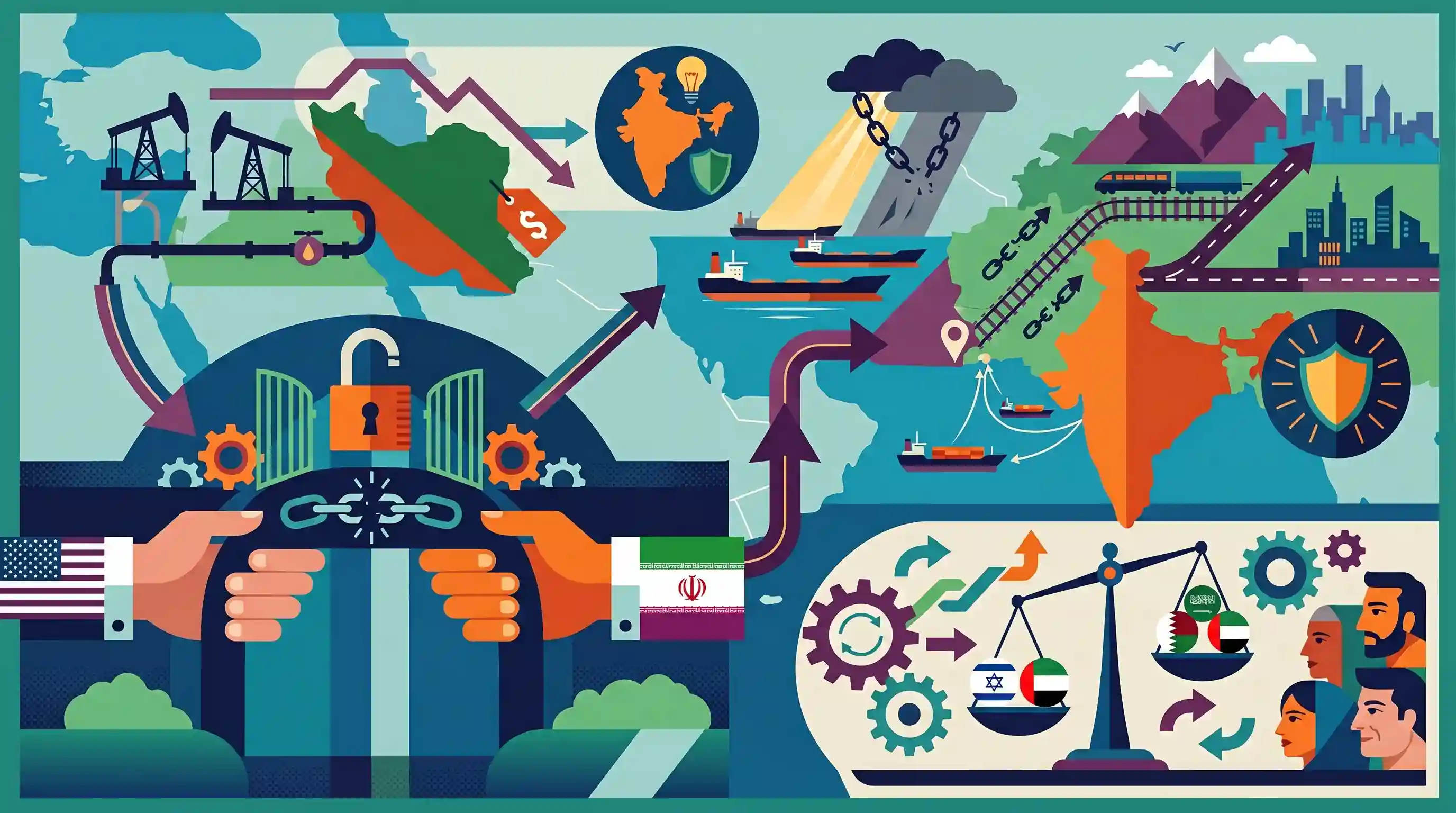
The article analyzes the profound geopolitical and economic impacts of a potential diplomatic agreement between the United States and Iran. An easing of US sanctions would facilitate Iran's full re-entry into the global energy market, easing crude oil prices and ensuring energy security for import-dependent nations like India. Additionally, normalized relations or a reduction in hostilities would secure vital maritime trade routes in the Middle East. For India specifically, relief from secondary sanctions allows for unhindered development of the Chabahar Port and the International North-South Transport Corridor (INSTC), amplifying its strategic reach into Central Asia. However, the deal may also shift the regional balance of power, compelling key actors like Israel and Gulf states to recalibrate their foreign policy.
Key Points
- A potential US-Iran deal and the easing of sanctions would allow Iranian oil to re-enter global markets, helping stabilize global energy prices.
- Reduced hostilities between Washington and Tehran could de-escalate tensions in the Middle East and safeguard critical maritime chokepoints like the Strait of Hormuz.
- For India, sanctions relief on Iran significantly boosts the viability and pace of strategic connectivity projects like the Chabahar Port and the INSTC.
- Such a diplomatic breakthrough might trigger a realignment of security architectures among other regional powers, notably Israel and Saudi Arabia.
Important Terms
Joint Comprehensive Plan of Action (JCPOA)

The 2015 agreement between Iran and the P5+1 powers (including the US) to limit Iran's nuclear program in exchange for lifting international economic sanctions.
UPSC context
GS Paper II: International Relations. Tests knowledge of global groupings and nuclear non-proliferation agreements affecting India's interests.
International North-South Transport Corridor (INSTC)
A 7,200-km multi-modal transport network (ship, rail, and road) linking India to Russia and Europe via Iran, bypassing Pakistan and shortening transit times.
UPSC context
GS Paper II/III: Connectivity & Trade. Tests understanding of strategic infrastructure and India's Eurasian reach.
Chabahar Port
A strategic Iranian port in the Gulf of Oman, operated by India to secure direct access to landlocked Afghanistan and Central Asia bypassing Pakistan.
UPSC context
GS Paper II: Bilateral Relations. Tests knowledge of maritime security and regional connectivity as a counterweight to China's BRI.
Secondary Sanctions
US-imposed penalties on non-US companies or individuals doing business with a sanctioned country (like Iran), forcing third-party nations to comply with American foreign policy.
UPSC context
GS Paper II: Effect of developed countries' policies. Tests understanding of extraterritorial jurisdiction and its impact on India's strategic autonomy.
Energy Security
The continuous, affordable availability of energy sources. For India, this involves diversifying crude oil imports and securing stable supply routes through the Persian Gulf.
UPSC context
GS Paper III: Infrastructure/Energy. Tests knowledge of resource dependency and the impact of geopolitics on national economic stability.
Prelims Trap
The Strait of Hormuz connects the Red Sea and the Gulf of Aden.
This describes the Bab-el-Mandeb strait. The Strait of Hormuz actually connects the Persian Gulf with the Gulf of Oman and the Arabian Sea.
Static Concepts Connected
What is the International North-South Transport Corridor (INSTC)?
- Founding members: A multi-modal transportation agreement initiated in 2000 by Russia, India, and Iran.
- Multi-modal network: Combines ship, rail, and road routes for moving freight between India, Russia, Iran, Europe, and Central Asia.
- Strategic objective: It reduces carriage costs by roughly 30% and transit time by 40% compared to the traditional Suez Canal route.
How do US "secondary sanctions" impact third-party countries like India?
- Extraterritorial reach: While primary sanctions target US entities, secondary sanctions penalize foreign individuals or companies for doing business with the sanctioned country.
- Financial weaponization: They threaten to cut off foreign entities (like Indian banks) from the US financial system and dollar-clearing mechanisms.
- Impact on India: It forces import-dependent countries to halt legitimate trade (like India buying Iranian oil) to protect their broader global financial access.
Cross-Topic Patterns
Crude prices and imported inflation
Iranian oil entering the market cools global crude prices, directly reducing India's Current Account Deficit (CAD) and easing "imported inflation" pressures in the domestic economy.
Central Asia and the New Great Game
Chabahar and INSTC are vital for India's "Connect Central Asia" policy, counterbalancing China's Belt and Road Initiative (BRI) and the China-Pakistan Economic Corridor (CPEC).
Chokepoint mapping in West Asia
The security of the Strait of Hormuz is frequently tested in Prelims alongside other critical maritime transit routes like Bab-el-Mandeb and the Suez Canal.

Expect a 2026 multi-statement question linking Chabahar port, INSTC routing, and the geopolitical impact of US secondary sanctions.
Linked PYQs · 3
Linked PYQs · 3
- 2018MainsGS2
In what ways would the ongoing US-Iran Nuclear Pact Controversy affect the national interest of India? How should India respond to this situation?
- 2025MainsGS2
"Energy security constitutes the dominant kingpin of India's foreign policy, and is linked with India's overarching influence in Middle Eastern countries.” How would you integrate energy security with India's foreign policy trajectories in the coming years?
- 2024MainsGS2
Critically analyse India's evolving diplomatic, economic and strategic relations with the Central Asian Republics (CARs) highlighting their increasing significance in regional and global geopolitics.
