उत्तर पूर्व भारत में चाकमा और हाजोंग की नागरिकता स्थिति और सुरक्षा
स्रोत:इंडियन एक्सप्रेस ↗
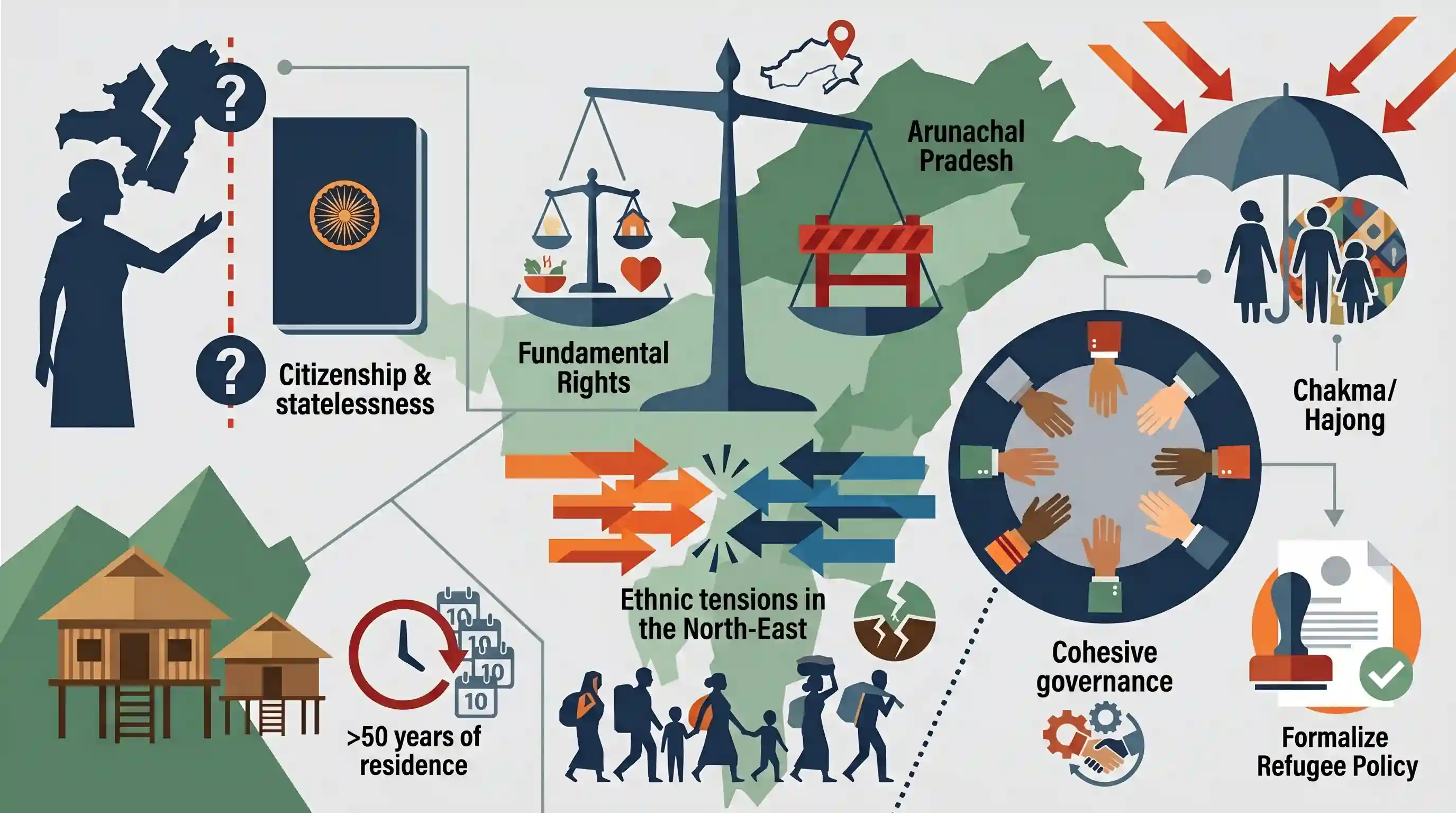
क्यों मायने रखता है
चकमा-हाजोंग मुद्दा नागरिकता, शरणार्थी अधिकारों और जातीय संघर्षों के अंतर्संबंध पर UPSC के लिए एक क्लासिक केस स्टडी है। यह संवैधानिक गारंटी (अनुच्छेद 14, 21 बनाम अनुच्छेद 19) और उत्तर-पूर्व भारत की आंतरिक सुरक्षा गतिशीलता की समझ का परीक्षण करता है।
सारांश
The article examines the tragic killing of Anjel Chakma, bringing to the forefront the longstanding plight of the Chakma and Hajong communities in Arunachal Pradesh. It discusses the complexities of citizenship, statelessness, and fundamental rights, questioning why these communities continue to be treated as outsiders despite having lived in India for over half a century. The incident underscores the urgent need for a cohesive governance approach to address ethnic tensions, protect minority rights, and resolve the protracted refugee crisis in Northeast India.
मुख्य बिंदु
- The killing of Anjel Chakma highlights the persistent marginalization and security threats faced by the Chakma community in Arunachal Pradesh.
- दशकों से भारत में रहने के बावजूद, चकमा और हाजोंग समुदाय अभी भी राज्यविहीनता और मौलिक नागरिकता अधिकारों के अभाव का सामना कर रहे हैं।
- The incident raises critical questions about the applicability of human rights (like Article 21) to vulnerable refugee populations in border regions.
- Resolving such issues requires balancing the ethnic sensitivities of indigenous groups with the humanitarian and legal obligations towards refugees under the Indian Constitution.
महत्वपूर्ण शब्द
चकमा और हाजोंग समुदाय

मुख्य रूप से बौद्ध (चकमा) और हिंदू (हाजोंग) जातीय समूह, जिन्होंने 1960 के दशक में पूर्वी पाकिस्तान से पलायन किया और मुख्य रूप से अरुणाचल प्रदेश में बस गए।
UPSC context
GS II (कमजोर वर्ग/सामाजिक न्याय) और GS III (आंतरिक सुरक्षा)। पूर्वोत्तर में जातीय संघर्ष और शरणार्थी संकट के ज्ञान का परीक्षण करता है।
Citizenship Act, 1955
The primary law governing Indian citizenship; it outlines methods of acquisition (birth, descent, registration, naturalization) and conditions for its termination.
UPSC context
GS II (Polity). Core topic for understanding legal status, naturalization rights, and constitutional provisions (Articles 5-11).
इनर लाइन परमिट (ILP)
राज्य सरकारों द्वारा संरक्षित सीमावर्ती क्षेत्रों में अनिवासी भारतीय नागरिकों के प्रवेश और प्रवास को विनियमित करने के लिए जारी किया गया एक आधिकारिक यात्रा दस्तावेज़।
UPSC context
GS II (Polity) and GS III (Internal Security). Tests understanding of tribal autonomy, demographic protection, and federalism.
राज्यहीनता
एक विधिक स्थिति जिसमें किसी व्यक्ति को किसी भी राज्य द्वारा नागरिक के रूप में मान्यता नहीं दी जाती है, जिसके परिणामस्वरूप अक्सर मौलिक अधिकारों और संरक्षण का अभाव हो जाता है।
UPSC context
GS II (International Relations/Social Justice). Relevant for discussing human rights, international conventions, and the impact of the NRC process.
Bengal Eastern Frontier Regulation (BEFR), 1873
एक औपनिवेशिक विनियमन जिसने ब्रिटिश हितों की रक्षा के लिए 'Inner Line' की स्थापना की; यह आधुनिक ILP प्रणाली के लिए कानूनी आधार बना हुआ है।
UPSC context
GS I (Modern History) and GS II (Polity). Tests the historical origin of administrative exclusion and tribal protection policies.
प्रारंभिक ट्रैप
अरुणाचल प्रदेश में चकमा और हाजोंग शरणार्थी CAA 2019 के तहत फास्ट-ट्रैक नागरिकता के लिए पात्र हैं।
गलत। अरुणाचल प्रदेश इनर लाइन परमिट (ILP) प्रणाली (Bengal Eastern Frontier Regulation, 1873) द्वारा संरक्षित है, जो स्पष्ट रूप से राज्य को CAA 2019 से छूट प्रदान करता है।
संबंधित अवधारणाएँ
Which areas are exempt from the Citizenship Amendment Act (CAA), 2019?
- छठी अनुसूची: Tribal areas of Assam, Meghalaya, Mizoram, and Tripura are excluded to protect indigenous demographics.
- Inner Line Permit: बंगाल ईस्टर्न फ्रंटियर रेगुलेशन, 1873 के तहत परमिट की आवश्यकता वाले राज्य (अरुणाचल प्रदेश, नागालैंड, मिजोरम, मणिपुर) इस अधिनियम से पूरी तरह छूट प्राप्त हैं।
Which Fundamental Rights are available to foreigners and refugees in India?
- सभी के लिए उपलब्ध: Articles 14, 20, 21, 21A, 22, 23, 24, 25, 26, 27, and 28 are available to both citizens and non-citizens.
- Citizens only: अनुच्छेद 15, 16, 19, 29 और 30 विशेष रूप से भारतीय नागरिकों के लिए हैं। शरणार्थी इनका दावा नहीं कर सकते।
- Article 21 Precedent: सुप्रीम कोर्ट ने NHRC बनाम आंध्र प्रदेश राज्य (1996) में यह निर्णय दिया कि राज्य को बेदखली की धमकियों के खिलाफ चकमा शरणार्थियों के जीवन और स्वतंत्रता की रक्षा करनी चाहिए।
अंतर-विषय पैटर्न
CAA, ILP और जनसांख्यिकीय चिंता
The Chakma-Hajong issue mirrors the broader Northeast security dilemma: balancing India's humanitarian refugee protection with the demographic anxieties of indigenous tribes protected by the Sixth Schedule and ILP.
Transnational dam displacement
The initial migration of these communities was triggered by the Kaptai Dam on the Karnaphuli River in Bangladesh, linking development-induced displacement and environmental geography directly to transnational refugee crises.

2026 में CAA छूटों का परीक्षण करने वाले एक बहु-कथनीय (multi-statement) प्रश्न की अपेक्षा करें, जो स्पष्ट रूप से अरुणाचल की ILP स्थिति को चकमा-हाजोंग राज्यविहीनता (statelessness) से जोड़ता हो।
संबद्ध PYQ · 3
संबद्ध PYQ · 3
- 2022MainsGS2
“Right of movement and residence throughout the territory of India are freely available to the Indian citizens, but these rights are not absolute.” Comment.
- 2024MainsGS2
Right to privacy is intrinsic to life and personal liberty and is inherently protected under Article 21 of the constitution. Explain. In this reference discuss the law relating to D.N.A. testing of child in the womb to establish its paternity.
- 2017MainsGS3
The North-East region of India has been infested with insurgency for a very long time. Analyze the major reasons for the survival of armed insurgency in this region.
