Disaster Management and Governance Failures in Goa
Source:Indian Express ↗
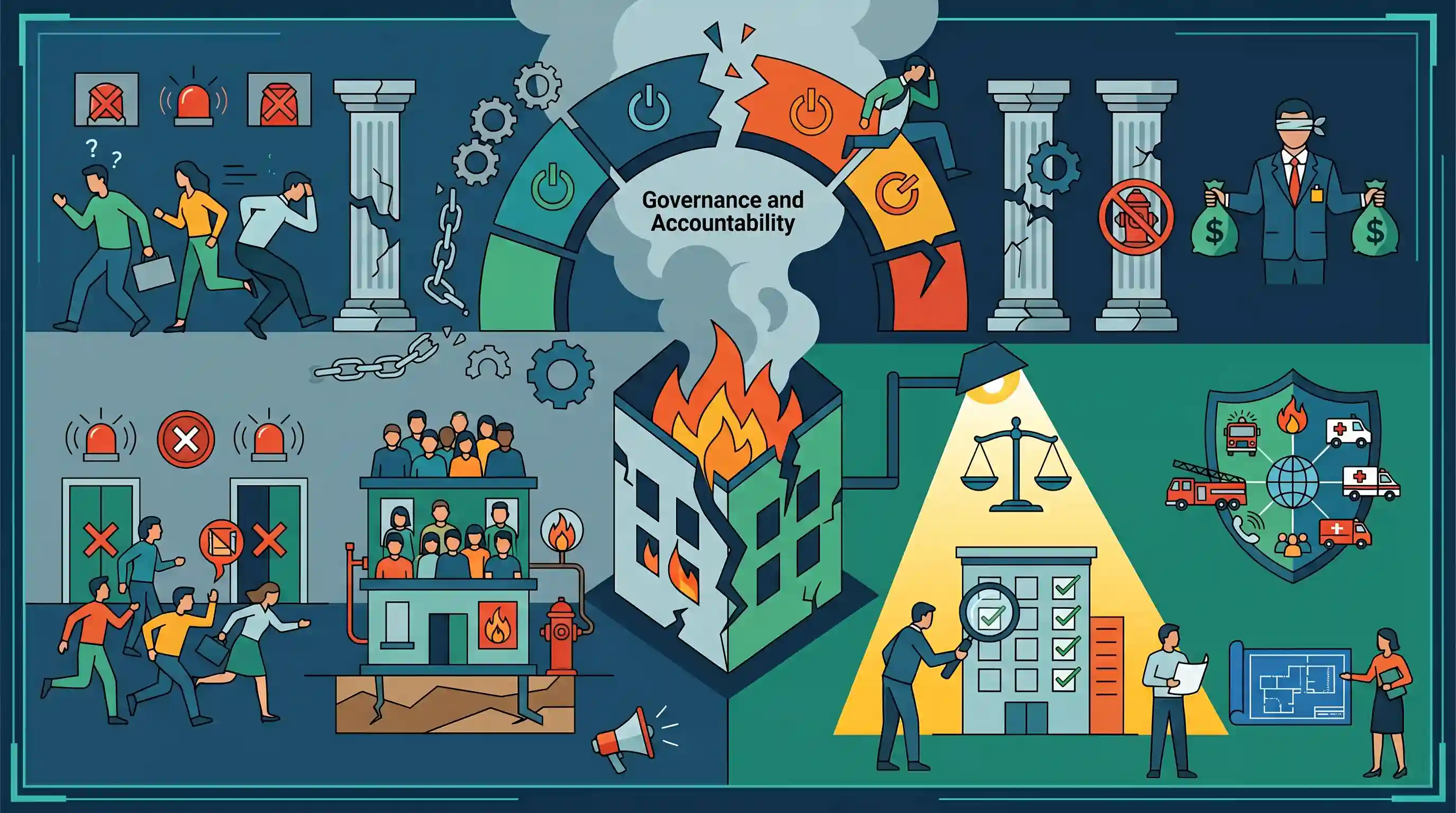
Why It Matters
It provides a real-world case study of administrative failure, crucial for understanding the intersection of disaster management (GS3), local governance (GS2), and ethical accountability (GS4).
Summary
The fire incident in Goa serves as a stark reminder of systemic "abdications" of duty across various levels of governance and administration. By failing to enforce stringent safety norms and neglecting vital disaster preparedness protocols, regulatory bodies and local institutions have compromised public safety. The article underscores a significant dereliction of administrative responsibility, emphasizing the urgent need for enhanced accountability, regular safety audits, and a robust, integrated disaster resilience framework to prevent similar catastrophes.
Key Points
- Systemic Governance Failures: The incident highlights severe dereliction of duty and a lack of accountability among local administrative and regulatory bodies concerning the enforcement of safety standards.
- Deficiencies in Disaster Preparedness: Exposes glaring gaps in institutional readiness, emergency response mechanisms, and proactive risk mitigation.
- Need for Regulatory Overhaul: Advocates for stricter compliance with fire safety protocols, comprehensive risk audits, and resilient urban planning.
- Ethical Deficit in Administration: Draws attention to the absence of 'devotion to duty' and the ethical implications of bureaucratic apathy toward public safety and environmental security.
Important Terms
Sendai Framework for Disaster Risk Reduction

A 15-year (2015-2030) international voluntary agreement aiming to significantly reduce disaster risk and losses to lives, health, and livelihoods through four priorities and seven global targets.
UPSC context
GS Paper III: Disaster Management. Tests knowledge of international guidelines and India's alignment with global risk reduction goals.
Disaster Management Act, 2005
The legal framework governing India's disaster response, establishing a three-tier institutional structure (National, State, and District levels) to shift the approach from reactive relief to proactive mitigation.
UPSC context
GS Paper II/III: Governance and Disaster Management. Essential for understanding statutory powers and institutional mechanisms during catastrophes.
Disaster Resilience
The capacity of a system or community exposed to hazards to resist, absorb, accommodate, and recover from effects in a timely and efficient manner, preserving essential structures.
UPSC context
GS Paper III: Disaster Management. Tests understanding of 'Build Back Better' and long-term risk-informed planning.
District Disaster Management Authority (DDMA)
The district-level statutory body chaired by the District Magistrate, responsible for planning, coordinating, and implementing disaster management policies and ensuring local department compliance with safety norms.
UPSC context
GS Paper II/III: Governance and Disaster Management. Focuses on the implementation of disaster plans at the grassroots level.
Safety Audit
A systematic evaluation of an organization's safety protocols and infrastructure to identify hazards and ensure compliance with regulatory standards like the National Building Code (NBC).
UPSC context
GS Paper II/IV: Governance and Ethics. Relevant for discussing administrative accountability and regulatory compliance in public safety.
Administrative Accountability
The obligation of public officials and regulatory bodies to answer for their actions and failures in enforcing laws, such as fire safety regulations or building codes.
UPSC context
GS Paper II/IV: Governance and Ethics. Tests the ability to analyze systemic failures and moral responsibilities of civil servants.
Prelims Trap
The National Building Code (NBC) 2016 is a statutory, legally binding framework uniformly enforced across all states in India.
The National Building Code (NBC) 2016 is merely a recommendatory document. It becomes mandatory only when adopted by states/ULBs into local building bye-laws.
Static Concepts Connected
Where do 'Fire Services' fall under the Constitutional division of powers?
- State List: Fire services fall under the jurisdiction of state governments under the 7th Schedule.
- 12th Schedule: Article 243W enables states to devolve 'Fire Services' to Municipalities (Item 7 of the 12th Schedule).
- Implementation Gap: Many states have not fully devolved this function to ULBs, leading to overlapping jurisdictions and severe accountability gaps in urban fire safety.
How does bureaucratic apathy in safety enforcement violate civil service ethics?
- Devotion to Duty: Failure to enforce building codes and safety audits directly violates the Central Civil Services (Conduct) Rules requiring utmost devotion.
- Accountability: Abdication of regulatory oversight breaches the ethical mandate of answerability to the public and rule of law.
- Compassion: Neglecting safety norms disproportionately harms vulnerable populations (e.g., migrant workers), failing the test of empathy for the marginalized.
Cross-Topic Patterns
Disaster Management meets Administrative Ethics
Governance failures in disaster prevention (like flouting NBC norms) are increasingly tested in GS-4 as case studies focusing on 'dereliction of duty' and bureaucratic complicity in urban tragedies.
Urban Sprawl and Induced Disaster Vulnerability
Unregulated urban expansion links directly to heightened fire risks. This bridges GS-1 (urbanization challenges) with GS-3 (disaster resilience and Sendai Framework implementation).

Expect a GS-3 or GS-4 question linking urban disaster vulnerabilities to bureaucratic apathy and the non-binding nature of the NBC 2016.
Linked PYQs · 4
Linked PYQs · 4
- 2024MainsGS3
What is disaster resilience? How is it determined? Describe various elements of a resilience framework. Also mention the global targets of Sendai Framework for Disaster Risk Reduction (2015–2030).
- 2024MainsGS2
Analyse the role of local bodies in providing good governance at local level and bring out the pros and cons merging the rural local bodies with the urban local bodies.
- 2024MainsGS4
“The 'Code of Conduct' and 'Code of Ethics' are the sources of guidance in public administration. There is code of conduct already in operation, whereas code of ethics is not yet put in place. Suggest a suitable model for code of ethics to maintain integrity, probity and transparency in governance.”
- 2022MainsGS4
Discuss the importance of 'Devotion to duty' in public service.
