SCOTUS Tariff Ruling and Global Economic Impact on Supply Chains
Source:The Hindu ↗
Why It Matters
US trade policies and protectionist measures significantly impact global supply chains, international trade norms, and export-driven economies like India. Understanding the shift away from protectionism is crucial for analyzing the future trajectory of global economic cooperation and WTO dynamics.
Summary
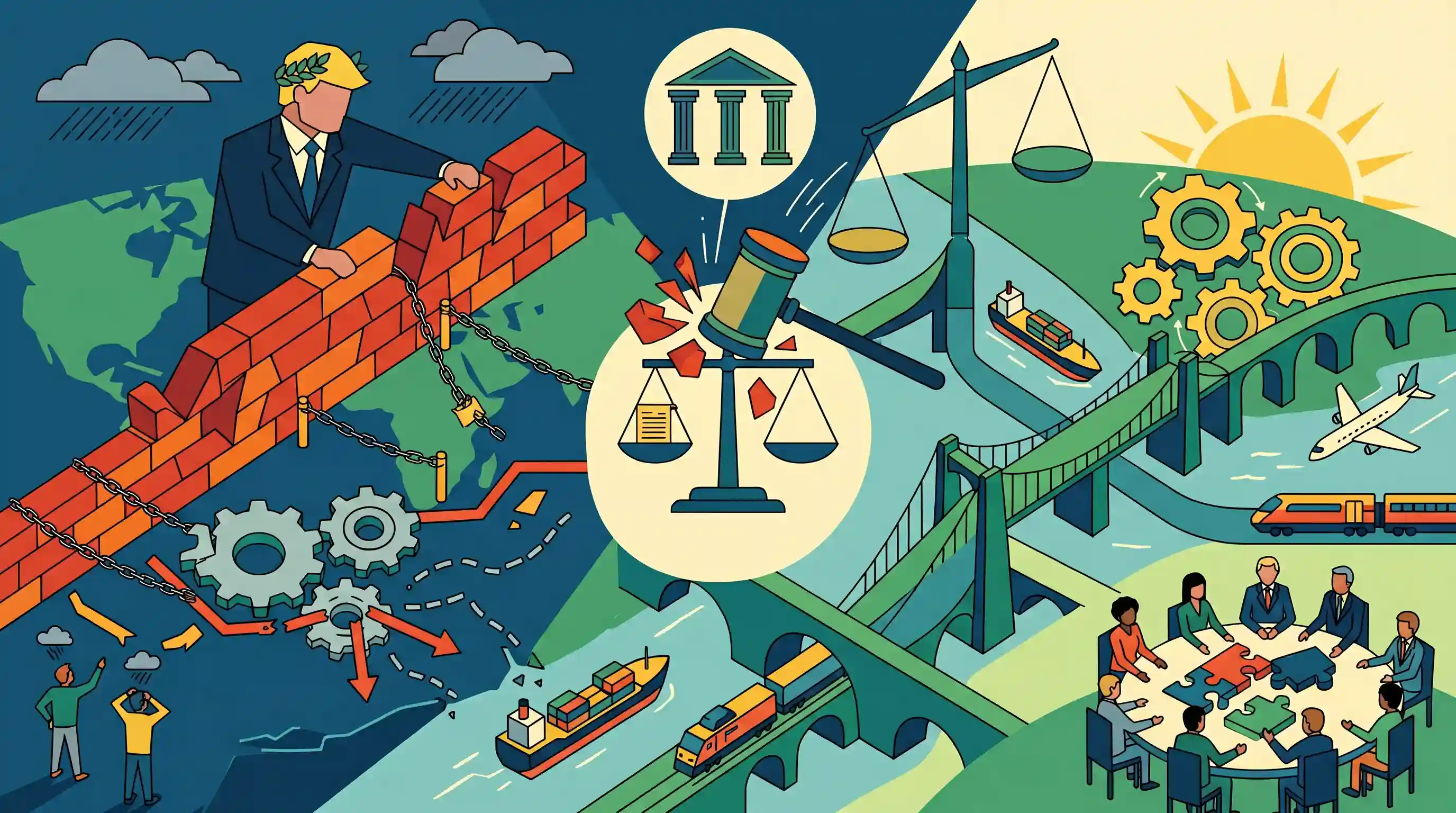
The article analyzes the global economic implications of the US Supreme Court's decision to invalidate the sweeping tariffs introduced during the Trump presidency. By striking down these protectionist trade barriers, the ruling curtails the unilateral executive power over trade policy and offers a reprieve to the global economy. The decision is expected to ease trade tensions, restore confidence in global supply chains, and reinforce the need for multilateralism and free trade, which were significantly undermined during the tariff wars.
Key Points
- The US Supreme Court (SCOTUS) ruling invalidating tariffs imposed during Donald Trump's administration carries significant global economic consequences.
- The ruling challenges the unilateral use of executive authority to impose sweeping trade barriers, signaling a potential shift away from aggressive protectionism.
- This decision provides relief to global trade partners and helps restore stability to international supply chains disrupted by the tariff wars.
- It revitalizes the importance of rule-based multilateral trading systems and free trade over retaliatory bilateral protectionist measures.
Important Terms
SCOTUS (Supreme Court of the United States)

The highest federal court in the US. In 2026, it ruled in Learning Resources, Inc. v. Trump that the President cannot unilaterally impose tariffs without clear congressional authorization.
UPSC context
GS Paper II (Polity/International Relations); tests separation of powers and the impact of foreign judicial checks on global trade.
IEEPA (International Emergency Economic Powers Act)
A 1977 US law granting the President power to regulate commerce during national emergencies. The 2026 SCOTUS ruling clarified this does not include inherent authority to impose tariffs.
UPSC context
GS Paper II/III; relevant for legal frameworks governing international trade and executive overreach in economic policy.
WTO (World Trade Organization)
The global intergovernmental organization that regulates international trade. It upholds a rules-based system, often undermined by unilateral protectionist measures and the paralysis of its dispute settlement body.
UPSC context
GS Paper III (Economy); tests knowledge of international trade architecture, dispute mechanisms, and challenges to multilateralism.
Protectionism
Economic policy of restricting imports through tariffs or quotas to shield domestic industries. This often leads to trade wars, inflation, and disruptions in global supply chains.
UPSC context
GS Paper III (Indian Economy); tests analysis of trade barriers and their impact on global value chains and domestic growth.
Multilateralism
A collaborative international framework where nations follow common rules. In trade, it ensures stability and non-discrimination, preventing powerful nations from using unilateral economic coercion.
UPSC context
GS Paper II (International Relations); tests the role of global groupings and rules-based orders in maintaining economic stability.
Most-Favoured-Nation (MFN) Principle
A core WTO principle requiring members to treat all trading partners equally. Unilateral, country-specific tariffs often violate this rule by creating discriminatory trade advantages.
UPSC context
GS Paper III (Economy); tests technical understanding of WTO norms and the legality of international trade disputes.
Prelims Trap
"The WTO dispute settlement body successfully forced the US to roll back its unilateral tariffs."
The rollback was a domestic judicial decision by the US Supreme Court, not a WTO enforcement. The WTO's Appellate Body remains paralyzed.
Static Concepts Connected
What is the Most-Favored-Nation (MFN) principle under the WTO?
- Equal Treatment: Countries cannot normally discriminate between trading partners. A special trade favor granted to one country must be extended to all other WTO members.
- Major Exceptions: Derogations are allowed for Free Trade Agreements (FTAs), customs unions, or preferential market access specifically for developing nations (e.g., GSP).
What are the legitimate trade defense measures recognized under the WTO?
- Anti-dumping Duty: Imposed on specific imports that are priced below their fair market value or cost of production in the exporting country.
- Countervailing Duty: Levied to neutralize the negative economic effects of direct or indirect subsidies provided by the exporting country's government.
- Safeguard Measures: Temporary import restrictions applied in response to a sudden, unforeseen surge in imports that threatens serious injury to a domestic industry.
Cross-Topic Patterns
Tariff rollbacks & labor-intensive exports
The removal of sweeping US tariffs revives competitiveness for India's textile, leather, and gem sectors, boosting MSME employment and helping narrow the current account deficit.
WTO Appellate Body crisis & unilateralism
Because the US blocked judge appointments to the WTO Appellate Body, global trade disputes escalated into unilateral, retaliatory tariff wars without institutional checks.

Expect a multi-statement question in 2026 linking unilateral tariffs to WTO's MFN principle and the paralyzed Appellate Body.
Linked PYQs · 2
Linked PYQs · 2
- 2025MainsGS3
What are the challenges before the Indian economy when the world is moving away from free trade and multilateralism to protectionism and bilateralism? How can these challenges be met?
- 2012MainsGS2
Discuss the likely negative impact of the protectionist measures proposed by the US on India's software industry.
