Shifting Political Dynamics in United States
Source:Indian Express ↗
Why It Matters
Changes in US domestic politics—such as the rise or fall of populism—directly influence US foreign policy, trade protectionism, and alliance commitments. This shapes the global geopolitical environment and has downstream effects on US-India bilateral relations, making it crucial for analyzing global power dynamics.
Summary
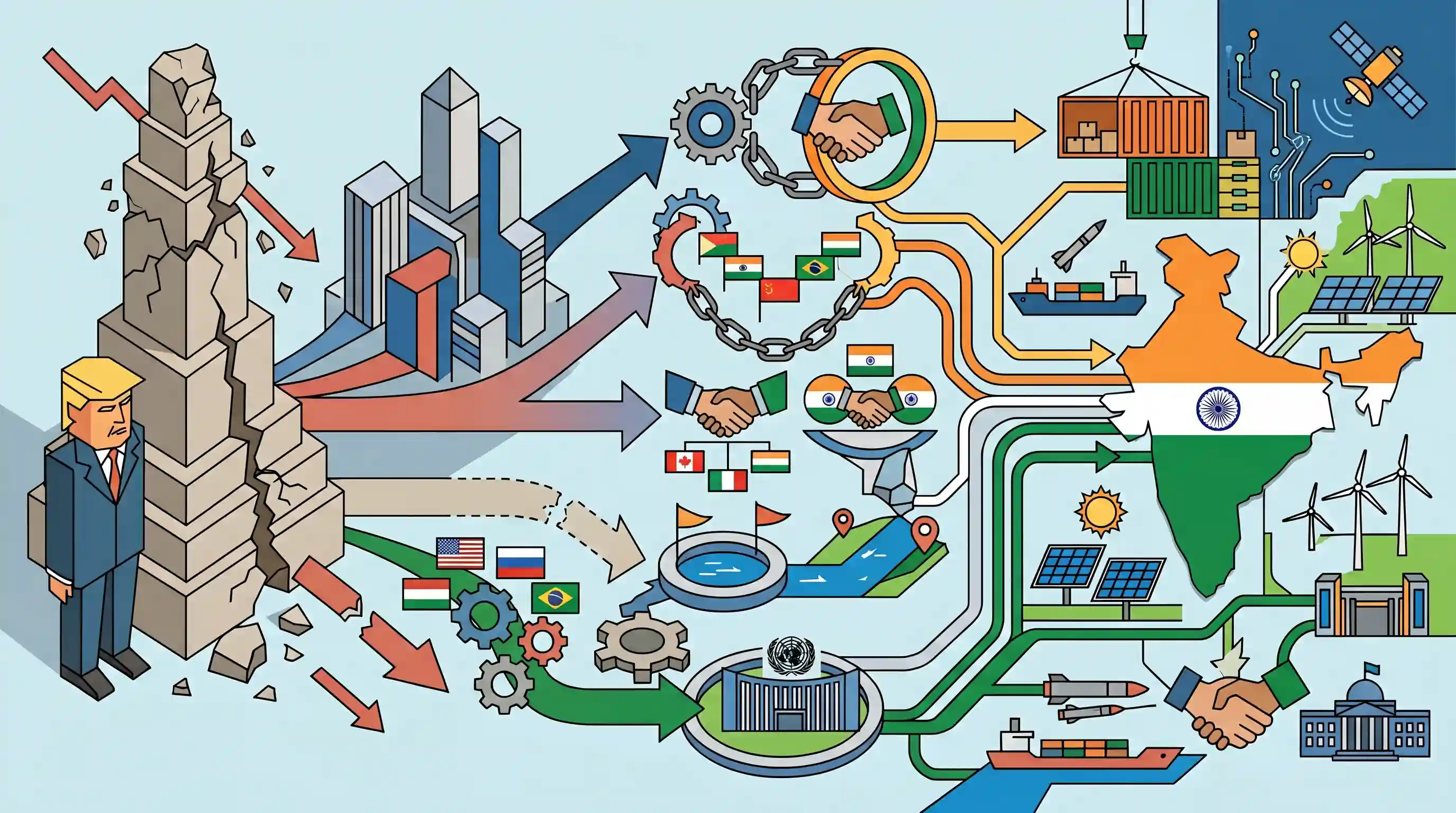
The article analyzes the political trajectory of Donald Trump, arguing that his once-formidable influence over American voters and the Republican Party is gradually waning. It suggests that the 'Trump magic'—characterized by populist rhetoric, 'America First' protectionist policies, and highly polarized campaigning—has passed its peak effectiveness. A potential decline in Trumpism may lead to notable shifts in US domestic politics, with significant cascading effects on the global geopolitical order. For the international community, a pivot away from extreme US political polarization could reshape American foreign policy, multilateral engagements, and its strategic alignment with key partners like India.
Key Points
- Evaluates the shifting dynamics within US domestic politics, suggesting a decline in Donald Trump's overarching influence and the 'MAGA' movement's political capital.
- Discusses how 'America First' populism might be losing its former appeal as voter fatigue with extreme polarizing rhetoric grows.
- Examines the implications of changing US political landscapes on global stability, multilateralism, and international diplomatic relations.
- Highlights that shifts away from Trump-era protectionism and transactional diplomacy could influence US alliance structures and global strategic postures, directly affecting bilateral ties with countries like India.
Important Terms
America First policy

A nationalist US policy prioritizing American interests through protectionism, non-interventionism, and unilateralism. It challenges global multilateralism and often involves imposing tariffs on trading partners like India.
UPSC context
GS II: Effects of policies of developed countries on India's interests; critical for analyzing trade tensions and strategic Indo-US shifts.
Trumpism
A political ideology blending populism, nationalism, and transactional diplomacy. It challenges liberal internationalism, emphasizing national sovereignty and disrupting traditional alliances and international institutional norms.
UPSC context
GS II: Bilateral Relations. Tests understanding of how populist movements in developed nations reshape global geopolitics and India’s diplomacy.
Multilateralism
The practice of coordinating national policies in groups of three or more states through international institutions. It emphasizes rules-based cooperation, shared responsibility, and collective security.
UPSC context
GS II: Global Groupings. Evaluates the rules-based international order against rising protectionism and isolationist trends in major powers.
Political Polarization
The deep division of a society or political system into two sharply contrasting ideological camps. It often results in legislative gridlock and inconsistent foreign policy across different administrations.
UPSC context
GS II: Comparison of Democracies. Relevant for assessing the durability of international commitments and stability of partnerships like the Quad.
Republican Party
One of the two major US political parties, traditionally advocating for conservatism and free markets. Recently, it has shifted toward protectionist "America First" policies and a more unilateralist foreign policy.
UPSC context
GS II: Political Systems. Important for comparing democratic systems and understanding how US domestic politics drive global strategic shifts.
Unilateralism
An international relations approach where a state acts independently, disregarding the interests or support of other nations or multilateral institutions to achieve national objectives.
UPSC context
GS II: International Relations. Analyzes shifts from collaborative global governance to transactional diplomacy affecting India’s strategic autonomy.
Prelims Trap
India currently enjoys duty-free export benefits to the US under the WTO-mandated Generalized System of Preferences (GSP).
The US revoked India's GSP status in 2019. Furthermore, GSP is a unilateral, non-reciprocal concession by developed nations under the WTO's Enabling Clause, not a mandatory legal right.
Static Concepts Connected
How does the Generalized System of Preferences (GSP) function within WTO frameworks?
- Enabling Clause: Allows developed countries to offer non-reciprocal tariff reductions to developing nations, acting as a legal exception to the Most Favored Nation (MFN) principle.
- Unilateral Concession: GSP benefits are granted unilaterally and can be withdrawn at the donor country's discretion, unlike binding bilateral or multilateral WTO tariff schedules.
What are key differences between the US Presidential and Indian Parliamentary constitutional schemes?
- Executive Accountability: The US President is not accountable to Congress due to strict separation of powers, whereas India's executive is directly accountable to the Lok Sabha.
- Legislative Overlap: In India, ministers must be Members of Parliament. In the US, cabinet members cannot simultaneously serve in the federal legislature.
Cross-Topic Patterns
Minilaterals surviving domestic US polarization
While 'America First' drove isolationist rhetoric, both recent US administrations prioritized minilaterals like the Quad and I2U2, demonstrating a bipartisan structural pivot toward institutionalized Indo-Pacific security.
US Protectionism vs. WTO Appellate crisis
Unilateral US tariffs justified under domestic national security laws directly bypass the WTO, exacerbating the broader institutional crisis where the US continues to block Appellate Body appointments.

Expect a GS-2 Mains question analyzing how shifts in US domestic politics and trade protectionism impact India's minilateral engagements.
Linked PYQs · 2
Linked PYQs · 2
- 2019MainsGS2
‘What introduces friction into the ties between India and the United States is that Washington is still unable to find for India a position in its global strategy, which would satisfy India's national self-esteem and ambitions.’ Explain with suitable examples.
- 2018MainsGS2
India and USA are two large democracies. Examine the basic tenets on which the two political systems are based.
