Generative AI Deepfakes Threaten Democratic Electoral Integrity
Source:The Hindu ↗
Why It Matters
The rapid evolution of Artificial Intelligence introduces novel challenges to internal security, democracy, and governance through the spread of deepfakes and misinformation. Understanding this is crucial for UPSC aspirants as it intersects Science and Technology (GS3), Internal Security (GS3), and Governance (GS2) issues, and frequently features in Mains questions about the regulation of emerging technologies and social media.
Summary
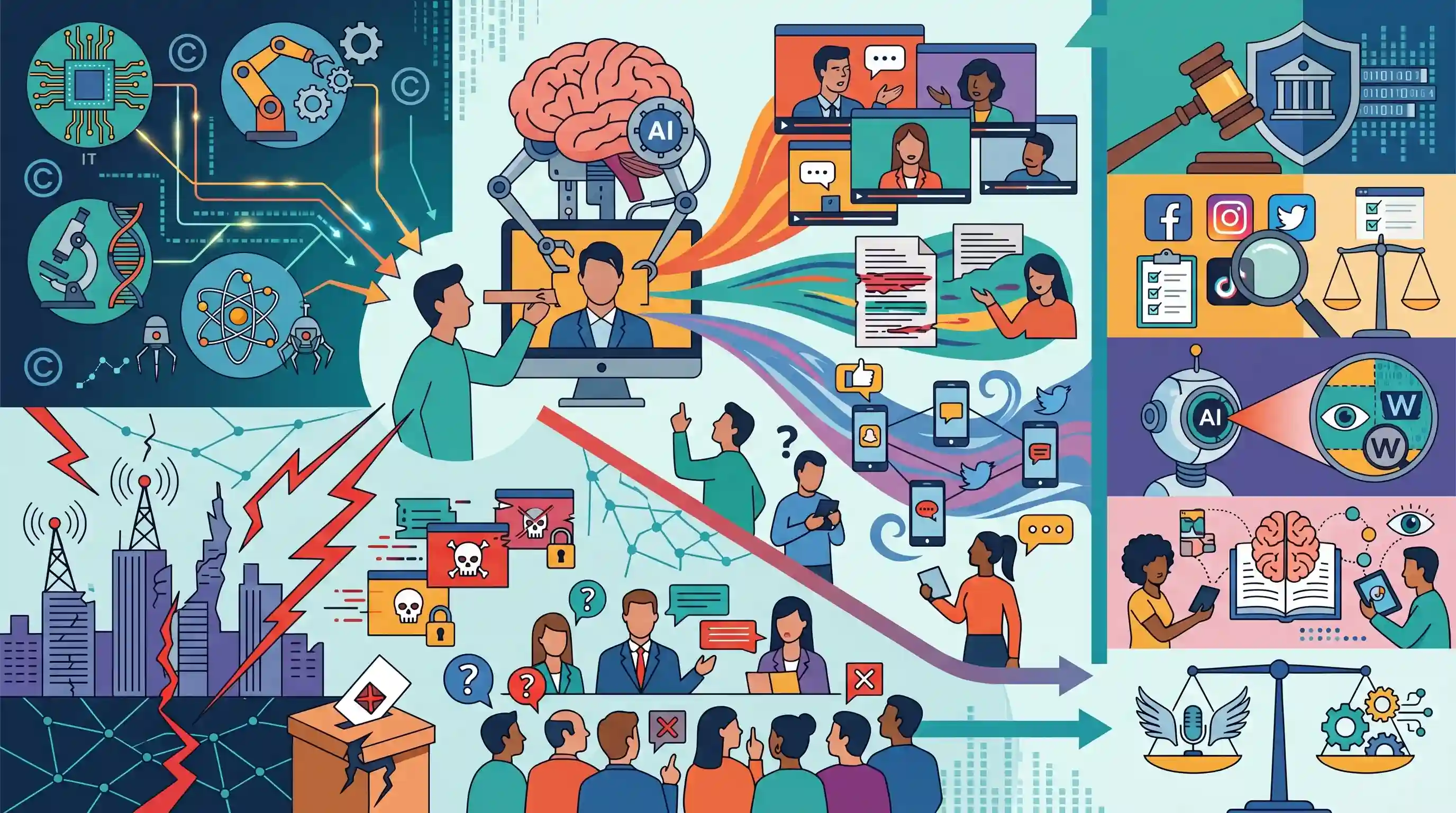
The proliferation of Generative Artificial Intelligence has amplified the threat of misinformation, particularly through the use of hyper-realistic deepfakes and synthetic media. Such advanced tools are increasingly being deployed to manipulate public opinion, thereby undermining democratic processes and posing significant risks during elections. The article underscores the limitations of current technical detection systems and regulatory frameworks in keeping pace with rapid AI advancements. To effectively combat AI-driven misinformation, a multi-pronged strategy is necessary. This includes implementing robust legislative interventions (such as the proposed Digital India Act), enhancing accountability for social media platforms, adopting technological safeguards like AI watermarking, and promoting widespread media literacy, all while balancing the need to protect free speech and innovation.
Key Points
- Generative AI tools have lowered the barriers to creating hyper-realistic synthetic media, commonly known as deepfakes.
- AI-driven misinformation poses a critical threat to the integrity of democratic processes and elections by manipulating public perception.
- Tech platforms and social media intermediaries face significant challenges in detecting and moderating AI-generated fake news at scale.
- Existing legal frameworks are often inadequate to address the rapid advancements in AI, necessitating updated regulations.
- A comprehensive approach involving digital watermarking, updated legislative frameworks (like the proposed Digital India Act), and enhanced digital literacy is required to fight AI misinformation.
Important Terms
Deepfakes

AI-generated synthetic media that realistically replaces a person’s likeness or voice using deep learning, frequently used to disseminate misinformation or manipulate public opinion.
UPSC context
GS III (Internal Security/Cybersecurity) — tests challenges to public order, democratic processes, and individual privacy rights.
Digital India Act
A proposed legislative framework intended to replace the IT Act, 2000, aimed at modernizing digital regulations to tackle deepfakes, AI harms, and online safety.
UPSC context
GS II (Legislative reforms) — covers India’s transition to a "Digital-First" economy and modernization of cybersecurity laws.
Information Technology Rules, 2021
Secondary legislation under the IT Act, 2000, that regulates social media, OTT, and digital news publishers, mandating due diligence and a three-tier grievance redressal system.
UPSC context
GS II/III (Governance/IT) — evaluates state regulation of digital platforms and the balance between security and free speech.
EU AI Act
The world’s first comprehensive AI law, adopting a risk-based approach to regulate AI systems globally, serving as a template for other nations’ digital policies.
UPSC context
GS II (International Relations/Governance) — analyzes global standards for AI ethics and their influence on Indian regulatory frameworks.
Election Commission of India (ECI)
The constitutional body managing Indian elections, which has recently issued directives requiring political parties to label AI-generated content to ensure fair competition and transparency.
UPSC context
GS II (Constitutional Bodies) — examines the ECI’s evolving mandate in safeguarding electoral integrity against digital-age misinformation.
AI Watermarking
A digital forensic technique of embedding invisible identifiers into AI-generated files to ensure traceability and distinguish synthetic content from authentic media.
UPSC context
GS III (Science & Tech) — focuses on technological interventions for digital authentication and combating AI-driven misinformation.
Prelims Trap
Social media platforms possess absolute safe harbour immunity regarding user-uploaded AI deepfakes under the IT Act.
Safe harbour is conditional. Intermediaries lose this immunity if they fail to practice due diligence or ignore expeditious takedown requirements under the amended IT Rules, 2021.
Static Concepts Connected
What is the 'Safe Harbour' provision for digital platforms in India?
- Section 79: Under the Information Technology Act, 2000, intermediaries are generally exempt from legal liability for third-party information or data hosted on their platforms.
- Conditional immunity: Protection is automatically revoked if platforms fail to observe due diligence or do not quickly remove unlawful content after being notified.
What is AI watermarking in the context of synthetic media?
- Invisible metadata: Embedding imperceptible cryptographic signatures or digital markers into files during creation to identify the content as AI-generated.
- Tamper-evident tracking: Generates tamper-evident records allowing platforms and authorities to trace synthetic media back to its originating AI model.
Cross-Topic Patterns
Deepfakes and cyber violence against women
With over 90% of malicious deepfakes being non-consensual synthetic pornography, AI regulation heavily intersects with GS1 (Society/Women's issues) and GS3 (Cybercrime).
Article 19(2) vs AI content regulation
Regulating algorithmic bias and AI misinformation requires a delicate balance to ensure state interventions qualify as 'reasonable restrictions' under Article 19(2).

Expect a multi-statement Prelims question testing the exact conditions for losing 'safe harbour' status under IT Rules against deepfakes.
Linked PYQs · 3
Linked PYQs · 3
- 2023MainsGS3
Introduce the concept of Artificial Intelligence (AI). How does Al help clinical diagnosis? Do you perceive any threat to privacy of the individual in the use of Al in healthcare?
- 2024MainsGS3
Social media and encrypting messaging services pose a serious security challenge. What measures have been adopted at various levels to address the security implications of social media? Also suggest any other remedies to address the problem.
- 2016MainsGS3
Use of Internet and social media by non-state actors for subversive activities is a major security concern. How have these been misused in the recent past? Suggest effective guidelines to curb the above threat.
