Societal Resilience and Psychological Warfare in Counter Terrorism
Source:Indian Express ↗
Why It Matters
Understanding the psychological and societal objectives of terrorism is vital for UPSC aspirants. It highlights why initiatives like 'Winning Hearts and Minds' are equally as important as intelligence and kinetic operations in conflict zones like J&K and LWE areas.
Summary
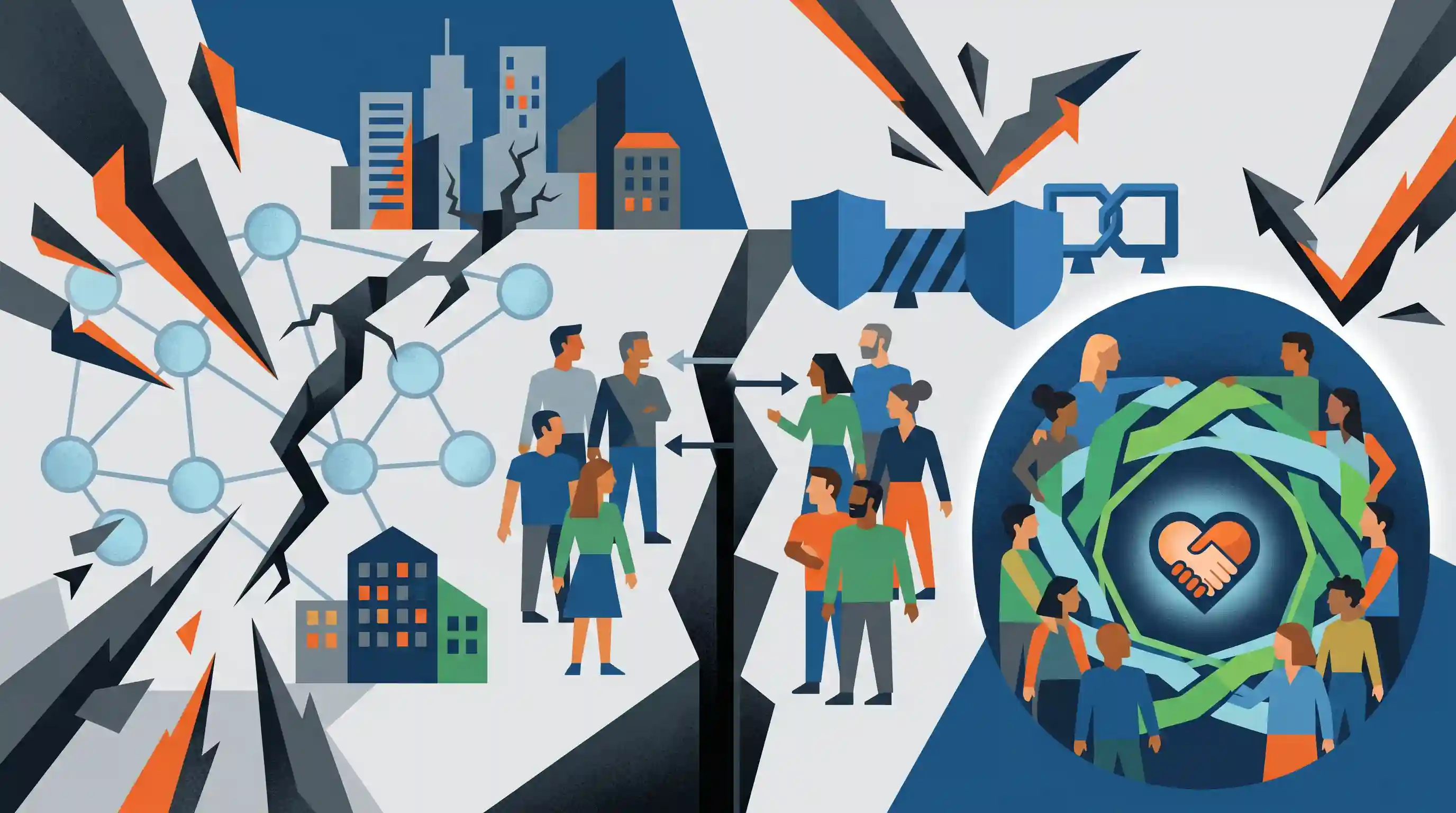
Terrorist attacks are fundamentally designed as psychological warfare, seeking to erode the foundational trust that binds societies together. By instilling fear and provoking polarization, extremists hope to disrupt social cohesion and create a wedge between different communities, or between citizens and the state. Consequently, an effective counter-terrorism strategy must extend beyond traditional law enforcement and military operations. It demands societal resilience, ensuring that citizens do not succumb to fear, suspicion, or communal division, effectively denying terrorists their ultimate objective.
Key Points
- The ultimate objective of terrorism goes beyond physical violence; it aims to inflict psychological damage, break societal trust, and polarize communities.
- Extremist outfits utilize violence to provoke disproportionate state reactions and instill suspicion among citizens, aiming to erode the democratic and social fabric.
- A purely kinetic approach (military/police action) is insufficient; counter-terrorism requires robust societal resilience to ensure the social divide does not widen.
- 'Winning Hearts and Minds' (WHAM) and maintaining communal harmony are essential strategic tools to defeat the underlying ideological goals of terrorism.
Prelims Trap
India's National Counter-Terrorism Policy relies exclusively on kinetic military and police operations.
Counter-terrorism frameworks, including 'PRAHAAR', explicitly mandate a "whole-of-society" approach involving civil society, deradicalization, and psychological operations, not just kinetic military force.
Static Concepts Connected
What is the 'Winning Hearts and Minds' (WHAM) doctrine in counter-insurgency?
- Civic Action: Armed forces undertaking development projects like building schools, medical camps, and infrastructure (e.g., Operation Sadbhavana in J&K).
- Perception Management: Countering extremist propaganda and psychological warfare through strategic communication and media outreach to prevent alienation.
- Military Restraint: Minimizing collateral damage and human rights violations during kinetic operations to prevent local resentment and rebel recruitment.
How do State and Non-State actors interact in Internal Security?
- Radicalization: Adversarial non-state actors (terrorist groups) use psychological warfare to drive wedges between citizens and the state.
- Whole-of-Society: The state leverages positive non-state actors (NGOs, religious leaders, civil society) to build societal resilience and counter extremist narratives.
Cross-Topic Patterns
GS3 Security + GS4 Ethics
Terrorism’s psychological warfare tests societal emotional intelligence and tolerance. Counter-terrorism is thus intrinsically linked to the ethical governance of communal harmony.
Left Wing Extremism (LWE) parallels
The kinetic vs. non-kinetic debate applies heavily to LWE (Naxalism), where security responses must be paired with land rights and tribal development (e.g., SAMADHAN doctrine).

GS3 Mains 2026 will likely ask to evaluate 'whole-of-society' approaches versus purely kinetic methods against psychological warfare.
Linked PYQs · 4
Linked PYQs · 4
- 2023MainsGS3
Winning of 'Hearts and Minds' in terrorism-affected areas is an essential step in restoring the trust of the population. Discuss the measures adopted by the Government in this respect as part of the conflict resolution in Jammu and Kashmir.
- 2025MainsGS3
Terrorism is a global scourge. How has it manifested in India? Elaborate with contemporary examples. What are the counter measures adopted by the State? Explain.
- 2021MainsGS3
Analyse the complexity and intensity of terrorism, its causes, linkages and obnoxious nexus. Also suggest measures required to be taken to eradicate the menace of terrorism.
- 2016MainsGS4
Explain how ethics contributes to social and human well-being.
