ART Centres and Illegal Oocyte Racket Regulation in India
Source:The Hindu ↗
Why It Matters
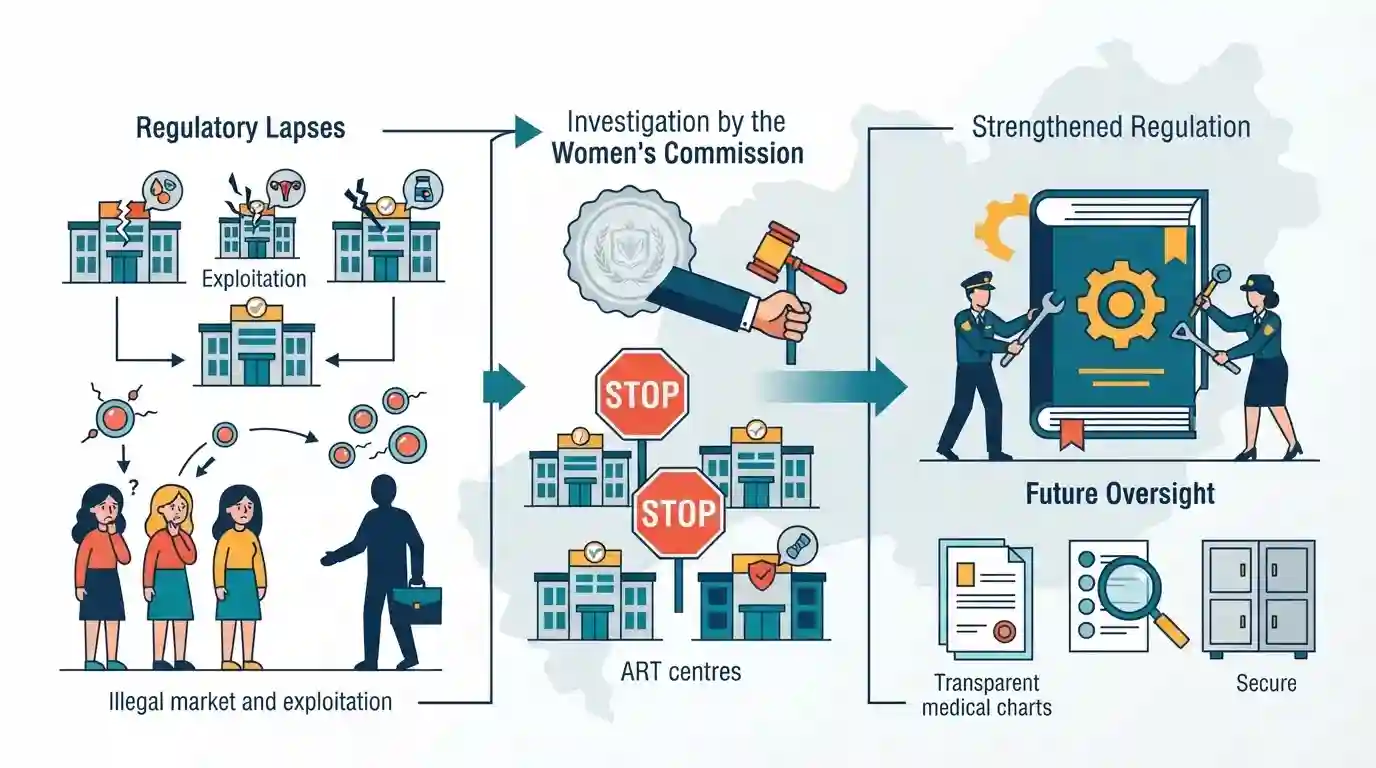
The emergence of illegal oocyte rackets exposes loopholes in the implementation of the Assisted Reproductive Technology (ART) Act, testing the efficacy of statutory women's commissions in curbing exploitation of vulnerable groups in the healthcare sector.
Summary
The Telangana Women’s Commission has issued notices to eight Assisted Reproductive Technology (ART) centres in connection with an illegal oocyte trafficking and commercialization racket. This incident exposes serious vulnerabilities in the implementation of fertility laws, regulatory lapses in monitoring fertility clinics, and the exploitation of vulnerable donors, highlighting the need for rigorous enforcement of the ART Regulation Act and stronger statutory oversight by women's commissions.
Key Points
- The Telangana Women’s Commission issued notices to eight Assisted Reproductive Technology (ART) centres following an investigation into an illegal oocyte (egg) commercial racket.
- The case highlights vulnerabilities and regulatory loopholes in the commercial exploitation of young women and donors within fertility clinics.
- It underscores the role of state-level women’s statutory bodies in safeguarding women's rights and enforcing medical compliance.
- Calls for stricter oversight under the ART Regulation Act to prevent illegal egg donation networks and commercial exploitation.
Important Terms
Assisted Reproductive Technology Regulation Act

An Indian legislation enacted in 2021 to regulate and supervise assisted reproductive technology clinics and banks, prevent misuse, ensure ethical practices, and protect against commercial exploitation of donors.
UPSC context
UPSC GS Paper II (Health Policy and Medical Regulation). Tests understanding of legal frameworks governing medical technologies and ethical issues in healthcare.
Telangana Women Commission
A statutory body established under state legislation to protect women's rights, investigate gender-based crimes, and ensure the proper implementation of laws safeguarding women.
UPSC context
UPSC GS Paper II (Statutory Bodies and Commissions). Evaluates the role and quasi-judicial powers of state-level bodies in protecting vulnerable sections.
ART centres
Specialized medical clinics and fertility banks that provide procedures such as IVF and oocyte retrieval, which must be registered and regulated under the ART Act.
UPSC context
UPSC GS Paper II/III (Vulnerable Sections and Exploitation / Medical Regulation). Focuses on monitoring private medical establishments and preventing black-market exploitation.
Static Concepts Connected
What are the key regulatory provisions and prohibitions under the Assisted Reproductive Technology (Regulation) Act, 2021?
- Mandatory Registration: It mandates the establishment of a National Assisted Reproductive Technology and Surrogacy Registry for registration and monitoring of all ART clinics and banks.
- Gamete Commerce Ban: It explicitly prohibits the commercial trade, sale, or purchase of human gametes (oocytes and sperm), zygotes, and embryos, penalising violations severely.
- Donor Safeguards: It stipulates age criteria, medical testing, and lifetime donation caps for oocyte donors to protect donor health and prevent commercial exploitation.
Cross-Topic Patterns
Medical Regulation meets Socio-Economic Vulnerability
The illegal oocyte trade targets low-income women, bridging medical ethics with social justice, state-level statutory accountability, and the socio-economic vulnerabilities addressed under GS Paper I and II.
Statutory Bodies and Active Enforcement
Statutory commissions flexing investigative powers illustrate the evolving scope of women's rights bodies beyond advisory roles into active penal and administrative compliance.

ART Regulation Act, 2021 provisions (gamete ban, registry rules) paired with state commission powers will likely feature in GS-2 or Prelims.
Linked PYQs · 2
Linked PYQs · 2
- 2012MainsGS2
In the context of Assisted Reproductive Technologies, India has emerged as a hub of commercial surrogacy. What key biological, legal and ethical issues merit consideration while framing the regulation to govern surrogacy in India?
- 2020MainsGS2
Which steps are required for constitutionalization of a Commission ? Do you think imparting constitutionality to the National Commission for Women would ensure greater gender justice and empowerment in India? Give reasons.
