Telangana Showcases AI Agri Transformation at UN FAO Summit
Source:The Hindu ↗
Why It Matters
AI and digital agriculture are rapidly evolving areas directly mentioned in the UPSC GS3 syllabus ('e-technology in the aid of farmers'). Telangana's recognition by a premier UN body provides a high-quality, real-world case study for Mains answers regarding the modernization of agriculture and agricultural extension services.
Summary
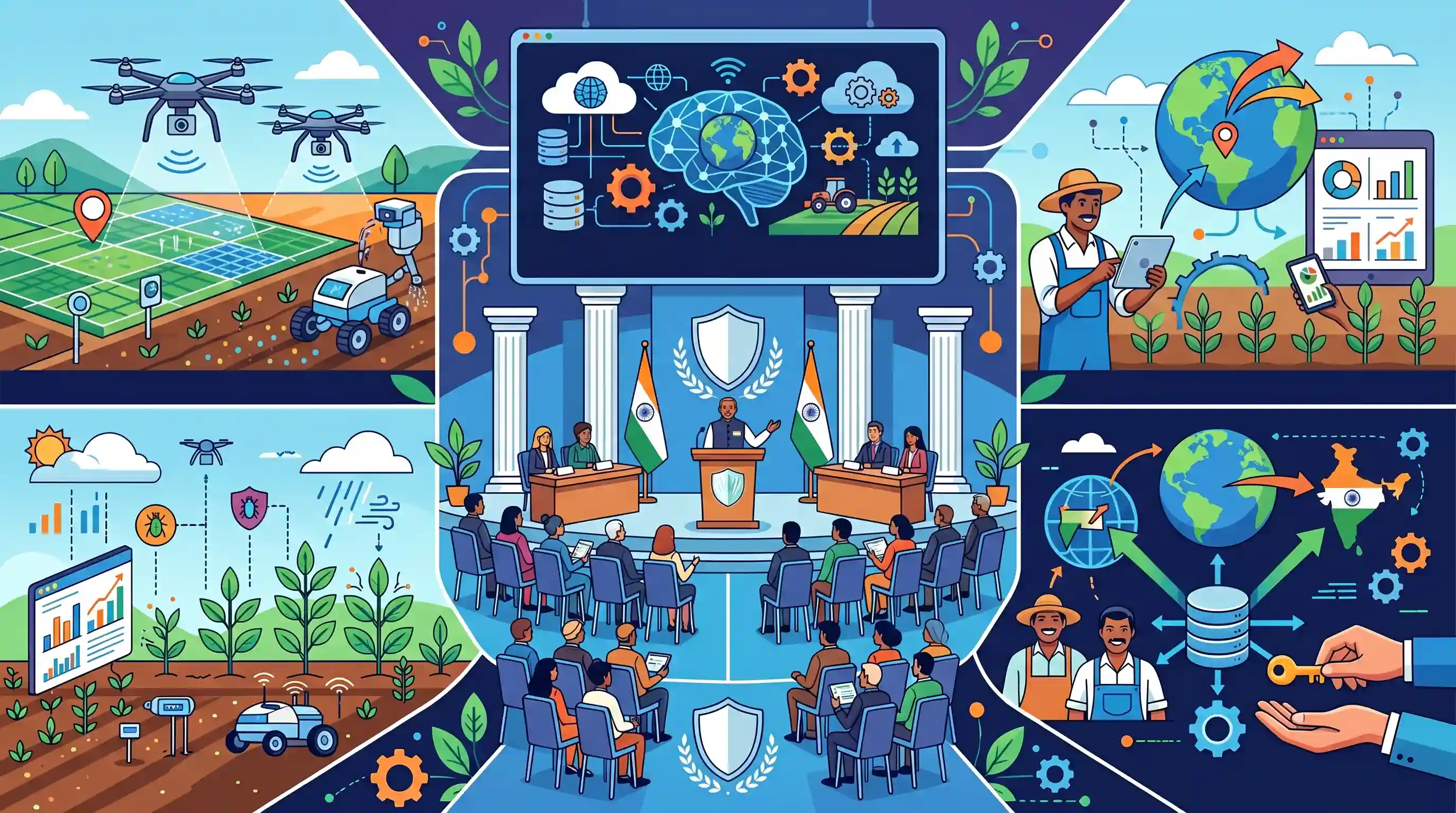
Telangana participated as the sole Indian state at the UN FAO's inaugural 'Global Initiative on AI for Agrifood Systems' meeting in Rome. The state's Agriculture Commissioner showcased Telangana's progressive integration of Artificial Intelligence and IT in agriculture, emphasizing applications like precision farming, crop management, and data-driven decision-making. The global recognition highlights India's sub-national progress in employing e-technology to transform agrifood systems and improve agricultural extension services.
Key Points
- Telangana showcased its AI-driven agricultural initiatives at the UN Food and Agriculture Organization (FAO) meet in Rome.
- The state was the only one from India invited to the inaugural session of the FAO's 'Global Initiative on AI for Agrifood Systems'.
- State representatives highlighted the deployment of AI and IT for precision farming, productivity enhancement, and data-driven crop management.
- The integration of technology aims to strengthen agricultural extension services and facilitate data-driven decision-making for farmers.
Important Terms
Global Initiative on AI for Agrifood Systems

A collaborative platform led by FAO and ITU to integrate Artificial Intelligence across the food value chain, aiming for sustainable, resilient, and equitable agrifood systems worldwide.
UPSC context
GS3: E-technology in the aid of farmers. Tests knowledge of international digital frameworks for agricultural transformation.
Food and Agriculture Organization (FAO)
A specialized UN agency that leads international efforts to defeat hunger, improve nutrition, and ensure food security, acting as a neutral forum for policy negotiation.
UPSC context
GS2: Important International institutions. Relevant for food security, global agricultural standards, and sustainable development goals (SDG 2).
E-technology in the aid of farmers
The use of digital tools like internet services, mobile apps, and AI to provide real-time information, market links, and technical advice to farmers.
UPSC context
GS3: Major syllabus topic. Tests understanding of how ICT improves agricultural productivity and farmer income.
Precision Farming
A technology-driven farm management approach using GPS, IoT, and AI to apply precise amounts of inputs (water, fertilizer) based on specific field variability.
UPSC context
GS3: Agriculture. Key for resource-use efficiency, doubling farmers' income, and climate-resilient farming practices.
Project Saagu Baagu
Telangana's flagship agritech initiative, in partnership with the World Economic Forum, that leverages AI and digital public infrastructure to provide data-driven advisories to farmers.
UPSC context
GS3: Agriculture/E-technology. A successful case study of state-led digital transformation in agrifood systems.
Sub-national Diplomacy
The participation of regional or state governments in international relations and global forums, independent of or complementary to national foreign policy.
UPSC context
GS2: Federalism and International Relations. Relevant for state-level initiatives that gain global recognition or investment.
Prelims Trap
Telangana’s ‘Saagu Baagu’ AI agriculture project is jointly implemented with the UN FAO.
The project is actually a pioneering collaboration between the Telangana government and the World Economic Forum (WEF), although it was showcased at the UN FAO.
Static Concepts Connected
What are the core technological components of Precision Agriculture?
- IoT and Sensors: Collects micro-level field data on soil moisture, temperature, and nutrient levels in real-time to prevent resource wastage.
- Variable Rate Technology: Allows variable, automated application of inputs (water, fertilizer, seeds) across a field based on specific site-level algorithmic data.
- Remote Sensing & Drones: Employs multispectral imaging and AI computer vision for crop health monitoring, early pest detection, and precise pesticide spraying.
What are the key flagship programs managed by the UN FAO?
- Codex Alimentarius: A joint FAO/WHO commission setting international food standards to protect consumer health and ensure fair practices in the food trade.
- GIAHS Program: Globally Important Agricultural Heritage Systems (GIAHS) recognizes outstanding landscapes combining agricultural biodiversity, resilient ecosystems, and traditional farming practices.
- AMIS Platform: Agricultural Market Information System (AMIS) is an inter-agency platform hosted by FAO to enhance food market transparency and policy response.
Cross-Topic Patterns
Agri-Stack and Digital Public Infrastructure (DPI)
Telangana’s ADeX mirrors the Union government's push for an 'Agri-Stack', treating agricultural data as a Digital Public Infrastructure (DPI) to enable seamless credit access and targeted crop advisories.
Sub-national diplomacy (Paradiplomacy)
Telangana representing India at a UN FAO forum highlights the growing trend of 'paradiplomacy', where sub-national entities directly engage in multilateral global platforms for technology transfer and investment.

Expect a multi-statement Prelims question linking AI applications in precision farming with Digital Public Infrastructure (Agri-Stack/ADeX).
Linked PYQs · 2
Linked PYQs · 2
- 2023MainsGS3
How does e-Technology help farmers in production and marketing of agricultural produce? Explain it.
- 2016PrelimsGS1
The FAO accords the status of 'Globally Important Agricultural Heritage System (GIAHS)' to traditional agricultural systems. What is the overall goal of this initiative? 1. To provide modern technology, training in modern farming methods and financial support to local communities of identified GIAHS so as to greatly enhance their agricultural productivity 2. To identify and safeguard eco-friendly traditional farm practices and their associated landscapes, agricultural biodiversity and knowledge systems of the local communities 3. To provide Geographical Indication status to all the varieties of agricultural produce in such identified GIAHS Select the correct answer using the code given below.
