RBI MPC Member Highlights Tax Concessions for Domestic Consumption
Source:Indian Express ↗
Why It Matters
Understanding how fiscal policy (tax concessions) can complement monetary policy to drive domestic growth during periods of external global stress is a fundamental concept for UPSC GS3 Economy.
Summary
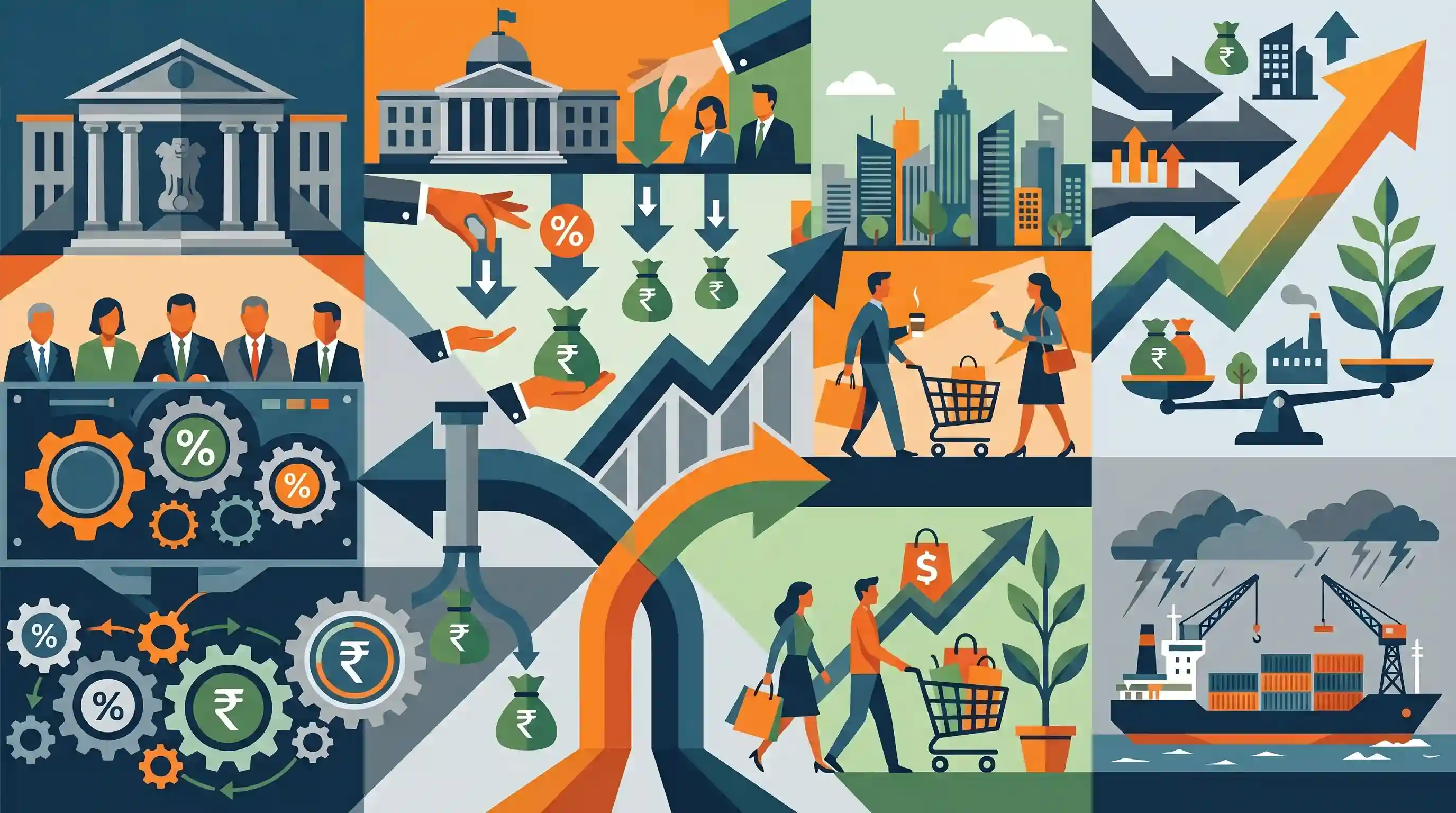
An RBI Monetary Policy Committee (MPC) member has indicated that tax concessions could provide a much-needed boost to domestic consumer spending. This fiscal intervention is deemed particularly significant given the challenging external macroeconomic environment. With global headwinds threatening to slow down export demand, stimulating domestic consumption through targeted tax relief can help sustain the country's economic growth momentum. The observation underscores the critical interplay between fiscal measures and monetary policy in navigating external vulnerabilities and ensuring macroeconomic stability.
Key Points
- An RBI Monetary Policy Committee (MPC) member noted that tax concessions could serve as an effective tool to boost domestic consumer spending.
- The global macroeconomic environment remains challenging, characterized by external headwinds that could dampen export-led growth.
- With external demand potentially weakening, domestic consumption is viewed as a crucial engine for sustaining India's economic growth momentum.
- The perspective highlights the intersection of fiscal policy (tax levers) and monetary policy in managing macroeconomic stability amidst global uncertainties.
Prelims Trap
"The RBI Monetary Policy Committee (MPC) is empowered to recommend tax concessions during economic slowdowns."
The MPC exclusively determines policy interest rates to manage inflation. Tax policies are purely fiscal tools managed by the Central Government, not the RBI or MPC.
Static Concepts Connected
What constitutes Private Final Consumption Expenditure (PFCE) in India's GDP?
- Definition: Total value of final consumption goods and services purchased by resident households and non-profit institutions.
- GDP Share: PFCE forms the largest expenditure component of India's GDP, historically accounting for roughly 58% to 61% of total output.
- Key Drivers: It is highly elastic to changes in disposable income, directly influenced by direct tax rates and inflation.
What is the statutory backing and composition of the Monetary Policy Committee (MPC)?
- Statutory Basis: Constituted under Section 45ZB of the Reserve Bank of India Act, 1934, following the 2016 amendments.
- Composition: Six members in total: three from the RBI (with the Governor as ex-officio Chair) and three appointed by the Central Government.
- Primary Mandate: To determine the policy interest rate (repo rate) required to achieve the mandated inflation target (4% +/- 2%).
Cross-Topic Patterns
Fiscal stimulus vs Inflation targeting
Tax cuts (fiscal) boost consumption but can widen the fiscal deficit, potentially overheating the economy and complicating the RBI's monetary mandate to anchor inflation under the FRBM framework.
Protectionism and domestic consumption reliance
As global headwinds and Western protectionist policies depress external export demand, India's macroeconomic stability relies increasingly on Private Final Consumption Expenditure (PFCE) to sustain GDP growth.

Expect a 2026 prelims statement testing the exact interplay of tax cuts (fiscal) and rate cuts (monetary) on aggregate domestic demand.
Linked PYQs · 4
Linked PYQs · 4
- 2024MainsGS3
What are the causes of persistent high food inflation in India? Comment on the effectiveness of the monetary policy of the RBI to control this type of inflation.
- 2017PrelimsGS1
Which of the following statements is/are correct regarding the Monetary Policy Committee (MPC)? 1. It decides the RBI's benchmark interest rates. 2. It is a 12-member body including the Governor of RBI and is reconstituted every year. 3. It functions under the chairmanship of the Union Finance Minister. Select the correct answer using the code given below:
- 2025MainsGS3
What are the challenges before the Indian economy when the world is moving away from free trade and multilateralism to protectionism and bilateralism? How can these challenges be met?
- 2018MainsGS3
How would the recent phenomena of protectionism and currency manipulations in world trade affect macroeconomic stability of India?
