US National Security Tariffs and Global Trade Protectionism
Source:Indian Express ↗
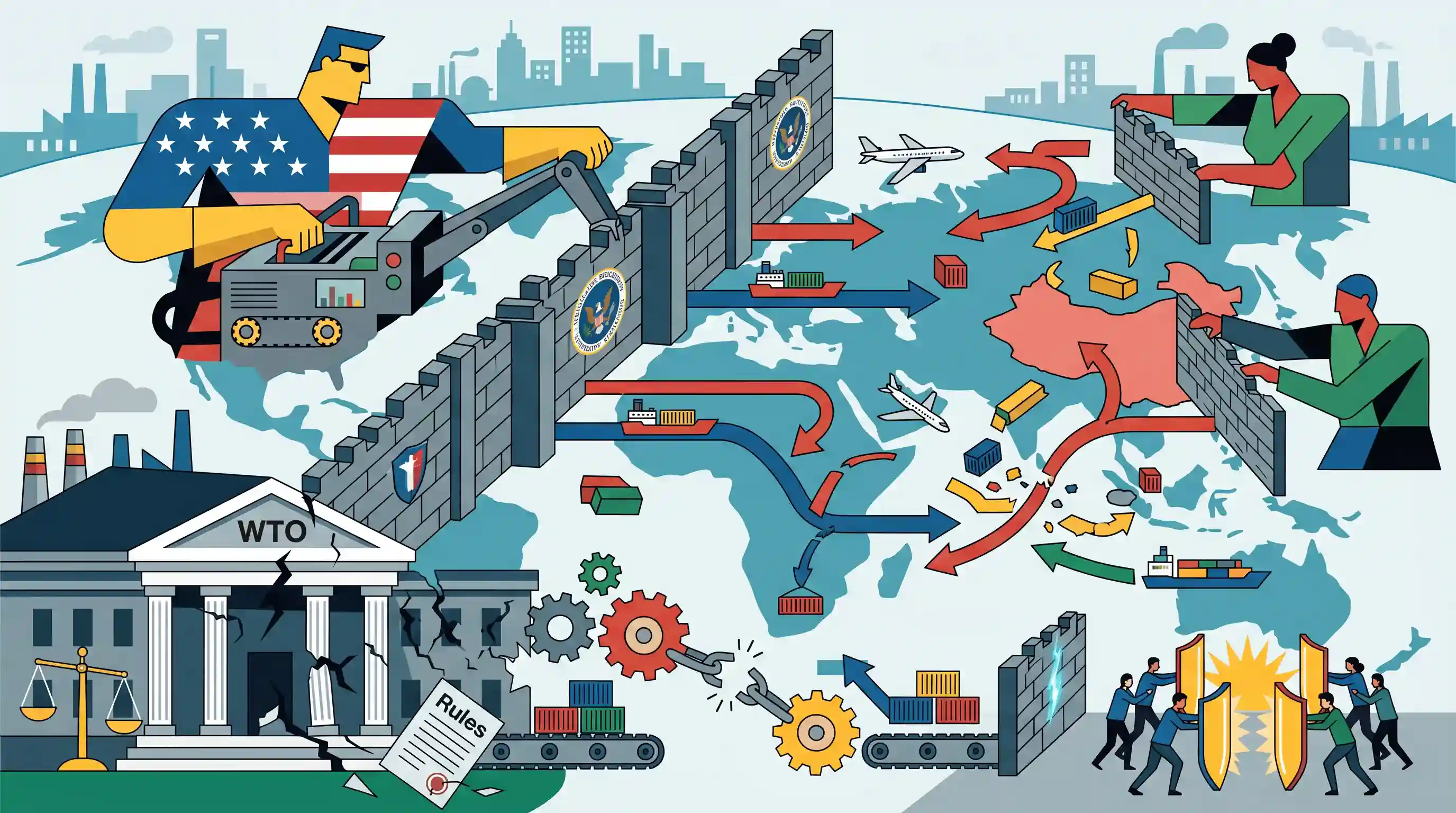
Why It Matters
Understanding how developed nations weaponize 'national security' to enact protectionist policies is critical for grasping the current crisis in multilateralism. It is highly relevant for GS-2 (International Relations) and GS-3 (Economy) questions concerning WTO reforms, global trade wars, and the challenges faced by the Indian economy amid declining free trade.
Summary
The article explains the rising trend of the United States employing national security investigations to justify the imposition of new tariffs and levies on imports. By invoking domestic mechanisms—such as Section 232 of the Trade Expansion Act—and exploiting national security exceptions in WTO rules, the US is bypassing standard multilateral trade commitments. This aggressive trade posture aims to protect domestic industries but simultaneously accelerates the shift from free trade to global protectionism, undermines the World Trade Organization, and disrupts global supply chains.
Key Points
- The US has increasingly launched national security investigations under domestic laws (like Section 232) to impose unilateral tariffs on imports, arguing that reliance on foreign goods threatens its defense base.
- These moves heavily rely on the broad interpretation of the 'national security exception' under WTO's GATT Article XXI, which allows nations to bypass standard trade rules.
- This marks a distinct shift away from multilateral, rules-based free trade towards protectionism, directly triggering retaliatory tariffs and fueling a global trade war.
- The systemic circumvention of WTO norms undermines the institution's authority and dispute settlement mechanisms, compelling emerging economies to navigate an increasingly fragmented and bilateral global trade environment.
Important Terms
Section 232 of the Trade Expansion Act of 1962

A US law authorizing the President to restrict imports or impose tariffs if the Department of Commerce determines those imports threaten national security.
UPSC context
GS-2 (International Relations/Global Policies); GS-3 (Economy). Tests understanding of unilateral trade actions and their impact on global supply chains.
GATT Article XXI (Security Exception)
A provision in the GATT/WTO framework allowing member nations to bypass standard trade obligations to protect "essential security interests," often invoked during wars or international emergencies.
UPSC context
GS-2 (International Institutions). Tests knowledge of WTO legal loopholes and the tension between national sovereignty and global trade rules.
World Trade Organization (WTO)
An intergovernmental organization established in 1995 that regulates international trade, facilitates negotiations, and resolves disputes based on a rules-based framework.
UPSC context
GS-2 (International Organizations); GS-3 (Economy). Tests knowledge of global governance, dispute resolution, and India’s trade interests.
Protectionism
The economic policy of shielding domestic industries from foreign competition through trade barriers like tariffs, import quotas, or government subsidies.
UPSC context
GS-3 (Economy). Tests conceptual understanding of trade barriers, their impact on inflation, innovation, and domestic manufacturing.
Multilateralism
A system of global governance where multiple nations coordinate actions and adhere to shared rules and international institutions (e.g., the WTO) to manage common issues.
UPSC context
GS-2 (International Relations). Tests understanding of the shifts from global cooperation to unilateralism/economic nationalism.
Trade War
An economic conflict where countries retaliate against each other by progressively raising import tariffs or imposing other trade barriers, often disrupting global markets.
UPSC context
GS-3 (Economy). Tests knowledge of retaliatory trade dynamics and their consequences for global economic growth and diplomatic relations.
Prelims Trap
GATT Article XXI allows countries to impose national security tariffs only after prior WTO authorization.
Article XXI is treated as 'self-judging'. Countries invoke it unilaterally without prior WTO approval, which is exactly why nations use it to bypass multilateral rules.
Static Concepts Connected
What are the three standard trade remedy measures allowed under the WTO framework?
- Anti-dumping Duties: Levied on imports priced below fair market value in the exporting country to protect domestic industries.
- Countervailing Duties: Imposed to neutralize the negative trade effects of foreign government subsidies on imported goods.
- Safeguard Measures: Temporary restrictions (tariffs or quotas) applied to protect a specific domestic industry from an unexpected, sudden surge in imports.
What is the WTO Appellate Body and why is it currently paralyzed?
- Adjudicatory Role: It is the highest adjudicating body of the WTO, hearing appeals from panel reports in disputes between member countries.
- Judicial Paralysis: Since 2019, the US has blocked the appointment of new judges, rendering the body unable to hear appeals or issue binding rulings on trade disputes.
Cross-Topic Patterns
WTO bypass fuels plurilateral trade agreements
As unilateral tariffs undermine the WTO, nations are rapidly pivoting to regional or plurilateral frameworks like IPEF and bilateral FTAs to secure predictable trade terms.
Protectionism meets critical supply chain resilience
US tariff weaponization reinforces the need for mechanisms like the India-Japan-Australia Supply Chain Resilience Initiative (SCRI) to de-risk global trade from unilateral economic shocks.

Expect a 2026 Prelims question mixing WTO trade remedies (Anti-dumping, CVD) with the GATT Article XXI national security exception.
Linked PYQs · 3
Linked PYQs · 3
- 2025MainsGS3
What are the challenges before the Indian economy when the world is moving away from free trade and multilateralism to protectionism and bilateralism? How can these challenges be met?
- 2018MainsGS2
What are the key areas of reform if the WTO has to survive in the present context of "Trade War', especially keeping in mind the interest of India?
- 2020PrelimsGS1
With reference to Trade-Related Investment Measures (TRIMS), which of the following statements is/are correct? 1. Quantitative restrictions on imports by foreign investors are prohibited. 2. They apply to investment measures related to trade in both goods and services. 3. They are not concerned with the regulation of foreign investment. Select the correct answer using the code given below:
