Protectionist Trade Policies and Economic Nationalism
Source:Indian Express ↗
Why It Matters
It demonstrates the expansion of protectionist policies into non-traditional sectors like entertainment and services, which can impact global trade relations and signal a further departure from free trade norms.
Summary
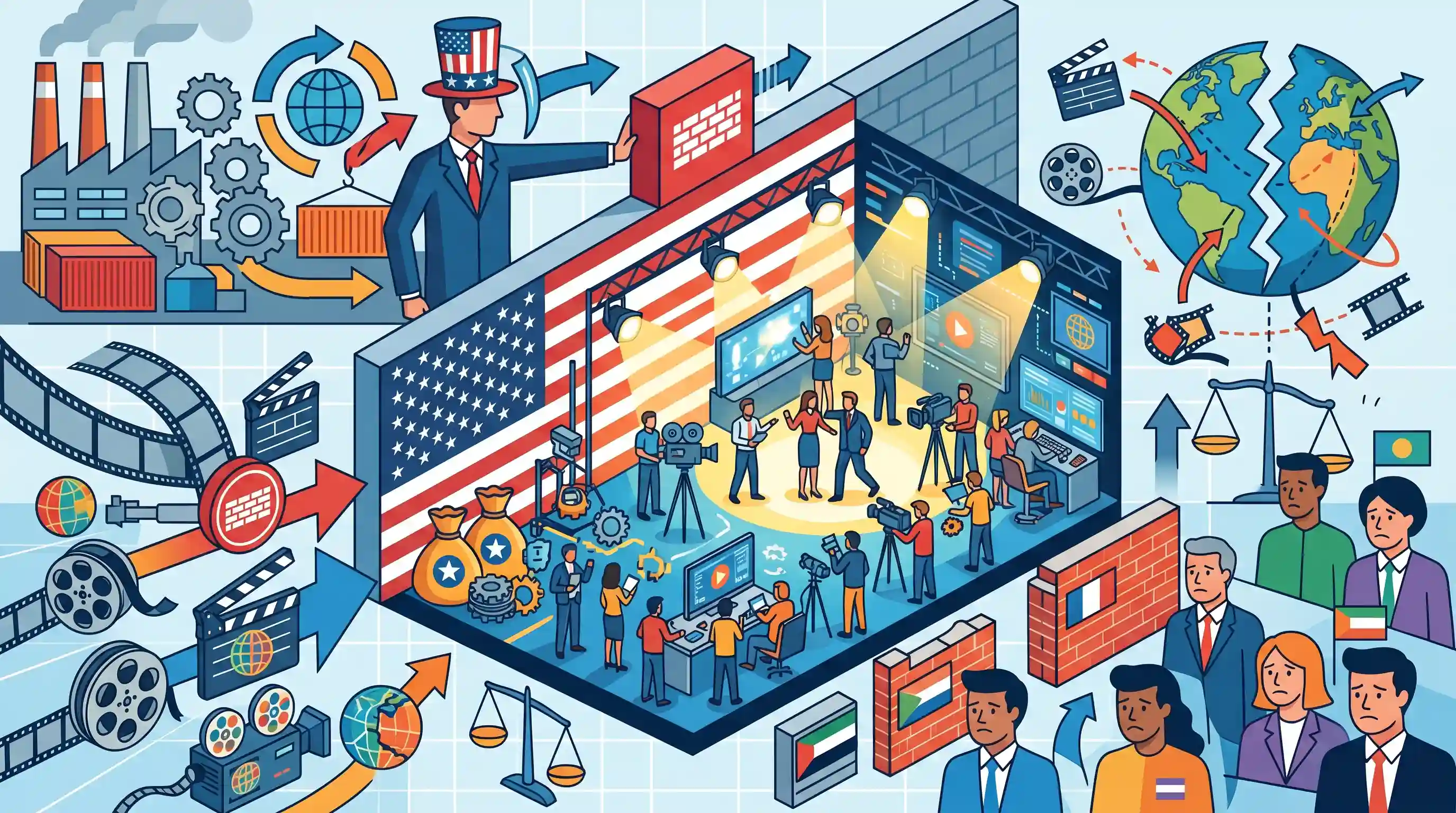
The article discusses the recent proposal by US President Donald Trump to impose tariffs on movies produced outside the United States. This move indicates an expansion of his 'America First' protectionist trade policies, shifting focus from traditional manufacturing goods to the entertainment and cultural sectors. The primary objective is to incentivize domestic film production and protect American jobs in the entertainment industry. This development reflects a broader global trend of rising economic nationalism and highlights the potential disruption of international trade norms, particularly concerning services and cultural goods.
Key Points
- US President Donald Trump is targeting movies made outside the United States with new tariffs.
- The policy aims to protect domestic jobs in the entertainment sector by discouraging offshore film production by US studios.
- This move marks a significant expansion of protectionist trade measures, extending beyond traditional manufacturing goods to include cultural and entertainment products.
- Such measures reinforce a broader global trend towards economic nationalism and raise concerns about potential trade barriers affecting international services and cultural exchange.
Prelims Trap
The WTO permanently prohibits customs duties on digital goods like movies and software.
The WTO Moratorium on E-transmissions is NOT a permanent treaty. It is a temporary, non-binding agreement historically renewed at Ministerial Conferences (like MC13).
Static Concepts Connected
What is the WTO Moratorium on Electronic Transmissions?
- Origins: First agreed in 1998, WTO members pledged not to impose customs duties on electronic transmissions (which includes digital movies and software).
- Renewal nature: It is a temporary measure that must be periodically extended at WTO Ministerial Conferences. It is currently under immense pressure.
- India's stance: India and South Africa oppose making it permanent, citing massive tariff revenue losses as trade shifts from physical to digital goods.
How are cultural and entertainment products governed in global trade?
- GATS framework: Trade in audiovisual services is governed by the General Agreement on Trade in Services (GATS), distinct from GATT which handles physical merchandise.
- Cultural Exception: A political concept (championed by France) arguing cultural goods/services should be exempt from standard free-trade rules to prevent foreign cultural dominance.
Cross-Topic Patterns
US digital tariffs hit India's AVGC sector
India's Animation, Visual Effects, Gaming, and Comics (AVGC) sector relies heavily on US studio outsourcing. Service protectionism directly threatens this high-growth pillar of India's 'Orange Economy'.
Digital Trade Walls and the Splinternet
Tariffs on streaming and digital entertainment signal a shift from taxing physical goods to building digital trade barriers, complicating multilateral agreements and fragmenting the global digital economy.

Expect a 2026 prelims statement testing the temporary nature of the WTO Moratorium on E-transmissions alongside India's AVGC sector.
Linked PYQs · 4
Linked PYQs · 4
- 2025MainsGS3
What are the challenges before the Indian economy when the world is moving away from free trade and multilateralism to protectionism and bilateralism? How can these challenges be met?
- 2018MainsGS3
How would the recent phenomena of protectionism and currency manipulations in world trade affect macroeconomic stability of India?
- 2012MainsGS2
Discuss the likely negative impact of the protectionist measures proposed by the US on India's software industry.
- 2025MainsGS2
"With the waning of globalization, post-Cold War world is becoming a site of sovereign nationalism.” Elucidate.
