US steel tariffs and Indian retaliatory trade protection measures
Source:Indian Express ↗
Why It Matters
This topic is crucial for understanding the contemporary shift from multilateralism to protectionism, the impact of global trade wars on India's macroeconomic stability, and the strategic complexities of India-US relations amidst shifting Middle Eastern geopolitics.
Summary
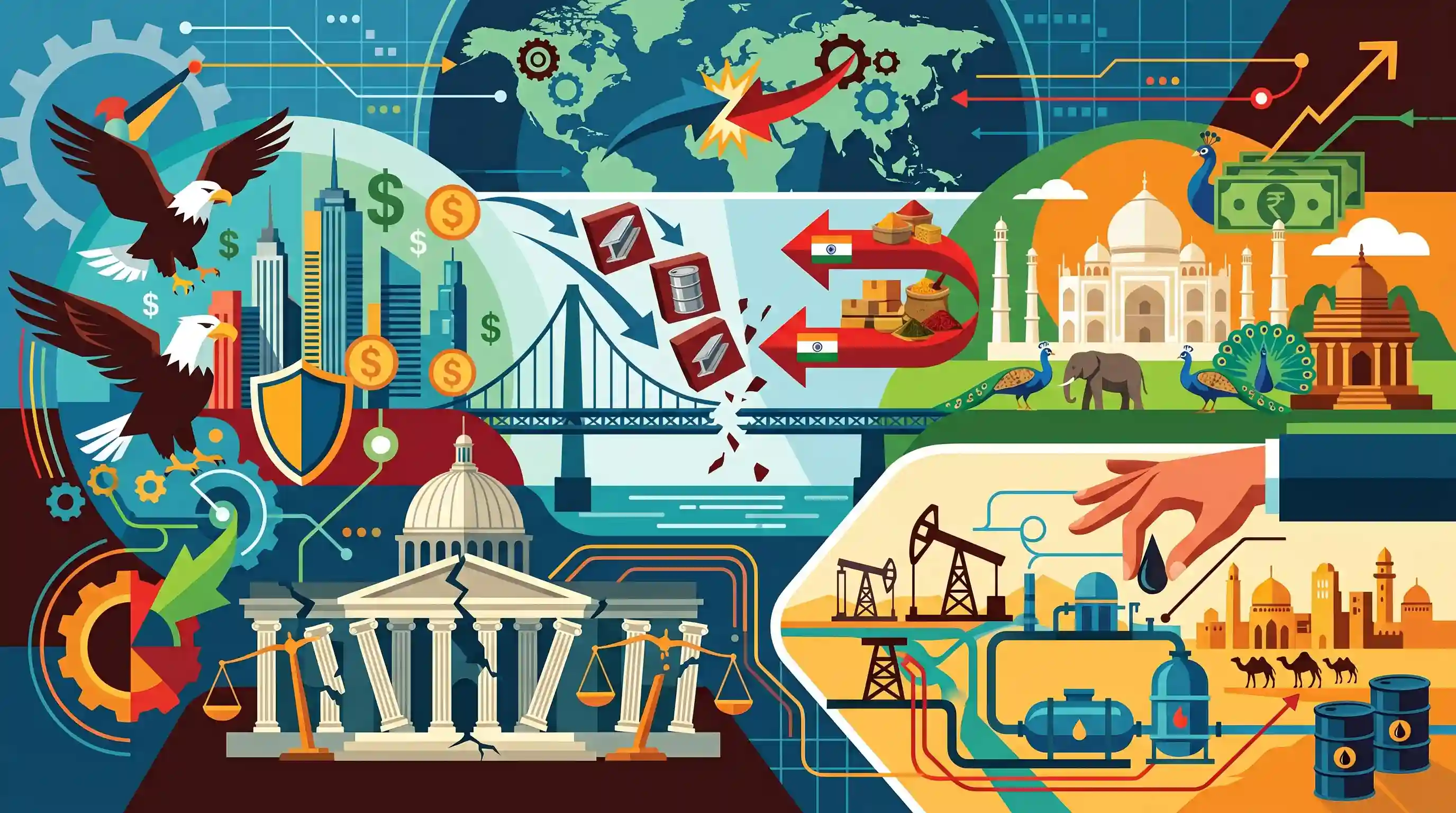
The article discusses the escalating trade tensions between the United States and India, reflecting a broader global shift towards protectionism. Following the US administration's decision to impose tariffs on imported steel and aluminum, India implemented retaliatory tariffs on various US goods. This trade friction challenges World Trade Organization (WTO) norms and impacts India-US bilateral relations. Additionally, the piece highlights diplomatic developments, noting the US President's visit to the Gulf, which underscores the intersection of international trade policy with energy security and Middle Eastern geopolitics.
Key Points
- The US administration instituted import tariffs on steel and aluminum, prompting global concerns over an escalating trade war and the weakening of multilateral trade frameworks.
- In response to the protectionist measures by the US, India announced retaliatory tariffs on a range of American imports, including agricultural products like apples and almonds.
- These tit-for-tat tariff escalations challenge the dispute resolution mechanisms of the World Trade Organization (WTO) and introduce friction into India-US bilateral ties.
- Concurrently, US President Donald Trump's visit to the Gulf highlights ongoing geopolitical realignments in the Middle East, balancing arms sales, regional alliances, and energy security.
Important Terms
World Trade Organization (WTO)

An intergovernmental organization established in 1995 to regulate international trade, ensure non-discrimination, and provide a binding dispute settlement mechanism for its 164 member states.
UPSC context
GS Paper II: International Relations/Institutions. Tests knowledge of multilateralism and global trade governance.
Protectionism
The economic policy of restricting imports through tariffs, quotas, or subsidies to shield domestic industries and employment from foreign competition.
UPSC context
GS Paper III: Economy/Trade Policy. Evaluates understanding of trade barriers and de-globalization trends.
Retaliatory Tariffs
Duties imposed by a country in response to trade barriers placed on its exports, aimed at pressuring the original country to lower its tariffs.
UPSC context
GS Paper II: International Relations. Relevant for India-US bilateral trade disputes and WTO compliance.
General Agreement on Tariffs and Trade (GATT)
A 1947 multilateral treaty designed to lower trade barriers; it served as the provisional predecessor to the WTO and continues as a foundational text (GATT 1994).
UPSC context
GS Paper II: International Relations. Tests historical evolution of global trade regimes.
Section 232 (Trade Expansion Act)
A provision of the US Trade Expansion Act of 1962 granting the President authority to impose tariffs on imports deemed a threat to national security.
UPSC context
GS Paper II: Effect of Policies of Developed Countries. Specific legal basis for US-India tariff friction.
Most Favoured Nation (MFN)
A core WTO principle requiring a member to treat all other members equally, applying the same trade conditions to all partners without discrimination.
UPSC context
GS Paper II/III: International Trade. Fundamental concept in trade negotiations and dispute resolution.
Prelims Trap
Retaliatory tariffs imposed by India are a form of Anti-Dumping Duty (ADD) to counter US imports.
Retaliatory tariffs suspend equivalent concessions in response to unjustified safeguard measures. ADD targets goods sold below fair market value. They are distinct WTO tools.
Static Concepts Connected
What is the GATT Article XXI "National Security Exception"?
- Core Principle: Allows WTO member nations to breach their trade obligations if necessary to protect their essential security interests.
- Recent Usage: Frequently invoked by major powers (e.g., US steel/aluminum tariffs) to bypass standard WTO dispute settlement mechanisms.
- Dispute impact: Its highly subjective nature makes WTO rulings difficult, risking a breakdown of the rules-based multilateral trading system.
What are the three main Trade Defense Instruments under WTO?
- Anti-dumping Duty: Imposed on goods exported at a price lower than their normal value in the home market.
- Countervailing Duty: Tariffs neutralizing the negative effects of subsidies provided by the exporting country's government.
- Safeguard Measures: Temporary restrictions (tariffs or quotas) against an unexpected surge in imports to protect domestic industry.
Cross-Topic Patterns
Strategic alignment vs. Trade friction
While India and the US deepen strategic defense ties (Quad, iCET), trade relations consistently clash over protectionist tariffs and differing visions for WTO structural reforms.
Protectionism & macroeconomic stability
Unilateral tariffs disrupt global supply chains, directly impacting developing economies by raising essential input costs (like steel) and threatening their export-led economic growth models.

Expect a multi-statement Prelims question testing the difference between Safeguard Duties, Countervailing Duties, and Retaliatory Tariffs.
Linked PYQs · 5
Linked PYQs · 5
- 2018MainsGS2
What are the key areas of reform if the WTO has to survive in the present context of "Trade War', especially keeping in mind the interest of India?
- 2019MainsGS2
‘What introduces friction into the ties between India and the United States is that Washington is still unable to find for India a position in its global strategy, which would satisfy India's national self-esteem and ambitions.’ Explain with suitable examples.
- 2025MainsGS3
What are the challenges before the Indian economy when the world is moving away from free trade and multilateralism to protectionism and bilateralism? How can these challenges be met?
- 2018MainsGS3
How would the recent phenomena of protectionism and currency manipulations in world trade affect macroeconomic stability of India?
- 2025MainsGS2
"Energy security constitutes the dominant kingpin of India's foreign policy, and is linked with India's overarching influence in Middle Eastern countries.” How would you integrate energy security with India's foreign policy trajectories in the coming years?
