US Tariff Regimes and Macroeconomic Impacts on Global Trade
Source:Indian Express ↗
Why It Matters
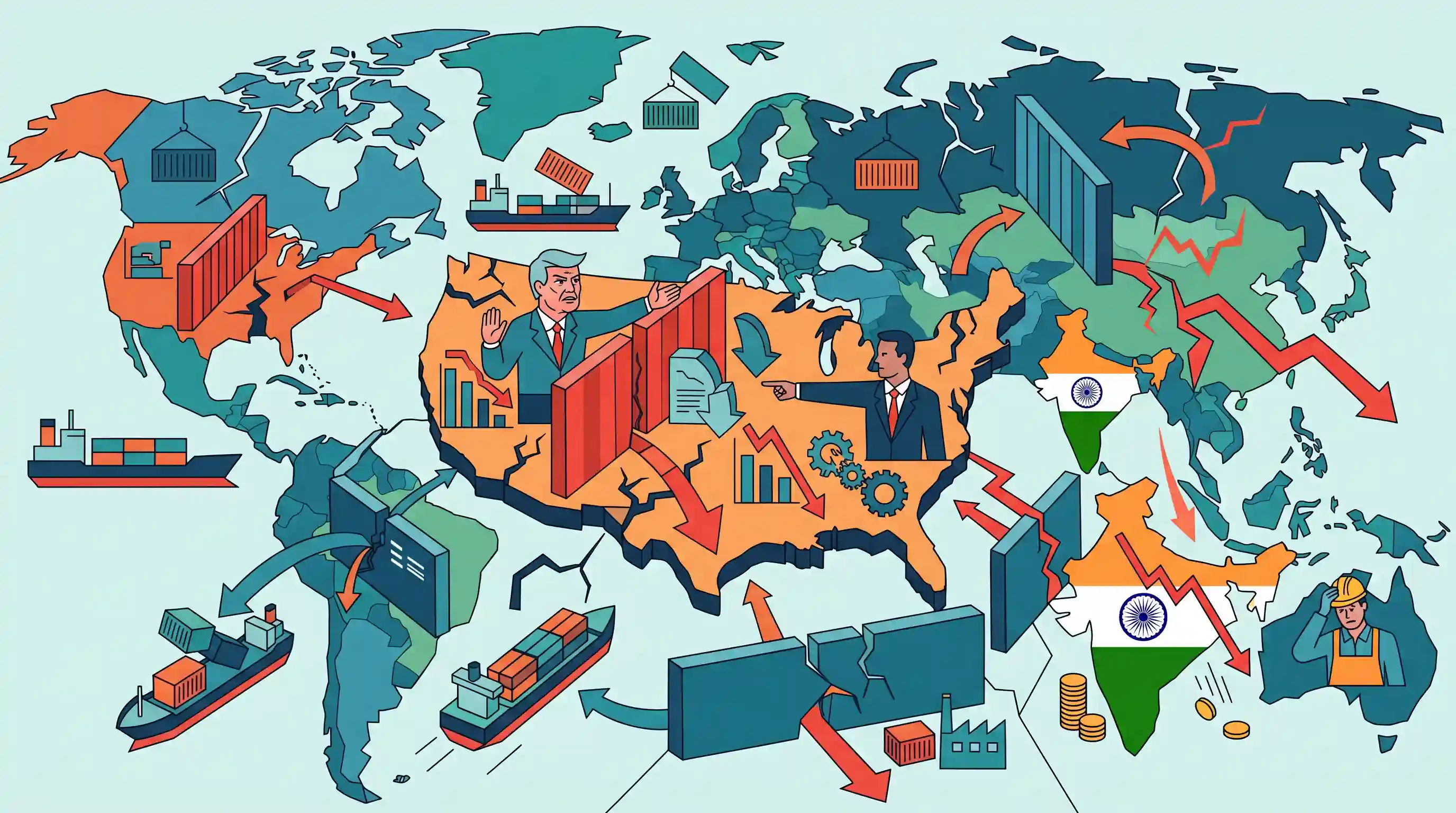
Understanding the real-world consequences of US tariffs and the ensuing political discourse provides critical insights into the shift from multilateralism to protectionism. For UPSC aspirants, this serves as a contemporary case study of how trade wars and sovereign nationalism affect macroeconomic stability, directly aligning with syllabus topics on global economic trends and their impact on India.
Summary
The article analyzes the recent contraction of the US economy, contextualizing it within the ongoing debate over protectionist trade policies. While economic analysts often point to aggressive tariffs as a driver of the slowdown—citing inflated consumer costs and disrupted supply chains—political figures like Donald Trump have defended the tariffs, instead attributing the economic contraction to the policies of the Biden administration. This scenario highlights the complex interplay between protectionism, domestic political narratives, and macroeconomic stability, while also raising concerns about the potential negative spillover effects of US trade wars on global growth and emerging markets like India.
Key Points
- The contraction of the US economy has sparked intense debate regarding the macroeconomic impact of aggressive tariff regimes and protectionist trade policies.
- Economically, high tariffs tend to inflate domestic prices, raise input costs for manufacturers, and invite retaliatory measures, all of which can contribute to an economic slowdown.
- Political leaders often defend tariffs as tools for protecting national interests, frequently attributing ensuing economic contractions to rival political administrations rather than the trade policies themselves.
- A tariff-induced economic downturn in the US threatens global macroeconomic stability, presenting spillover risks for emerging markets like India in the form of reduced export demand and heightened financial volatility.
Important Terms
World Trade Organization (WTO)

An intergovernmental organization established in 1995 that regulates international trade and settles disputes. It operates on a rules-based system to ensure trade flows predictably among its 164 member nations.
UPSC context
UPSC GS Paper II/III: Essential for understanding multilateral trade agreements, dispute settlement mechanisms, and India’s stance on global trade rules.
US Federal Reserve (The Fed)
The central banking system of the United States that manages monetary policy through interest rates. Its decisions significantly influence global liquidity, exchange rates, and capital flows.
UPSC context
UPSC GS Paper III: Tests knowledge of global macroeconomic linkages and the impact of Western monetary policy on Indian markets.
Protectionism
Economic policy of restricting imports through tariffs or quotas to shield domestic industries from foreign competition. While protecting local jobs, it often leads to higher consumer prices and trade tensions.
UPSC context
UPSC GS Paper III: Important for analyzing trade wars, domestic manufacturing (Make in India), and impacts on global supply chains.
Tariffs
Taxes imposed by a government on imported goods to raise their domestic price. They serve as a tool for protectionism and can trigger retaliatory "trade wars" between nations.
UPSC context
UPSC GS Paper III: Relates to trade deficits, inflation, and the reciprocal tariff debates often seen in US-India trade relations.
De-globalization
A trend of declining global economic integration characterized by rising trade barriers, reshoring of supply chains, and a retreat from multilateral cooperation toward national self-sufficiency.
UPSC context
UPSC GS Paper II/III: Relevant for essays on shifting global orders, protectionism, and the future of India's export-led growth.
Spillover Effects
Economic events or policy changes in one nation that significantly impact others through trade or capital flows, such as US interest rate hikes affecting Indian markets.
UPSC context
UPSC GS Paper III: Tests the ability to link international events to domestic economic performance, specifically capital flight and currency volatility.
Prelims Trap
Higher import tariffs inherently check domestic inflation by promoting local manufacturing.
Aspirants confuse self-reliance with price stability. Tariffs on intermediate goods raise input costs for domestic manufacturers, directly triggering cost-push inflation rather than lowering prices.
Static Concepts Connected
How do protectionist tariffs trigger domestic cost-push inflation?
- Input cost spike: Tariffs artificially increase the landed price of essential imported raw materials and intermediate goods for domestic industries.
- Consumer burden: Faced with reduced access to cheaper foreign alternatives, manufacturers pass these heightened production costs down to final consumers, driving inflation.
What are the primary economic spillover effects of a US slowdown on India?
- Export contraction: A contracting US economy directly reduces aggregate demand for Indian exports, heavily impacting IT services, pharmaceuticals, and textiles.
- Capital flight: Global risk aversion often prompts Foreign Portfolio Investors (FPIs) to withdraw from emerging markets, putting depreciative pressure on the Rupee.
- Currency pressure: A weaker Rupee makes crude oil and critical imports more expensive, worsening India's current account deficit and imported inflation.
Cross-Topic Patterns
Unilateral tariffs & WTO Appellate Body crisis
The bypass of WTO norms for tit-for-tat tariffs connects directly to the prolonged paralysis of the WTO's dispute settlement mechanism, a recurring UPSC IR and trade theme.
Protectionism accelerating 'China Plus One'
Tariff-induced supply chain disruptions are accelerating 'friend-shoring', testing India's macroeconomic capacity to absorb migrating Global Value Chains (GVCs) via domestic PLI schemes.

Expect a 2026 Prelims question linking US tariff-induced cost-push inflation to WTO bypass mechanisms and FPI capital flight from India.
Linked PYQs · 4
Linked PYQs · 4
- 2025MainsGS3
What are the challenges before the Indian economy when the world is moving away from free trade and multilateralism to protectionism and bilateralism? How can these challenges be met?
- 2018MainsGS3
How would the recent phenomena of protectionism and currency manipulations in world trade affect macroeconomic stability of India?
- 2018MainsGS2
What are the key areas of reform if the WTO has to survive in the present context of "Trade War', especially keeping in mind the interest of India?
- 2025MainsGS2
"With the waning of globalization, post-Cold War world is becoming a site of sovereign nationalism.” Elucidate.
