United States Trade Policy Shift Towards Protectionist Tariffs
Source:Indian Express ↗
Why It Matters
Understanding the shift of major global economies like the US towards protectionism is critical for UPSC aspirants. It directly links to GS Paper 3 topics on the effects of liberalization on the economy, changes in industrial policy, and the impact of global trade wars on India's macroeconomic stability.
Summary
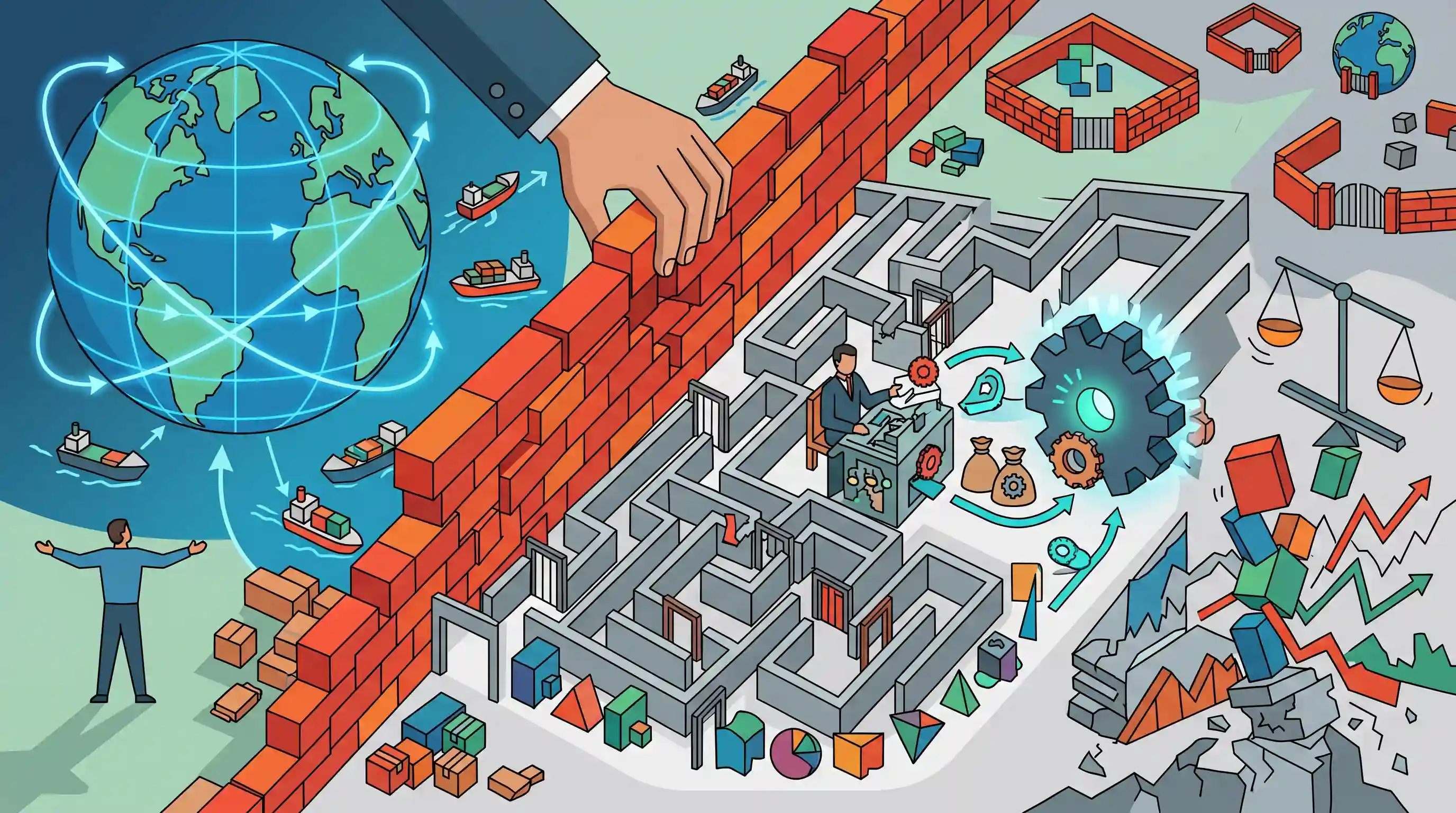
The article discusses the significant shift in United States trade policy under the Trump administration, characterized by the imposition of widespread tariffs. To mitigate the domestic impact, the US has created a complex process for companies to seek exemptions. This bureaucratic mechanism is being likened to India's historical 'Licence-Permit Raj', where discretionary government approvals dictated economic activity. The new US system threatens to encourage rent-seeking, political lobbying, and market distortion, while signaling a broader global shift away from free trade and multilateralism towards protectionism.
Key Points
- The US is implementing broad and sweeping tariffs under the Trump administration, effectively abandoning its longstanding role as a champion of free trade.
- To manage the impact of these tariffs on domestic businesses, the US administration has introduced a complex system of exemptions and waivers.
- Economists compare this new tariff waiver mechanism to India's pre-1991 'Licence-Permit Raj', characterized by heavy government intervention, quotas, and bureaucratic control over imports.
- Such a discretionary exemption system risks breeding rent-seeking behavior, heavy lobbying, and bureaucratic inefficiencies, ultimately distorting market dynamics.
- This shift towards protectionism poses significant challenges for global supply chains, international trade rules managed by the WTO, and export-oriented economies including India.
Important Terms
Licence-Permit Raj

India's pre-1991 economic system characterized by strict government regulations, bureaucratic 'red tape', and mandatory licensing for private businesses to operate.
UPSC context
GS Paper 3 (Indian Economy); relevant for comparing historical Indian policy with contemporary global protectionist trends and bureaucratic inefficiencies.
Protectionism
Economic policy of restricting imports from other countries through methods such as tariffs, import quotas, and government subsidies to protect domestic industries.
UPSC context
GS Paper 3 (Effects of liberalization); tests understanding of trade barriers and their impact on global supply chains and inflation.
Multilateralism
An international system where multiple nations work together through organizations and treaties to resolve global issues and regulate trade fairly.
UPSC context
GS Paper 2 (International Relations); crucial for discussing the shift from global cooperation to unilateral trade actions and bilateralism.
Tariff
A tax imposed by a government on imported goods or services, used to protect domestic producers and as a tool in trade negotiations.
UPSC context
GS Paper 3 (Economy); important for understanding fiscal policy, trade wars, and their macroeconomic impact on consumers and producers.
World Trade Organization (WTO)
The only global international organization dealing with the rules of trade between nations, founded in 1995 to ensure smooth, predictable, and free trade.
UPSC context
GS Paper 2 (International Institutions); essential for analyzing trade dispute settlement mechanisms and global governance challenges.
Rent-seeking
The act of seeking to increase one's share of existing wealth by manipulating the political environment rather than through productive economic activity or innovation.
UPSC context
GS Paper 3 (Economy) and Paper 4 (Ethics); tests knowledge of market distortions, corruption risks, and the impact of discretionary government power.
Prelims Trap
Tariff exemption mechanisms lower trade barriers and promote free market competition.
Exemptions based on bureaucratic discretion act as non-tariff barriers. They distort markets and foster rent-seeking rather than promoting genuine free competition.
Static Concepts Connected
What is "Rent-Seeking" in macroeconomic terms?
- Definition: Seeking to increase one's share of existing wealth without creating new wealth or adding value to the economy.
- Mechanism: Often involves lobbying the government for subsidies, tariff protection, exclusive licenses, or favorable regulations.
- Economic Impact: Leads to inefficient resource allocation, stifles innovation, and creates deadweight loss in the economy.
What characterized India's pre-1991 "Licence-Permit Raj"?
- Industrial Licensing: Strict mandatory government approvals required to set up, expand, or change product lines in the manufacturing sector.
- Import Substitution: High tariffs and strict quotas (Quantitative Restrictions) designed to discourage imports and forcefully protect domestic industry.
- Monopolies Control: The MRTP Act restricted large firms from expanding to prevent wealth concentration, inadvertently stifling economies of scale.
Cross-Topic Patterns
US Protectionism + India's Export Strategy
As the US erects discretionary tariff barriers, India's PLI schemes and export-led growth models face headwinds, necessitating diversification towards Global South markets and FTAs like India-Middle East-Europe Economic Corridor (IMEC).
WTO Crisis + Unilateral Tariffs
The shift towards unilateral tariff waivers undermines the WTO's Most-Favored-Nation (MFN) principle, reflecting the broader paralysis of the WTO's dispute settlement mechanism and a return to mercantilism.

Prelims 2026: Expect conceptual statements on 'rent-seeking' linked with Non-Tariff Barriers and WTO's Most-Favored-Nation principles.
Linked PYQs · 2
Linked PYQs · 2
- 2025MainsGS3
What are the challenges before the Indian economy when the world is moving away from free trade and multilateralism to protectionism and bilateralism? How can these challenges be met?
- 2018MainsGS3
How would the recent phenomena of protectionism and currency manipulations in world trade affect macroeconomic stability of India?
