Precision Oncology and Personalized Care for Uterine Cancer Care
Source:The Hindu ↗
Why It Matters
Demonstrates the real-world application of biotechnology (genomics, molecular markers like microsatellite DNA) in addressing major public health challenges, highly relevant for GS3 Science & Tech and GS2 Health NCD management.
Summary
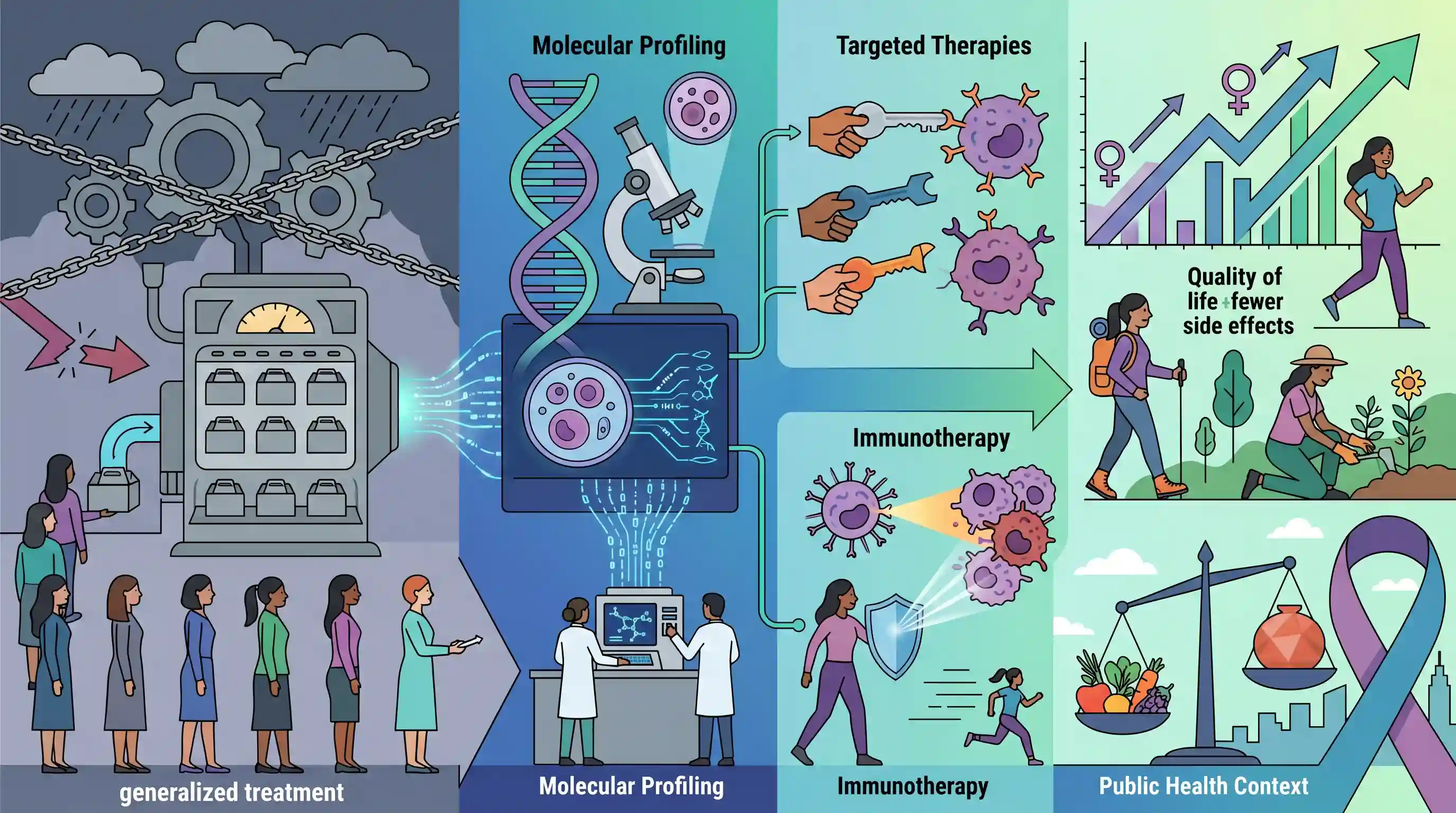
The rising burden of uterine cancer is increasingly being tackled through a shift away from traditional, generalized treatment methods towards precision oncology. By utilizing advanced genomic profiling and molecular classification, healthcare providers can now offer personalized care regimens, including targeted therapies and immunotherapy. These innovative approaches not only improve clinical outcomes and survival rates but also significantly enhance the patient's quality of life by mitigating the adverse effects typically associated with conventional chemotherapy. In the broader public health context, addressing lifestyle-related risk factors such as obesity alongside deploying these biotechnological advancements is crucial for managing the disease burden.
Key Points
- Uterine cancer (primarily endometrial cancer) is seeing a rising incidence due to changing lifestyle factors, including increased rates of obesity and diabetes.
- There is a paradigm shift from a 'one-size-fits-all' conventional approach (surgery, chemotherapy, radiation) to precision oncology and personalized care.
- Genomic profiling and molecular classification (e.g., testing for Microsatellite Instability or POLE mutations) allow oncologists to tailor treatments to the specific genetic makeup of the tumor.
- Innovative approaches such as immunotherapy and targeted therapies are vastly improving survival rates and quality of life by reducing the reliance on broad-spectrum chemotherapy.
Important Terms
National Programme for Prevention & Control of Non-Communicable Diseases (NP-NCD)

A revamped Indian flagship scheme (formerly NPCDCS) focusing on the prevention, early diagnosis, and management of chronic diseases like cancer and diabetes through infrastructure and population-based screening.
UPSC context
GS Paper II (Health/Social Justice); tests knowledge of government health interventions and management of non-communicable diseases.
Precision Oncology
A cancer treatment approach that tailors medical therapy to a patient's specific genetic makeup and tumor characteristics, replacing "one-size-fits-all" treatments with personalized care to improve efficacy.
UPSC context
GS Paper III (Science & Technology); tests awareness of emerging biotechnological advancements and personalized medicine in healthcare.
Genomic Profiling
A laboratory method using advanced sequencing to analyze DNA and RNA from cancer cells, identifying specific genetic alterations that drive tumor growth to guide treatment selection.
UPSC context
GS Paper III (Science & Technology); relevant to biotechnology, genetics, and modern diagnostic techniques in the health sector.
Molecular Classification
The categorization of tumors into distinct subtypes based on genetic markers and molecular profiles rather than microscopic appearance, which allows for more accurate prognosis and treatment.
UPSC context
GS Paper III (Science & Technology); tests understanding of advanced disease diagnostics and specialized healthcare interventions for women.
Targeted Therapy
A type of cancer treatment using drugs designed to identify and attack specific molecules or proteins essential for cancer cell survival, minimizing damage to surrounding healthy cells.
UPSC context
GS Paper III (Science & Technology); covers developments in pharmaceuticals and biological therapies for chronic diseases.
Immunotherapy
A biological therapy that harnesses or enhances the body's own immune system to recognize and destroy cancer cells, often through checkpoint inhibitors or genetically modified T-cells.
UPSC context
GS Paper III (Science & Technology); significant for its role in innovative healthcare and cutting-edge biological advancements.
Prelims Trap
Microsatellite DNA analysis is exclusively used to study evolutionary relationships and genetic diversity among species.
While heavily used in evolutionary biology and forensics, microsatellite testing (MSI) is now a core diagnostic tool in clinical oncology for cancer treatment.
Static Concepts Connected
How does Immunotherapy differ from traditional Chemotherapy?
- Chemotherapy: Uses broad-spectrum drugs to kill rapidly dividing cells indiscriminately, often harming healthy cells like hair follicles and gastrointestinal lining.
- Immunotherapy: Stimulates or modifies the patient's own immune system (e.g., via checkpoint inhibitors) to accurately recognize and destroy specific cancer cells.
What are the key features of the NP-NCD?
- Core Focus: Targets the prevention and control of Cancer, Diabetes, Cardiovascular Diseases, and Stroke, recently expanding to include non-alcoholic fatty liver disease (NAFLD).
- Implementation: Integrated with Ayushman Bharat Health and Wellness Centres for population-level screening of common NCDs starting at age 30.
Cross-Topic Patterns
Biologics + Indian Patent Act
Advanced immunotherapies often face patent monopolies. This connects to Section 84 (Compulsory Licensing) debates to ensure life-saving targeted therapies remain affordable in India.
Epidemiological Transition + Demographic Dividend
Rising lifestyle-induced cancers (obesity/diabetes linked) shift India's disease burden, threatening the productivity of the working-age population and jeopardizing the demographic dividend.

A 2026 S&T question will likely test the conceptual differences between precision oncology, targeted therapies, and broad-spectrum chemo.
Linked PYQs · 3
Linked PYQs · 3
- 2021MainsGS3
What are the research and developmental achievements in applied biotechnology? How will these achievements help to uplift the poorer sections of the society?
- 2020MainsGS2
In order to enhance the prospects of social development, sound and adequate health care policies are needed particularly in the fields of geriatric and maternal health care. Discuss.
- 2023PrelimsGS1
'Microsatellite DNA' is used in the case of which one of the following?
