Transgender Empowerment and Economic Entrepreneurship in India
Source:Indian Express ↗
Why It Matters
The article provides a strong case study for GS Paper 1 (Society) and GS Paper 2 (Social Justice), demonstrating how economic empowerment and entrepreneurship can act as catalysts for the social inclusion of marginalized communities, specifically transgender persons.
Summary
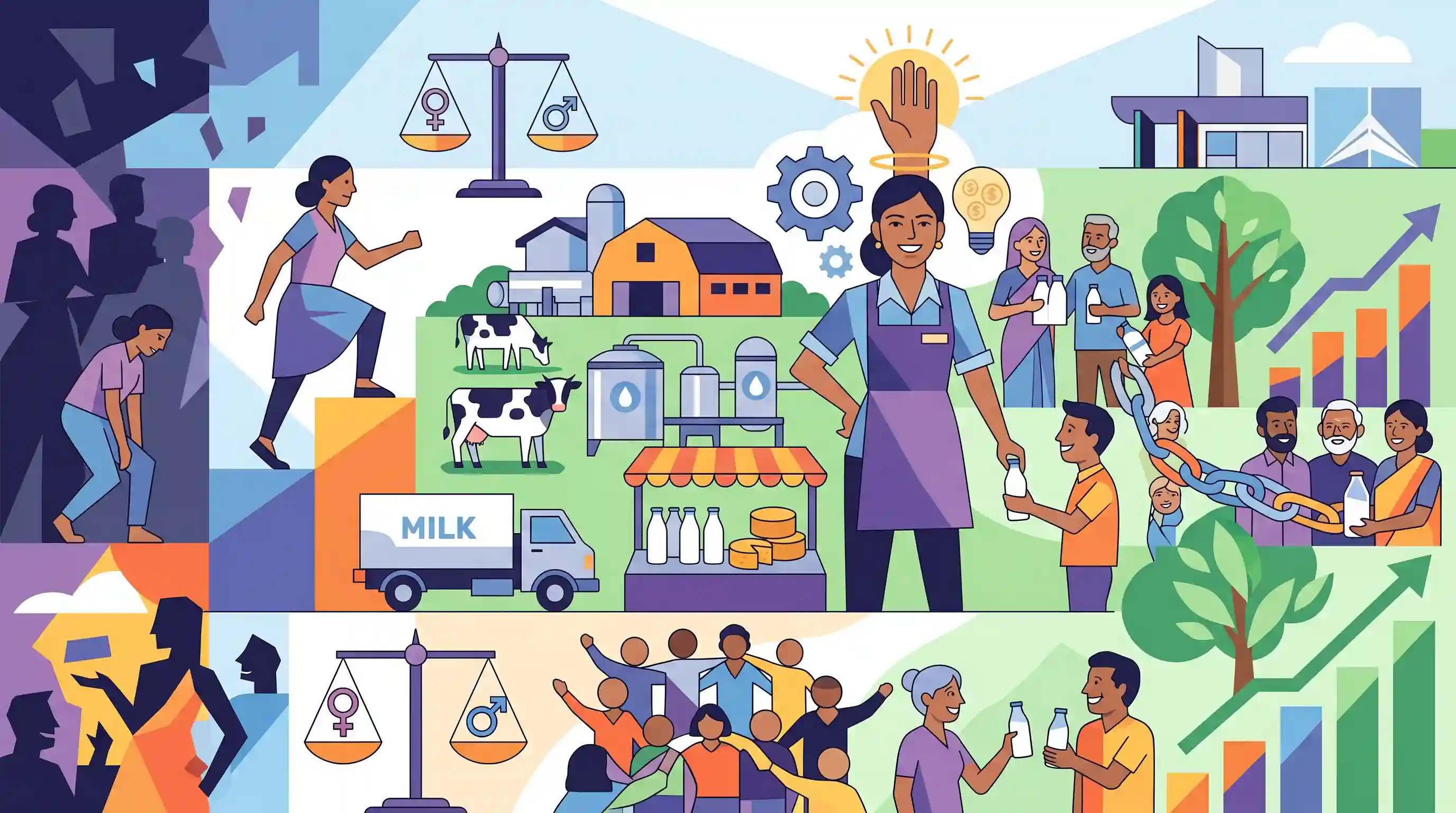
Sweety, a transgender person based in Chandigarh, has defied societal norms and marginalization by setting up her own enterprise, the Sweety Milk Dairy Farm. The venture is not just a source of livelihood but a statement of identity, dignity, and economic independence. By choosing entrepreneurship over traditional roles often forced upon the transgender community, Sweety exemplifies how self-reliance can drive social inclusion and empower vulnerable sections of society.
Key Points
- Sweety, a transgender person from Chandigarh, has successfully established the Sweety Milk Dairy Farm, charting a new path for financial independence.
- The entrepreneurial venture serves as a powerful example of how economic self-reliance can help marginalized individuals re-script their identity and gain societal respect.
- The initiative breaks traditional stereotypes and occupational segregation often imposed on the transgender community.
- The story underscores the broader need for inclusive economic opportunities to ensure meaningful social inclusion and equity for vulnerable sections.
Important Terms
Transgender Persons (Protection of Rights) Act, 2019

Central legislation protecting the rights of transgender people, prohibiting discrimination in education, employment, and healthcare while providing for a "Certificate of Identity" issued by the District Magistrate.
UPSC context
GS Paper II: Social Justice; vulnerable sections and welfare schemes. Key for understanding the legal framework of gender identity.
SMILE Scheme
Support for Marginalised Individuals for Livelihood and Enterprise; a Ministry of Social Justice umbrella scheme providing comprehensive rehabilitation, skill development, and entrepreneurship opportunities for transgender persons.
UPSC context
GS Paper II: Welfare schemes for vulnerable sections. Tests knowledge of livelihood-focused social security measures.
Gender Justice
The principle of fair treatment for all genders in social, economic, and legal spheres, ensuring substantive equality and access to resources as envisioned under Articles 14, 15, and 21.
UPSC context
GS Paper II: Polity and Social Justice. Central theme for essays and social inclusion questions.
Inclusive Growth
Economic development that creates opportunities for all segments of society, ensuring that the benefits of growth are shared equitably among marginalized groups, including the transgender community.
UPSC context
GS Paper III: Indian Economy. Relates to the distribution of developmental benefits to vulnerable groups.
Sweety Milk Dairy Farm
A Chandigarh-based enterprise founded by a transgender individual; serves as a real-world case study of economic empowerment through entrepreneurship to overcome social exclusion.
UPSC context
Case Study/GS Paper II/Ethics: Useful example of individual agency, social inclusion, and economic independence for marginalized sections.
Garima Greh
Shelter homes established under the SMILE scheme to provide safe, dignified accommodation, food, and skill training to transgender persons facing family rejection or homelessness.
UPSC context
GS Paper II: Social Justice. Specific sub-component of transgender welfare often tested in Prelims.
Prelims Trap
"The SMILE scheme is exclusively implemented for the livelihood and enterprise support of transgender persons."
SMILE (Support for Marginalized Individuals for Livelihood and Enterprise) covers both transgender persons AND persons engaged in the act of begging, not just transgender persons.
Static Concepts Connected
What did the NALSA vs. Union of India (2014) judgment establish?
- Third Gender: Recognized transgender persons legally as a "third gender" for the first time.
- Fundamental Rights: Extended Fundamental Rights under Articles 14, 15, 16, and 21 to transgender individuals.
- Self-Identification: Upheld an individual's right to self-perceived gender identity without the prerequisite of medical reassignment surgery.
What are the core mandates of the Transgender Persons Act, 2019?
- Non-discrimination: Prohibits discrimination against transgender persons in employment, education, healthcare, and access to public facilities.
- Identity Certificate: Mandates the District Magistrate to issue a certificate of identity, which allows legal change of gender.
- National Council: Established the National Council for Transgender Persons (NCTP) to advise the central government on policies and legislation.
Cross-Topic Patterns
Dairy entrepreneurship for social inclusion
Economic empowerment of vulnerable groups via allied agriculture (dairy) highlights the crucial shift from state welfare dependency to micro-entrepreneurship and MSME integration.
Credit access for transgender entrepreneurs
Transgender inclusion in financial schemes like MUDRA or Stand-Up India bridges the gap between formal banking and marginalized communities who historically lack collateral.

A composite prelims question linking the SMILE scheme beneficiaries with the constitutional provisions under the NALSA judgment is highly probable.
Linked PYQs · 2
Linked PYQs · 2
- 2023MainsGS2
Explain the constitutional perspectives of Gender Justice with the help of relevant Constitutional Provisions and case laws.
- 2024MainsGS1
Despite comprehensive policies for equity and social justice, underprivileged sections are not yet getting the full benefits of affirmative action envisaged by the Constitution. Comment.
