Suspected US Airstrikes Target Houthi Positions Across Yemen
Source:The Hindu ↗
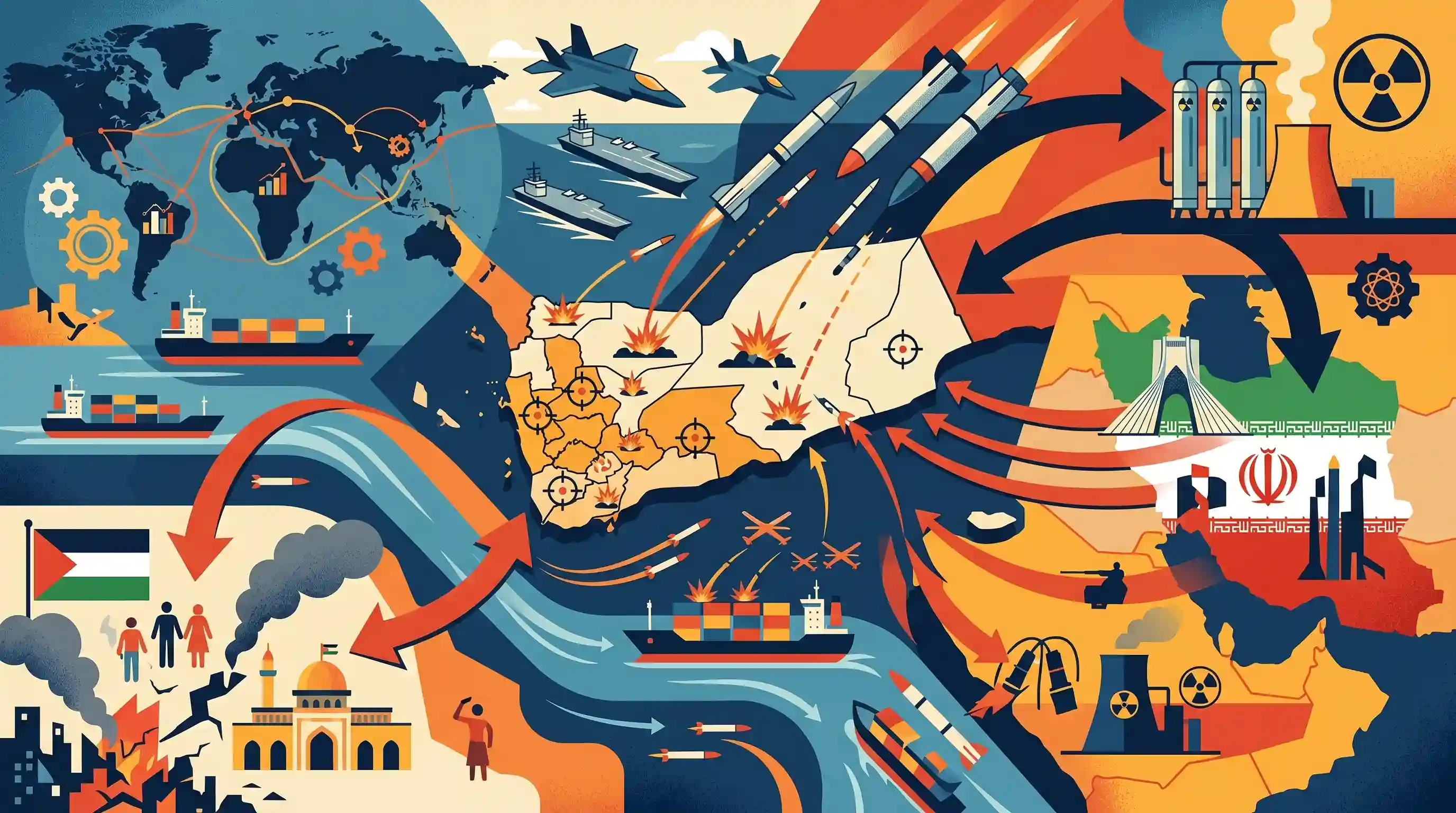
Why It Matters
The crisis in the Red Sea underscores the intersection of regional conflicts and global economic stability. For UPSC aspirants, it provides a critical case study on maritime security, the strategic importance of trade chokepoints, and the broader geopolitical rivalry between the U.S. and Iran, which indirectly affects India's energy security and foreign policy interests in the Middle East.
Summary
The article reports on a series of suspected U.S. airstrikes in Yemen targeting Houthi rebel positions across several governorates. These strikes are part of an escalated military campaign by the Trump administration to deter the Houthis from attacking international commercial shipping in the Red Sea. The Houthis maintain that their maritime assaults are in solidarity with Palestinians in the Israel-Hamas war. Furthermore, U.S. officials have linked the operations against the Iran-backed Houthis to a broader strategic effort to pressure Tehran regarding its nuclear program, underscoring the deep geopolitical complexities and risks to global trade routes in the Middle East.
Key Points
- Houthi rebels reported suspected U.S. airstrikes across multiple governorates in Yemen, including Hodeida and Sanaa, resulting in several casualties.
- The airstrikes are part of an intensified U.S. military campaign under the Trump administration aimed at halting Houthi attacks on commercial shipping in the Red Sea.
- The Houthis claim their maritime attacks, which have targeted over 100 merchant vessels, are a response to the ongoing Israel-Hamas war in the Gaza Strip.
- U.S. Defense Secretary Pete Hegseth framed the strikes against the Houthis as part of a broader strategic effort to pressure Iran over its nuclear program.
- The ongoing conflict highlights the vulnerability of the Red Sea maritime route, posing significant risks to global trade and energy security.
Important Terms
Houthi rebels

An Iranian-backed Shia militant group (Ansar Allah) that controls northern Yemen, including the capital Sanaa, and is a key player in the Yemeni Civil War.
UPSC context
GS Paper II (International Relations); tests understanding of non-state actors, proxy warfare, and regional instability in West Asia.
U.S. Central Command (CENTCOM)
The U.S. Department of Defense's unified combatant command responsible for military operations across the Middle East, Central Asia, and parts of South Asia.
UPSC context
GS Paper II (International Relations); relevant for studying India-US strategic ties and global security architectures.
Bab el-Mandeb Strait
A critical maritime chokepoint between Yemen and the Horn of Africa, connecting the Red Sea to the Gulf of Aden and the Indian Ocean.
UPSC context
GS Paper I (Geography) and Paper II (IR); vital for global trade routes, energy security, and maritime 'Places in News'.
Operation Prosperity Guardian
A U.S.-led multinational maritime coalition launched in December 2023 to protect international shipping from Houthi missile and drone attacks in the Red Sea.
UPSC context
GS Paper III (Internal Security); focuses on maritime security, protection of global supply chains, and international naval cooperation.
Axis of Resistance
A loose geopolitical and military alliance led by Iran, including the Syrian government, Hezbollah, Hamas, and the Houthi movement, aimed at countering Western and Israeli influence.
UPSC context
GS Paper II (International Relations); tests knowledge of regional power blocs and proxy dynamics in the Middle East.
Hamas
A Palestinian Sunni-Islamic fundamentalist, militant, and nationalist organization that governs the Gaza Strip and is currently in a major conflict with Israel.
UPSC context
GS Paper II (International Relations); context for the ongoing Israel-Palestine conflict and its regional spillover effects.
Prelims Trap
Houthi rebels in Yemen disrupt global shipping by blocking the Strait of Hormuz.
Houthis operate near the Bab el-Mandeb strait (Red Sea), not the Strait of Hormuz (Persian Gulf). UPSC frequently swaps these regional chokepoints to test map clarity.
Static Concepts Connected
Which countries border the Red Sea and the Bab el-Mandeb strait?
- Red Sea Borders: Egypt, Sudan, Eritrea, and Djibouti on the western shore; Saudi Arabia and Yemen on the eastern shore.
- Bab el-Mandeb: A strategic chokepoint connecting the Red Sea to the Gulf of Aden, flanked by Yemen, Djibouti, and Eritrea.
What is the economic impact of bypassing the Red Sea-Suez route?
- Freight Costs: Rerouting around Africa adds 10-14 days to transit times, significantly driving up bunker fuel costs and insurance premiums.
- Imported Inflation: Elevates the landed cost of crude oil and merchandise, contributing to imported inflation and widening current account deficits for net-importers.
Cross-Topic Patterns
Red Sea Crisis & Indian Exports
Rerouting via the Cape of Good Hope increases freight rates, directly impacting India's agricultural and engineering exports to Europe and North Africa.
Ad-hoc Naval Coalitions vs UN mandates
Operation Prosperity Guardian reflects a global shift from UN-mandated security operations to interest-based minilateral maritime task forces.

A map question matching West Asian proxy groups to their bordering maritime chokepoints (e.g., Houthis & Bab el-Mandeb) is likely in 2026.
Linked PYQs · 3
Linked PYQs · 3
- 2018MainsGS2
In what ways would the ongoing US-Iran Nuclear Pact Controversy affect the national interest of India? How should India respond to this situation?
- 2025MainsGS2
"Energy security constitutes the dominant kingpin of India's foreign policy, and is linked with India's overarching influence in Middle Eastern countries.” How would you integrate energy security with India's foreign policy trajectories in the coming years?
- 2023PrelimsGS1
Consider the following pairs: Area of conflict mentioned in news Country where it is located 1. Donbas : Syria 2. Kachin : Ethiopia 3. Tigray : North Yemen How many of the above pairs are correctly matched?
