Supreme Court Denies Stay on Transgender Rights Amendment Act
Source:Indian Express ↗
આ શા માટે મહત્વનું છે
This development directly impacts the legal rights, self-identification, and welfare frameworks governing transgender persons in India, serving as a key reference point for discussions on gender justice and judicial review of social legislations.
સારાંશ
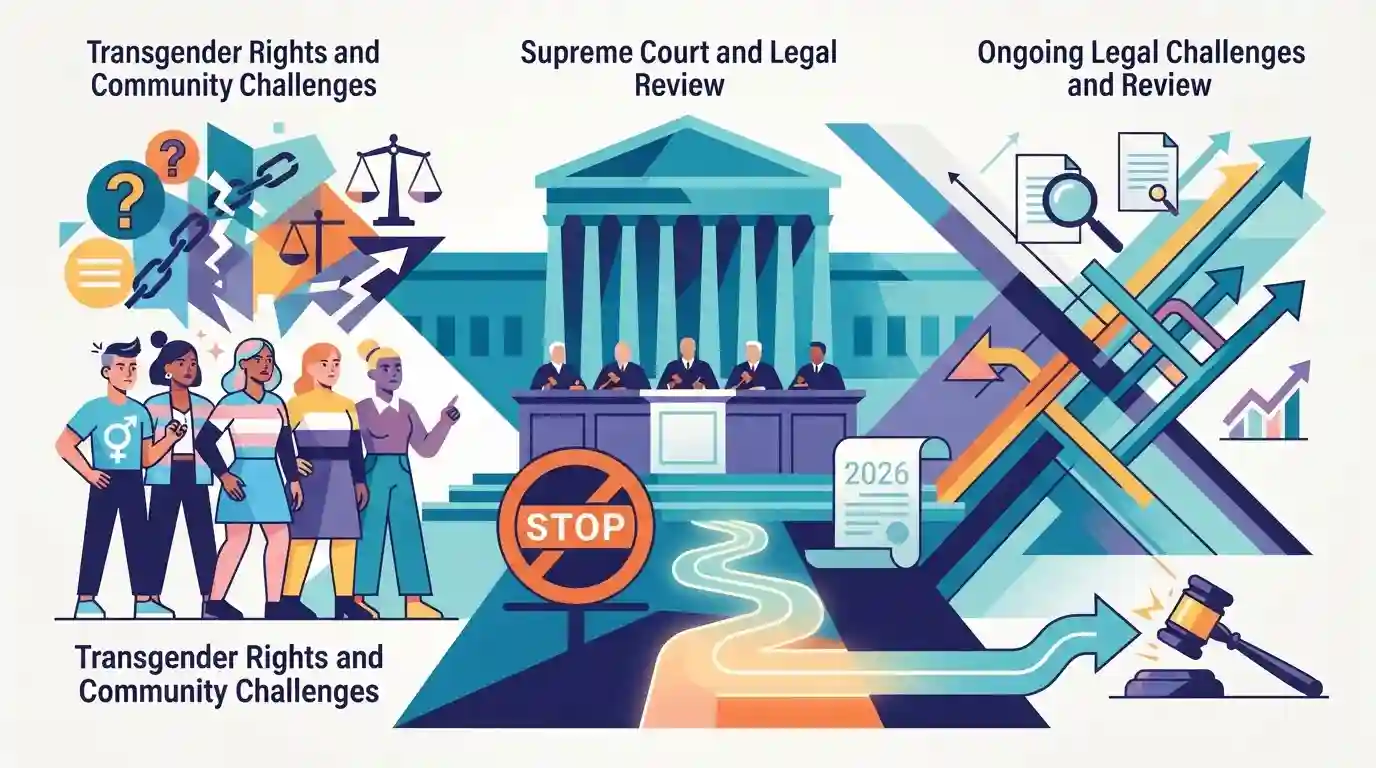
The Supreme Court has declined to stay the implementation of the Transgender Persons Protection Rights Amendment Act, 2026, amid ongoing legal challenges questioning its constitutional validity and impact on the rights of transgender individuals.
મુખ્ય મુદ્દા
- The Supreme Court refused to grant a stay on the Transgender Persons Protection Rights Amendment Act 2026.
- Petitions challenged provisions of the amendment act citing concerns over individual rights, dignity, and self-identification.
- The Court's decision keeps the legislation operational while the legal challenge proceeds, raising important questions on balance between state regulation and personal autonomy for transgender persons.
- Connects closely with the foundational NALSA judgment (2014) and constitutional guarantees under Articles 14, 15, 19, and 21.
મહત્વપૂર્ણ શબ્દો
Transgender Persons Protection Rights Amendment Act 2026

A legislative enactment modifying existing transgender rights legislation, facing legal challenges over its alleged removal of statutory self-perceived gender identity and potential conflict with constitutional rights.
UPSC context
GS Paper II (Social Justice - Vulnerable Sections & Government Policies) and GS Paper II (Constitution - Judicial Review). Tests laws affecting marginalized groups.
Transgender Persons Protection of Rights Act 2019
The principal 2019 legislation enacted to protect the rights of transgender persons, prohibit discrimination, and provide for welfare measures, though subject to ongoing debates regarding consistency with the NALSA judgment.
UPSC context
GS Paper II (Social Justice - Vulnerable Sections). Tests legal frameworks, rights of gender minorities, and implementation gaps in statutory protections.
Supreme Court
The highest court of India, empowered with original, appellate, and writ jurisdictions to review legislative enactments for constitutional validity and protect fundamental rights.
UPSC context
GS Paper II (Indian Constitution - Judiciary, Judicial Review, Basic Structure). Tests the role of the apex court in safeguarding fundamental rights.
સંલગ્ન સ્થિર ખ્યાલો
What were the key directions and constitutional principles established in the NALSA v. Union of India (2014) judgment?
- Third Gender Status: Recognized transgender persons as the 'third gender' for safeguarding their rights under the Constitution.
- Self-Identification: Affirmed that self-determination of gender identity is an integral part of personal autonomy and dignity under Article 21.
- State Obligations: Directed Centre and State governments to take steps for social welfare, healthcare, and public awareness regarding transgender persons.
આંતર-વિષય પેટર્ન
Judicial Review vs. Legislative Amendments
Judicial review of welfare and rights legislation tests the boundary between parliamentary sovereignty and basic structure doctrine under Article 21.
Social Justice + Affirmative Action
Transgender rights intersect with statutory reservation policies, bringing inclusion debates into public employment and educational institutions.

SC refusal to stay transgender amendment acts will feature in statement-based questions on Article 21 rights and NALSA principles.
સંલગ્ન PYQ · 1
સંલગ્ન PYQ · 1
- 2023MainsGS2
Explain the constitutional perspectives of Gender Justice with the help of relevant Constitutional Provisions and case laws.
