Supreme Court Sets Special Hearing on Delhi Transit Shutdown
Source:The Hindu ↗
ఇది ఎందుకు ముఖ్యం
This event underscores the dynamic role of the Supreme Court in protecting fundamental rights like freedom of movement against drastic executive and administrative shutdowns, highlighting the balance between public order and civil liberties.
సారాంశం
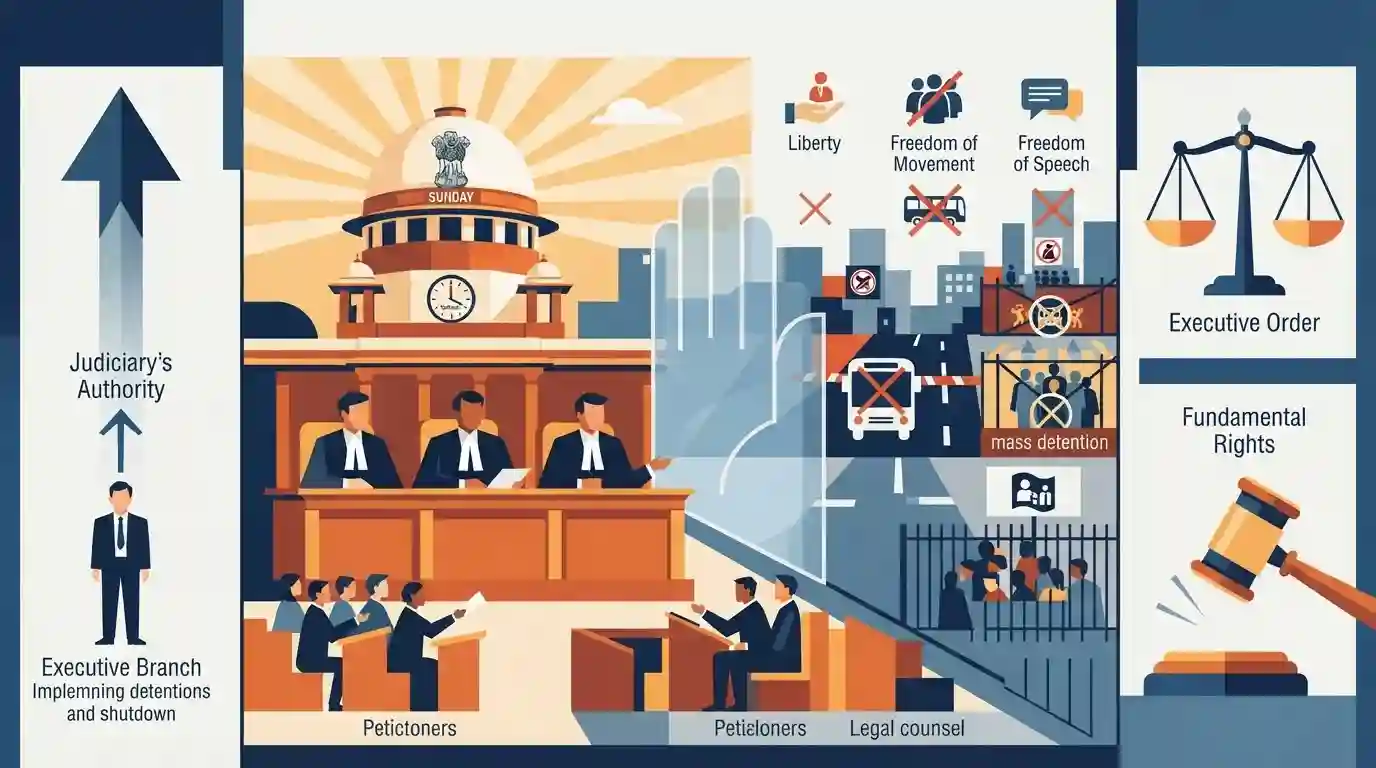
The Supreme Court of India fixed a special Sunday hearing to hear pleas challenging mass detentions and a strict transit shutdown in Delhi, emphasizing judicial oversight on executive actions affecting fundamental freedoms.
ముఖ్య అంశాలు
- The Supreme Court scheduled an extraordinary Sunday hearing to address contempt pleas and challenges against mass detentions and a massive transit shutdown in Delhi.
- The case highlights tensions between administrative/security measures (such as transit shutdowns and detentions) and constitutionally guaranteed fundamental freedoms like the freedom of movement.
- Showcases the active role of the apex court in intervening during emergencies and checking executive action.
ముఖ్యమైన పదాలు
Supreme Court

The apex judicial body of India, serving as the final court of appeal, guardian of the Constitution, and protector of citizens' fundamental rights.
UPSC context
UPSC Prelims/Mains (GS Paper II): Tests understanding of the Indian judiciary, judicial review, constitutional remedies, and the separation of powers.
అనుసంధానమైన స్థిర భావనలు
What are the constitutional grounds and exceptions governing the freedom of movement under Article 19?
- Constitutional Base: Right to Move: Article 19(1)(d) guarantees citizens the right to move freely throughout the territory of India.
- Permissible Limits: Reasonable Restrictions: Can be imposed under Article 19(5) only in the interests of the general public or for the protection of Scheduled Tribes.
- Judicial Test: Proportionality Standard: State measures must be the least restrictive means necessary to achieve the stated public order objective.
అంతర-అంశ నమూనాలు
Emergency Powers & Judicial Proportionality Tests
The Supreme Court's scrutiny of emergency transit shutdowns directly intersects with administrative law principles of proportionality and statutory limits under the National Security Act and CrPC.

Expect an assertion-reason question on the constitutional limits of Article 19(1)(d) vs executive security measures during public order crises.
అనుసంధాన PYQలు · 2
అనుసంధాన PYQలు · 2
- 2022MainsGS2
“Right of movement and residence throughout the territory of India are freely available to the Indian citizens, but these rights are not absolute.” Comment.
- 2025MainsGS2
"Constitutional morality is the fulcrum which acts as an essential check upon the high functionaries and citizens alike...." In view of the above observation of the Supreme Court, explain the concept of constitutional morality and its application to ensure balance between judicial independence and judicial accountability in India.
