Supreme Court Quashes FIRs Registered Against NEET Protesters
Source:Indian Express ↗
ఇది ఎందుకు ముఖ్యం
This ruling illustrates the judiciary's role in balancing law and enforcement with democratic rights of peaceful dissent and student activism, highlighting the invocation of extraordinary judicial powers.
సారాంశం
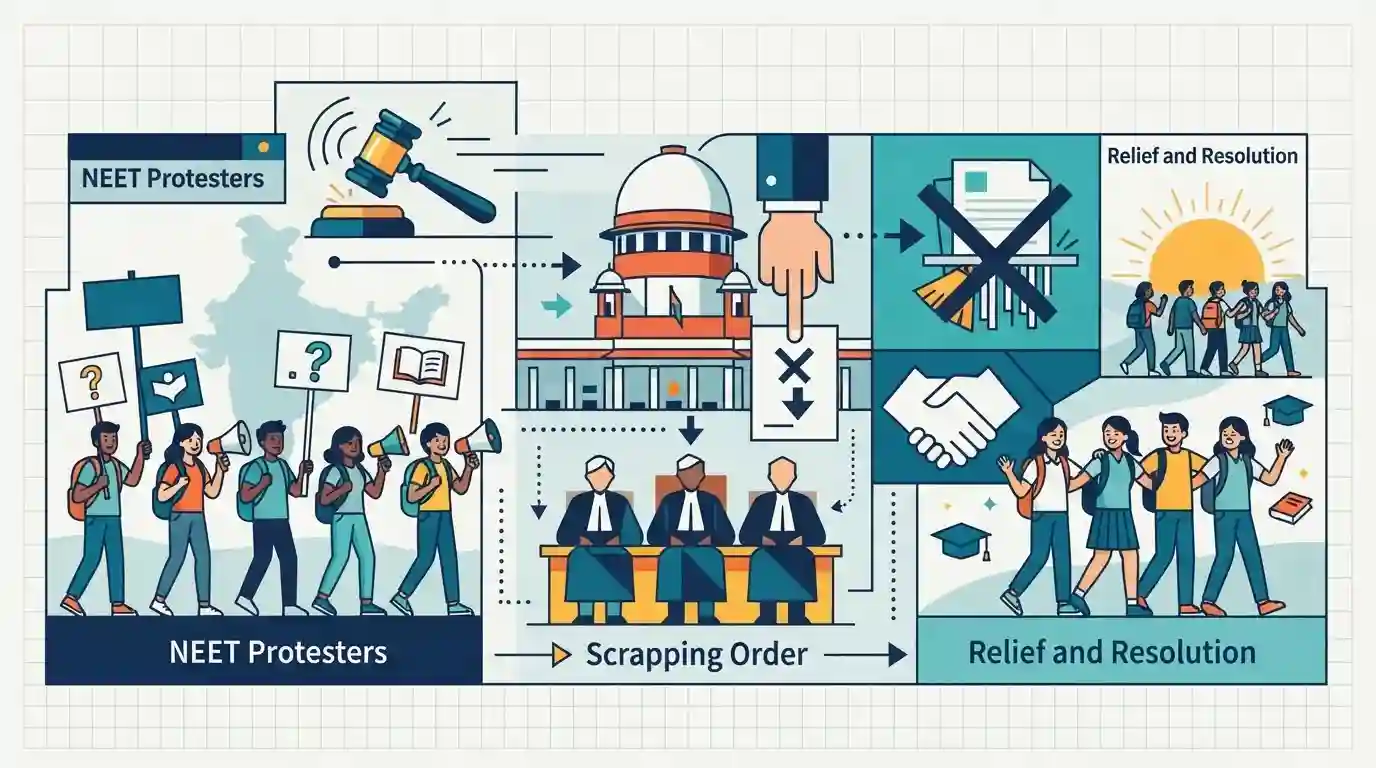
The Supreme Court of India ordered the scrapping of all FIRs filed against NEET protesters nationwide, offering major relief to students involved in demonstrations regarding examination issues.
ముఖ్య అంశాలు
- The Supreme Court of India quashed and scrapped all First Information Reports (FIRs) registered against NEET protesters across the country.
- The ruling underscores the judiciary's intervention to protect student rights and prevent overreach in public protests.
- This decision highlights the application of extraordinary constitutional powers of the Supreme Court to dispense equitable relief.
ముఖ్యమైన పదాలు
Supreme Court

The highest judicial court and final court of appeal in India, possessing extraordinary powers under Article 142 to ensure complete justice.
UPSC context
Polity & Governance (Mains GS-2): Structure, organization, and functioning of the Judiciary, judicial review, and extraordinary constitutional powers.
అనుసంధానమైన స్థిర భావనలు
What is the constitutional scope and limitation of Article 142 of the Indian Constitution?
- Plenary Power: Grants the Supreme Court plenary power to pass any decree or order necessary for doing complete justice in any cause or matter pending before it.
- Constitutional Limit: It is supplementary in nature; it cannot be used to bypass express statutory provisions or fundamental constitutional frameworks.
- Nationwide Reach: Enforceable throughout the territory of India in the manner prescribed by parliamentary law or presidential order.
What are the reasonable restrictions on the freedoms under Article 19(1)(a) and 19(1)(b)?
- Article 19(2) Limits: Sovereignty and integrity of India, security of the State, friendly relations with foreign States, public order, decency or morality.
- Assembly Restrictions: Sovereignty and integrity of India or public order apply as explicit grounds for restricting peaceful assemblies under Article 19(3).
- Peaceful Dissent: Protests must remain peaceful and unarmed; violent acts or destruction of public property forfeit fundamental protection.
అంతర-అంశ నమూనాలు
Right to Protest vs Public Order
Peaceful student agitations intersect with Article 19(1)(b) assemblies and the state's duty to maintain public order under the Seventh Schedule (State List).
Article 142 and Judicial Federalism
The Supreme Court's use of plenary powers to provide nationwide relief bypasses jurisdictional hurdles across multiple High Courts, showcasing judicial federalism dynamics.

Article 142 jurisdiction limits and Article 19(1) protest restrictions are high-probability multi-statement prelims topics.
అనుసంధాన PYQలు · 1
అనుసంధాన PYQలు · 1
- 2019PrelimsGS1
With reference to the Constitution of India, prohibitions or limitations or provisions contained in ordinary laws cannot act as prohibitions or limitations on the constitutional powers under Article 142. It could mean which one of the following?
