Supreme Court Examines Internet Access Rights for Children
Source:Indian Express ↗
આ શા માટે મહત્વનું છે
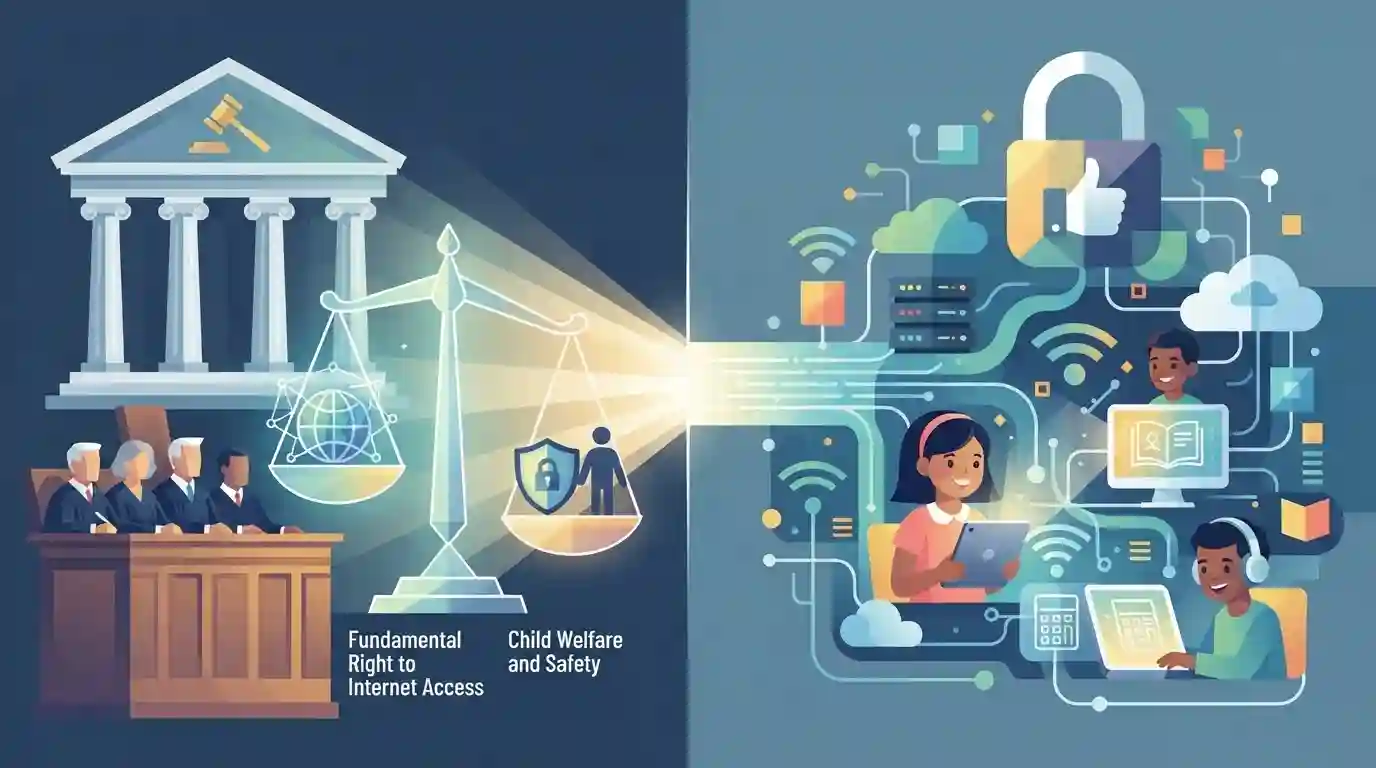
This topic addresses the evolving contours of fundamental rights in the digital age, highlighting the intersection between technological access, child protection, and constitutional jurisprudence under Article 21.
સારાંશ
The article discusses the Supreme Court's deliberations and legal perspectives regarding internet access as a fundamental right, focusing particularly on children, digital inclusion, and the constitutional dimensions of balancing access with online safety and welfare.
મુખ્ય મુદ્દા
- The Supreme Court has examined legal dimensions surrounding internet access, raising questions about whether it constitutes a fundamental right, particularly for children.
- Balancing children's digital access with protection from online harms, privacy concerns, and educational equity remains a key governance challenge.
- Judicial discourse increasingly touches upon digital rights as an extension of right to life, education, and personal liberty under Article 21.
મહત્વપૂર્ણ શબ્દો
Article 21 of the Constitution

A foundational provision guaranteeing that no person shall be deprived of life or personal liberty except according to procedure established by law, expansively interpreted by the Supreme Court to include internet access, privacy, and digital inclusion.
UPSC context
GS Paper II (Indian Constitution - Evolution, Features, Amendments, Significant Provisions). Tests understanding of dynamic judicial interpretation of fundamental rights.
Supreme Court of India
The apex judicial body of India empowered to interpret the Constitution, protect fundamental rights, and enforce judicial review over legislative and executive actions concerning digital rights and child welfare.
UPSC context
GS Paper II (Structure, Organization and Functioning of the Judiciary). Tests the role of the apex court in constitutional governance and rights enforcement.
પ્રિલિમ્સ ટ્રેપ
The Anuradha Bhasin judgment explicitly declared the right to access the internet as a fundamental right under Article 21 for children.
Aspirants often assume the Anuradha Bhasin (2020) judgment explicitly declared internet access a fundamental right for children under Article 21, whereas Bhasin focused primarily on Article 19(1)(a) and (g) trade/speech freedoms.
સંલગ્ન સ્થિર ખ્યાલો
What are the key judicial pronouncements expanding Article 21 to include modern rights?
- Anuradha Bhasin Case: Anuradha Bhasin (2020): Ruled that freedom of speech and expression and freedom of trade through the internet are protected under Article 19(1)(a) and 19(1)(g).
- Puttaswamy Judgment: KS Puttaswamy (2017): Affirmed privacy as an intrinsic part of Right to Life and Personal Liberty under Article 21.
- Article 21 Expansion: Digital Integration: Recent rulings tie internet access directly to Article 21, establishing it as essential for education, dignity, and personal liberty.
આંતર-વિષય પેટર્ન
Digital Access and Article 21A Linkage
The digital divide directly hampers constitutional guarantees of Right to Education (Article 21A), proving that infrastructure deficits are actionable rights violations rather than mere policy lags.
Child Rights vs. DPDP Act Frameworks
Balancing online safety with privacy rights under Article 21 mirrors the friction between data protection frameworks (DPDP Act) and children's digital autonomy.

SC rulings linking internet access to Article 21 for children + proportionality test in IT regulations will feature in Prelims/Mains.
સંલગ્ન PYQ · 2
સંલગ્ન PYQ · 2
- 2025MainsGS2
The National Commission for Protection of Child Rights has to address the challenges faced by children in the digital era. Examine the existing policies and suggest measures the Commission can initiate to tackle the issue.
- 2024MainsGS2
Right to privacy is intrinsic to life and personal liberty and is inherently protected under Article 21 of the constitution. Explain. In this reference discuss the law relating to D.N.A. testing of child in the womb to establish its paternity.
