Bhopal gas tragedy toxic waste and mercury disposal concerns
Source:The Hindu ↗
Why It Matters
This issue highlights the long-term, multi-generational environmental and public health legacy of the 1984 Bhopal gas tragedy. It underscores the challenges of hazardous waste management, heavy metal (mercury) pollution tracking, and the critical role of judicial and regulatory bodies in preventing secondary ecological disasters.
Summary
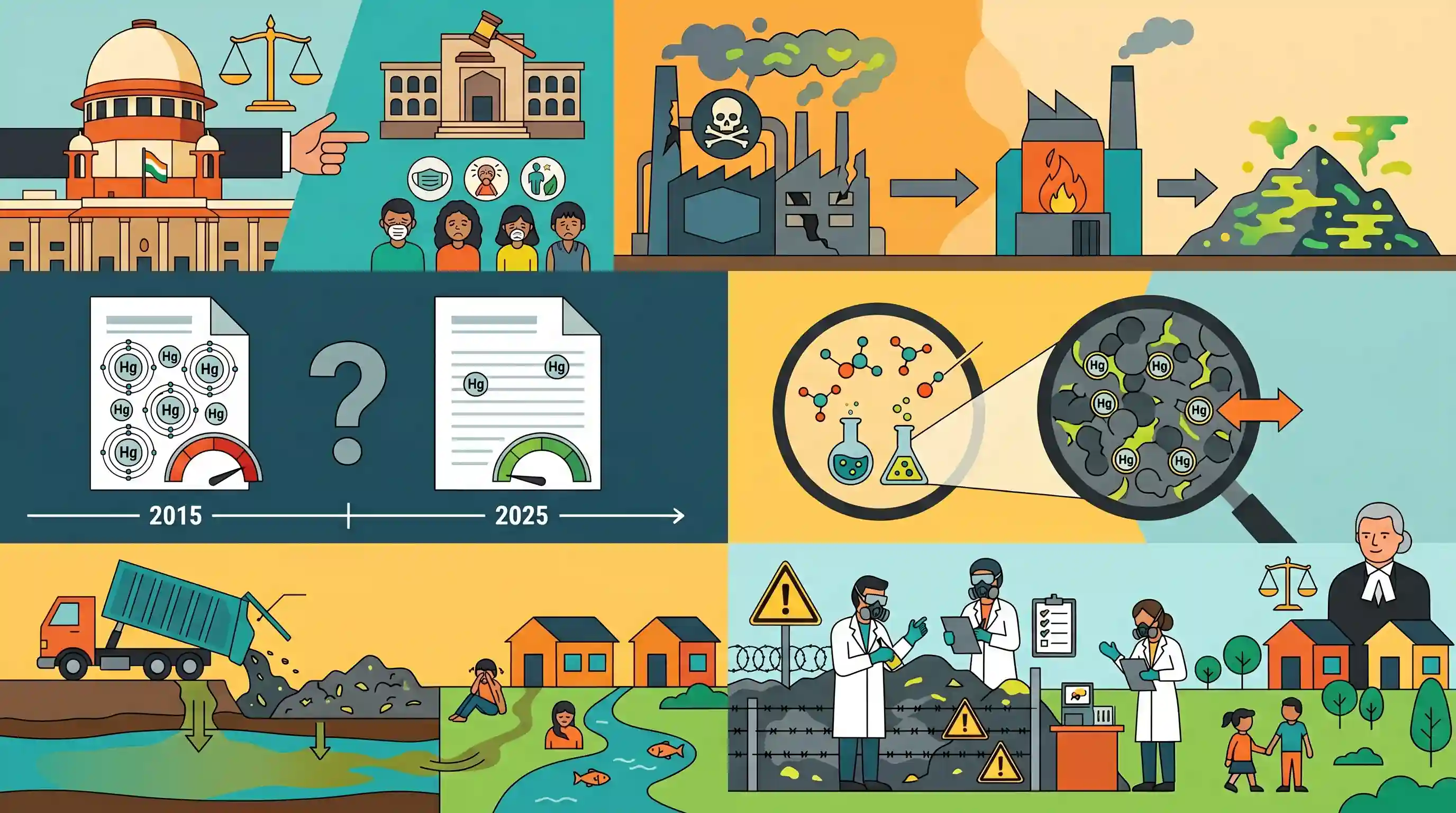
The Supreme Court directed the NGO Bhopal Gas Peedith Sangharsh Sahyog Samiti to present its concerns regarding the disposal of hazardous residual ash from the Bhopal gas tragedy before the Madhya Pradesh High Court. The ash, produced by incinerating toxic waste from the Union Carbide plant at Pithampur, is embroiled in controversy due to discrepancies in mercury levels. A 2015 CPCB report identified dangerously high mercury concentrations, whereas a 2025 report detected none. Petitioners warn that chemical additives used during incineration merely trapped the mercury in the residual ash, posing a severe environmental and health hazard if the ash is landfilled near human habitation without strict scientific oversight.
Key Points
- The Supreme Court has asked an NGO to approach the Madhya Pradesh High Court regarding concerns over the disposal of hazardous residual ash resulting from the incineration of toxic waste from the 1984 Bhopal gas tragedy.
- Approximately 337 metric tonnes of UCIL waste were incinerated at Pithampur, yielding nearly 900 metric tonnes of toxic residual ash.
- A significant anomaly exists regarding mercury levels: a 2015 CPCB report found high mercury concentrations (up to 904 mg/kg), while a 2025 report inexplicably detected no mercury.
- Petitioners argue that chemical additives like activated carbon and sulfur used during incineration suppressed chimney emissions but concentrated the mercury in bag filter ash, which is now slated for permanent landfilling.
- A December 2025 High Court order has kept an earlier directive in abeyance, effectively allowing the containment of this toxic ash at a site located barely 500 meters from human habitation.
Important Terms
Central Pollution Control Board (CPCB)

A statutory body under the Ministry of Environment, Forest and Climate Change. It sets national environmental standards and oversees hazardous waste disposal and pollution monitoring across India.
UPSC context
GS Paper 3 (Environment); tests knowledge of statutory bodies and their regulatory role in pollution and hazardous waste management.
Union Carbide India Ltd (UCIL)
The Indian subsidiary of the American firm Union Carbide Corporation. Its defunct pesticide plant in Bhopal is the site of the 1984 gas leak and legacy toxic waste.
UPSC context
GS Paper 3 (Disaster Management); a landmark case for studying industrial disasters, corporate accountability, and environmental remediation challenges.
Bhopal Gas Peedith Sangharsh Sahyog Samiti
A prominent non-governmental organization (NGO) representing survivors of the Bhopal gas tragedy. It advocates for victims' medical, legal, and environmental rights through judicial petitions.
UPSC context
GS Paper 2 (Governance/Civil Society); illustrates the role of NGOs and pressure groups in public interest litigation and social justice.
Madhya Pradesh High Court
The state's highest judicial body, which has been monitoring the Bhopal gas tragedy's environmental aftermath and toxic waste disposal for over two decades.
UPSC context
GS Paper 2 (Judiciary); tests understanding of the High Court's supervisory jurisdiction and its role in ongoing environmental monitoring cases.
Supreme Court of India
India's apex court, which exercises original jurisdiction over fundamental rights violations. It directs technical disputes to specific courts or expert committees for specialized oversight.
UPSC context
GS Paper 2 (Polity); tests knowledge of judicial activism and the court's role in protecting the right to a clean environment.
IIT Hyderabad
A premier engineering and research institute. Its faculty (e.g., Dr. Asif Qureshi) provide critical scientific evidence and mass balance analyses in environmental legal disputes.
UPSC context
GS Paper 3 (S&T/Environment); highlights the significance of academic scientific expertise in informing environmental policy and judicial decisions.
Prelims Trap
The Central Pollution Control Board (CPCB) was constituted under the Environment (Protection) Act, 1986.
A classic UPSC trap. CPCB is a statutory body constituted under the Water Act, 1974, although it later received additional powers under the Air Act (1981) and EPA (1986).
Static Concepts Connected
What are the key characteristics and impacts of mercury pollution?
- Bioaccumulation: Mercury converts to highly toxic methylmercury in aquatic ecosystems, accumulating up the food chain to dangerous levels (causing Minamata disease in humans).
- Industrial Sources: Coal-fired power plants, artisanal gold mining, and hazardous waste incineration are the major anthropogenic sources of mercury emissions globally.
- Global Framework: The Minamata Convention is a UN treaty designed to protect human health and the environment from anthropogenic emissions and releases of mercury.
How are toxic emissions controlled during hazardous waste incineration?
- Activated Carbon: Injected into exhaust gases to adsorb volatile organic compounds (VOCs) and heavy metals (like mercury) before they reach the chimney.
- Bag Filters: Specialized fabric filters trap particulate matter and saturated carbon dust, effectively preventing atmospheric air pollution.
- Toxicity Transfer: While cleaning the air, these technologies concentrate heavy metals into solid 'bag filter ash' or 'fly ash', which requires highly specialized, contained landfilling.
Cross-Topic Patterns
Absolute Liability & Post-Bhopal Laws
The Bhopal disaster directly prompted the Supreme Court's 'Absolute Liability' doctrine (Oleum gas case) and the Public Liability Insurance Act, 1991 to compensate victims of hazardous industry accidents.
Minamata Convention obligations
The controversy over incinerated mercury waste aligns with India's commitments under the Minamata Convention to ensure the environmentally sound management of mercury-contaminated sites and hazardous industrial waste.

Incineration byproducts (fly ash, bag filter dust) and heavy metal pollution (mercury) will likely merge into a 2026 Prelims science MCQ.
Linked PYQs · 2
Linked PYQs · 2
- 2023PrelimsGS1
Consider the following statements regarding mercury pollution: 1. Gold mining activity is a source of mercury pollution in the world. 2. Coal-based thermal power plants cause mercury pollution. 3. There is no known safe level of exposure to mercury. How many of the above statements are correct?
- 2024MainsGS3
Industrial pollution of river water is a significant environmental issue in India. Discuss the various mitigation measures to deal with this problem and also the government's initiatives in this regard.
