तमिलनाडु DGP नियुक्ति और सुप्रीम कोर्ट पुलिस सुधार
स्रोत:द हिंदू ↗
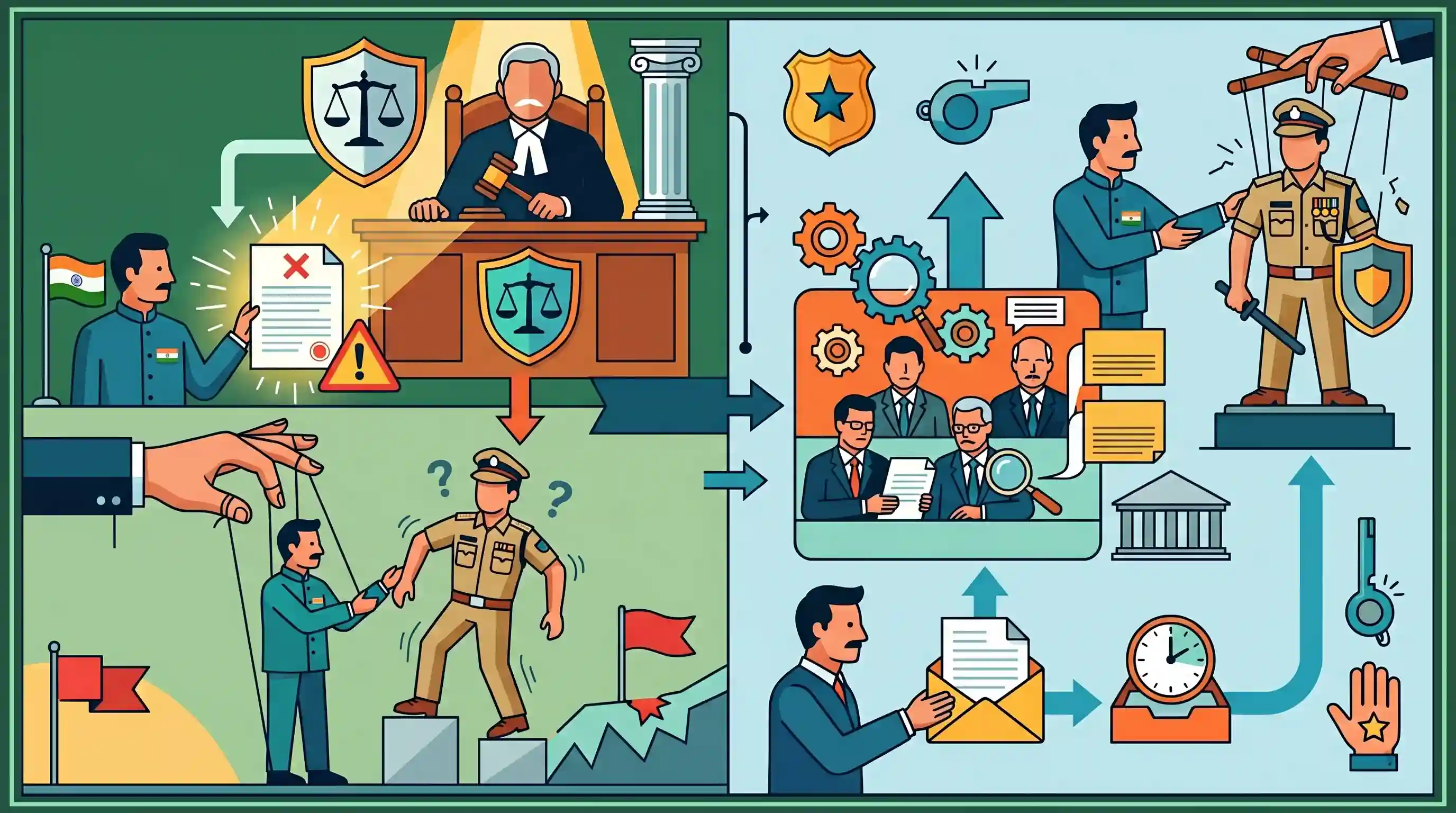
क्यों मायने रखता है
Illustrates the tension between state executive powers and Supreme Court directives (issued via PILs) designed to depoliticize police administration and ensure the operational autonomy of law enforcement agencies.
सारांश
The Supreme Court has directed the Union Public Service Commission (UPSC) and the Tamil Nadu government to quickly consider and finalize names for the regular Director General of Police (DGP) post. The court had earlier issued a contempt notice to the state for appointing G. Venkatraman as an acting DGP, a move that directly violates the Supreme Court's 2018 directives stemming from the landmark Prakash Singh case. The 2018 judgement strictly forbids ad hoc appointments to the state's top police post and mandates that state governments send their recommendations to the UPSC at least three months before an incumbent retires, aiming to protect police chiefs from political interference.
मुख्य बिंदु
- सुप्रीम कोर्ट ने UPSC और तमिलनाडु सरकार को नियमित पुलिस महानिदेशक (DGP) पद के लिए नामों पर शीघ्रता से विचार करने का निर्देश दिया।
- Tamil Nadu faced a contempt action for appointing an acting DGP 'in-charge' in August, which violates the Supreme Court's clear directives.
- The SC's 2018 judgement in the Prakash Singh case prohibits acting or ad hoc appointments for the position of state police chief.
- States are mandated to send a list of eligible officers to the UPSC at least three months prior to a DGP vacancy to ensure institutional independence.
महत्वपूर्ण शब्द
Prakash Singh case guidelines

ऐतिहासिक 2006 SC निर्देश (2018 में संशोधित), जो राजनीतिक हस्तक्षेप से पुलिस की स्वतंत्रता सुनिश्चित करने हेतु UPSC के माध्यम से योग्यता-आधारित DGP चयन और दो वर्ष का निश्चित कार्यकाल अनिवार्य करते हैं।
UPSC context
GS पेपर II (शासन) और GS III (आंतरिक सुरक्षा); पुलिस सुधारों और न्यायिक सक्रियता के ज्ञान का परीक्षण करता है।
Union Public Service Commission (UPSC)
एक संवैधानिक निकाय (अनुच्छेद 315-323) जो एक पारदर्शी और योग्यता-आधारित चयन प्रक्रिया सुनिश्चित करने के लिए राज्य के DGP नियुक्तियों हेतु तीन सबसे वरिष्ठ पात्र IPS अधिकारियों का पैनल तैयार करता है।
UPSC context
GS Paper II (Constitutional Bodies); tests understanding of the executive role of constitutional authorities.
Acting DGP (Ad-hoc appointment)
Temporary police chief appointments made by states to bypass the mandatory UPSC empanelment process; explicitly forbidden by the Supreme Court to prevent political favoritism.
UPSC context
GS Paper II (Governance); highlights issues of executive accountability and rule-of-law violations.
Fixed Tenure
DGPs के लिए दो वर्ष की अनिवार्य न्यूनतम सेवा अवधि, उनकी सेवानिवृत्ति की तिथि की परवाह किए बिना, जिसका उद्देश्य नेतृत्व को स्थिरता प्रदान करना और राजनीतिक तबादलों से सुरक्षा सुनिश्चित करना है।
UPSC context
GS पेपर II (शासन व्यवस्था); प्रशासनिक स्थिरता और सिविल सेवा सुधारों पर चर्चा के लिए महत्वपूर्ण।
Contempt Notice
A legal mechanism (Article 129/215) used by the SC to penalize states for willfully disobeying directives regarding regular DGP appointments and avoiding empanelment rules.
UPSC context
GS Paper II (Judiciary); tests knowledge of judicial powers to enforce constitutional and procedural mandates.
प्रारंभिक ट्रैप
The UPSC selects and appoints the Director General of Police (DGP) for the States.
UPSC केवल तीन सबसे वरिष्ठ पात्र अधिकारियों का मूल्यांकन करता है और एक संक्षिप्त सूची (empanelment) तैयार करता है। वास्तविक नियुक्ति विशेष रूप से संबंधित राज्य सरकार द्वारा इसी पैनल में से की जाती है।
संबंधित अवधारणाएँ
What are the key directives of the SC in the Prakash Singh case (2006)?
- Security Commission: Set up State Security Commissions to insulate the police from unwarranted external/political pressure and evaluate their performance.
- निश्चित कार्यकाल: Provide a minimum two-year tenure for the DGP and other key operational officers (IG, SP, SHO) to ensure functional autonomy.
- कार्यों का पृथक्करण: Separate investigating police duties from law and order duties to improve expertise and efficiency.
- स्थापना बोर्ड: Establish a Police Establishment Board (PEB) to decide transfers, postings, and promotions for officers below the rank of Deputy Superintendent.
What is the role of UPSC in appointing state police chiefs?
- राज्य का प्रस्ताव: States are legally mandated to send a list of eligible IPS officers to the UPSC at least three months before a DGP vacancy arises.
- एम्पैनलमेंट: UPSC shortlists three senior-most officers based on length of service, good record, and range of experience.
- अंतिम चयन: The State government is required to appoint the regular DGP exclusively from the three-member shortlist provided by the UPSC.
अंतर-विषय पैटर्न
पुलिस सुधार + संघवाद का टकराव
States frequently bypass UPSC empanelment by appointing 'acting' DGPs, reflecting a broader Center-State federal tussle over bureaucratic control, similar to the friction seen over IPS cadre deputation rules.
Contempt jurisdiction + Executive accountability
The SC utilizing contempt notices against state governments for administrative non-compliance highlights the proactive use of Article 129 to enforce systemic governance and institutional reforms.

Expect a Prelims question mixing Prakash Singh directives with UPSC’s constitutional mandate under Article 320 regarding state appointments.
संबद्ध PYQ · 2
संबद्ध PYQ · 2
- 2020MainsGS2
Judicial Legislation is antithetical to the doctrine of separation of powers as envisaged in the Indian Constitution. In this context justify the filing of large number of public interest petitions praying for issuing guidelines to executive authorities.
- 2024MainsGS2
Explain the reasons for the growth of public interest litigation in India. As a result of it, has the Indian Supreme Court emerged as the world's most powerful judiciary ?
