Study Reveals Gender Disparities in Academic Peer Review Timelines
Source:The Hindu ↗
Why It Matters
Provides a concrete, data-backed example of systemic institutional bias against women in higher education and STEMM. This serves as a vital case study for Mains answers regarding gender equity, challenges to women's empowerment, and structural barriers in professional and academic advancement.
Summary
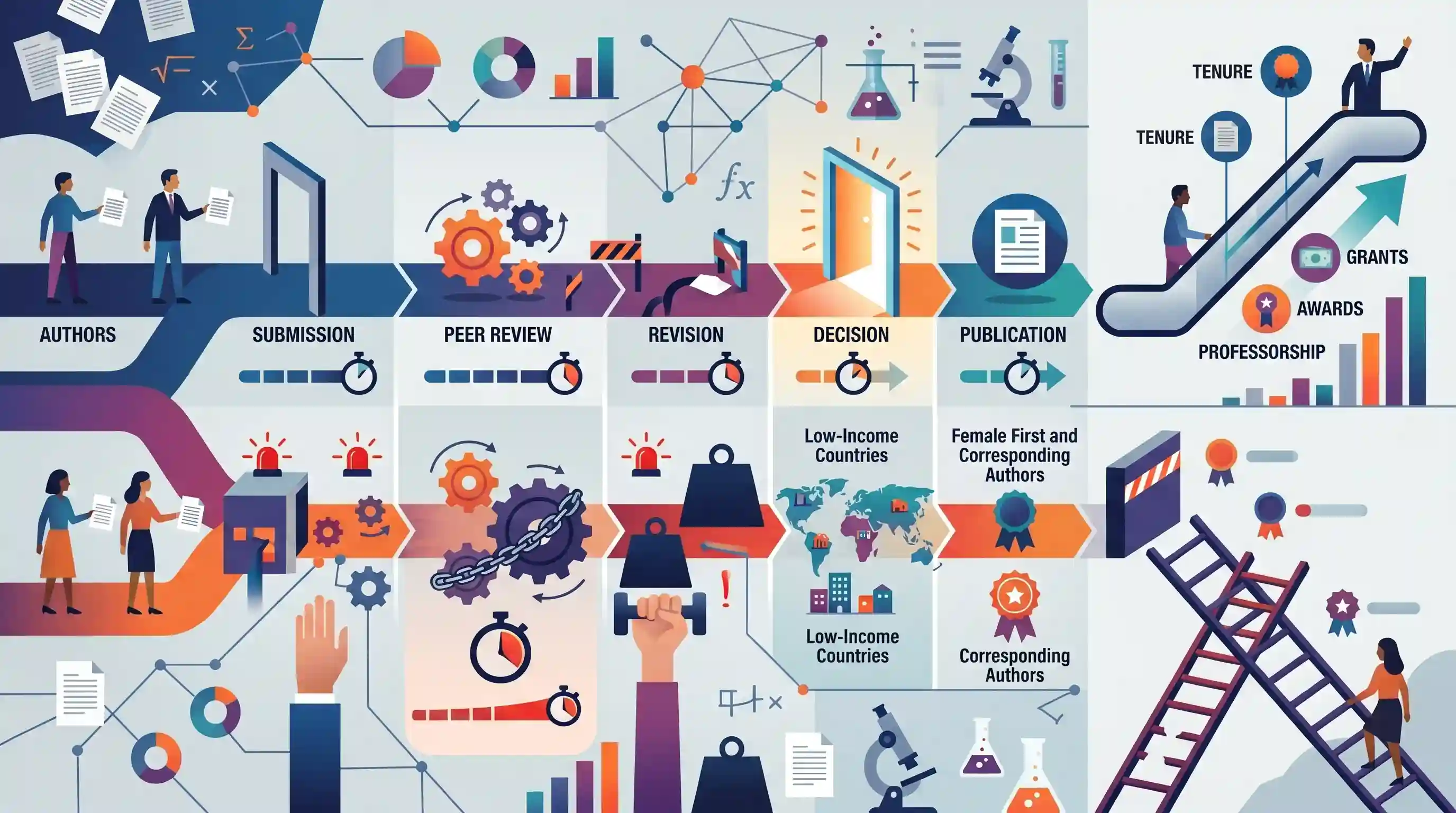
A recent study reveals significant systemic bias in the academic peer review process, showing that scientific papers authored by women spend considerably longer under review than those by men. By analyzing millions of biomedical articles, researchers found that this disparity disproportionately impacts female first and corresponding authors, as well as scholars from low-income countries. These findings highlight deep-rooted structural inequities in STEMM (Science, Technology, Engineering, Mathematics, and Medicine) publishing. Such delays can adversely affect publication records and career progression, underscoring the urgent need for reforms to ensure gender equity in scientific research and academia.
Key Points
- A comprehensive analysis of 3.65 crore biomedical and life sciences articles reveals that papers authored by women spend up to 15% longer in the peer review process compared to those authored by men.
- The median time spent under review is 7.4% to 14.6% longer for women, leading to cumulative career delays of 350 to 750 days for a female researcher publishing 50 papers.
- The longest delays are experienced when both the first author and corresponding author are women, taking an average of 15 days longer than male counterparts.
- Geographical bias is also evident, with authors from low-income countries facing similarly prolonged peer review timelines.
- These structural delays in academic publishing compound existing disparities in STEMM, hindering women's career advancement, funding prospects, and representation in senior academic roles.
Important Terms
Peer Review

The process where independent experts evaluate a researcher's work to ensure quality, validity, and suitability for publication. It is the cornerstone of scientific self-regulation.
UPSC context
Tests GS Paper IV (Ethics) and GS II (Issues relating to education and research integrity).
STEMM
Acronym for Science, Technology, Engineering, Mathematics, and Medicine, representing fields critical for innovation where women often face structural career barriers.
UPSC context
Key for GS Paper III (Science & Technology) and GS II (Social Justice/Women).
Gender Gap
The systematic difference between men and women regarding status, opportunities, and representation, manifesting in this study as longer publication delays for female authors.
UPSC context
Relevant for GS Paper I (Indian Society) and GS II (Issues related to women).
Systemic Bias
Prejudices ingrained within institutional rules and norms that lead to unfair advantages for certain social groups, often occurring without conscious intent.
UPSC context
Tests GS Paper IV (Human Values/Ethics) and GS II (Governance and Social Justice).
PubMed
A massive free database of biomedical and life sciences literature, crucial for tracking global research output and gender representation in scientific publishing.
UPSC context
Relevant for GS Paper III as a tool for evidence-based scientific research analysis.
Social Empowerment
The process of enhancing the capacity of marginalized groups, such as women in research, to make strategic life choices and achieve leadership positions.
UPSC context
Crucial theme for GS Paper I (Society) and GS Paper II (Social Justice).
Prelims Trap
"GATI is an infrastructure initiative implemented under the PM Gati Shakti Master Plan."
Aspirants often confuse GATI (a DST initiative for gender equity in STEMM) with the PM Gati Shakti National Master Plan for multi-modal logistics.
Static Concepts Connected
What is the 'Leaky Pipeline' phenomenon in the context of STEM?
- Progressive Attrition: The continuous, disproportionate loss of women at each advancing stage of scientific and academic careers, from graduation to leadership.
- Indian Paradox: While India boasts nearly 43% female STEM graduates, their representation in the professional R&D workforce plummets to roughly 18%.
- Systemic Causes: Driven by institutional biases like peer review and funding delays, uneven caregiving burdens, and a lack of systemic mentorship.
Which key Indian initiatives aim to bridge the gender gap in STEMM?
- KIRAN Scheme: Knowledge Involvement in Research Advancement through Nurturing aims to reintegrate women scientists into the workforce after career breaks.
- GATI Initiative: A comprehensive framework assessing and accrediting higher education institutes on their commitment to gender equity and creating enabling environments.
- Vigyan Jyoti: Targets meritorious high-school girls to encourage their enrollment in underrepresented STEM domains like engineering and physical sciences.
Cross-Topic Patterns
Global South Knowledge Inequity
Prolonged review times for authors from low-income nations mirrors the broader North-South hegemony in academic publishing, IPR regimes, and technological standard-setting.
Algorithmic vs Institutional Bias
Debates on algorithmic bias in AI models directly reflect these pre-existing, systemic human biases found in traditional institutional processes like scientific peer review.

Expect a mains question linking the 'leaky pipeline' in STEM to systemic institutional barriers like peer-review delays and funding access.
Linked PYQs · 2
Linked PYQs · 2
- 2024MainsGS1
Distinguish between gender equality, gender equity and women's empowerment. Why is it important to take gender concerns into account in programme design and implementation?
- 2021MainsGS2
Discuss the desirability of greater representation to women in the higher judiciary to ensure diversity, equity and inclusiveness.
