Small Lifestyle Changes Linked to Reduced Mortality Rates
Source:The Hindu ↗
Why It Matters
With the rising prevalence of lifestyle-related non-communicable diseases and an aging population, preventive healthcare is critical. Understanding that minor, feasible changes can have massive public health benefits helps policymakers design more realistic and effective health awareness campaigns and interventions.
Summary
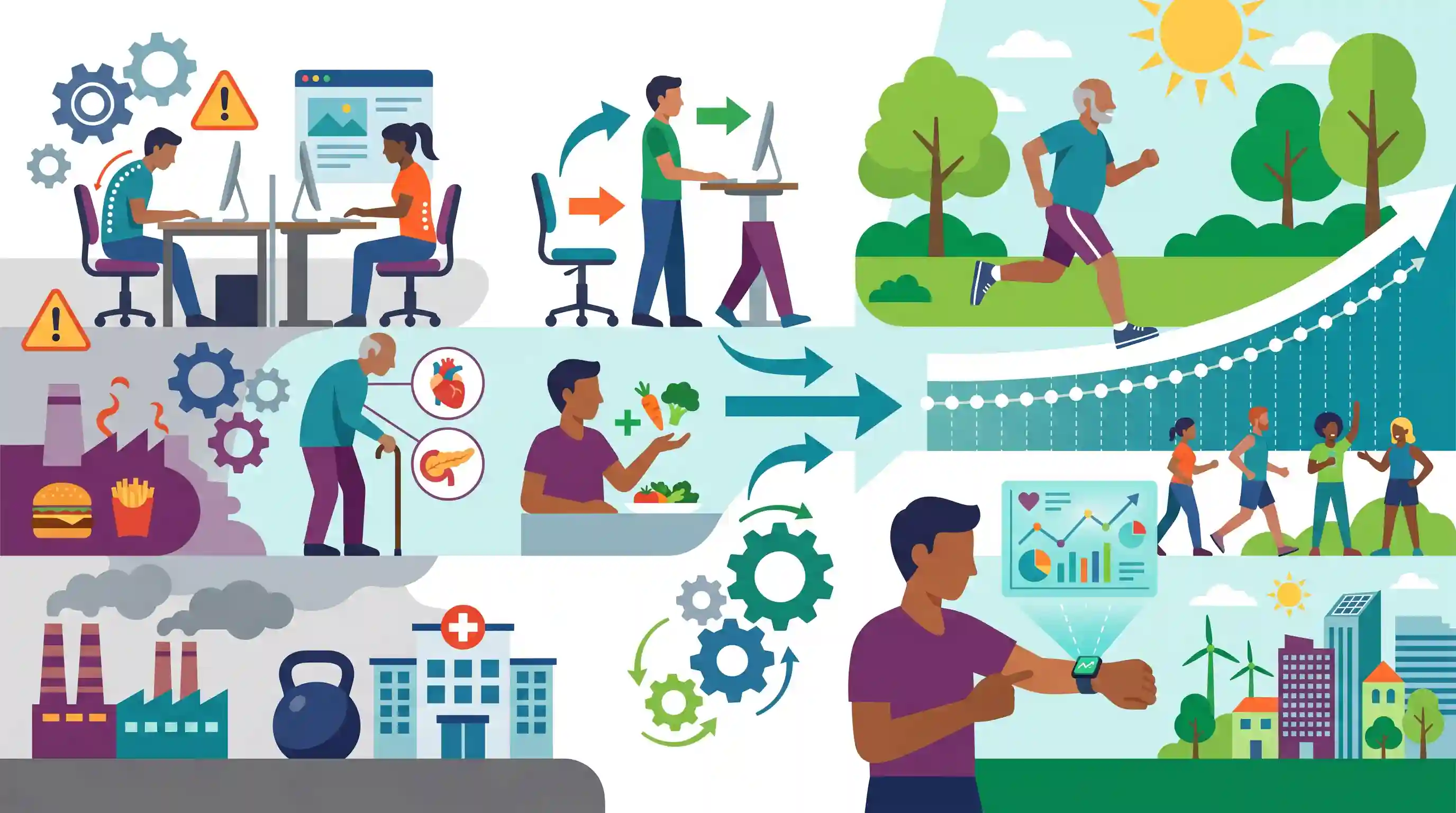
Recent studies published in The Lancet highlight that small, incremental improvements in lifestyle factors—such as replacing short intervals of sedentary time with moderate physical activity or adding a small serving of vegetables—can significantly extend life expectancy and reduce mortality rates. The research underscores the immense public health potential of small, achievable lifestyle modifications in tackling non-communicable diseases (NCDs) and reducing the global demographic disease burden, particularly as life expectancy increases.
Key Points
- Substituting just five minutes of sedentary time with moderate-to-vigorous physical activity (MVPA) is linked to a 10% reduction in overall mortality among adults.
- Minor lifestyle adjustments, such as adding five minutes of sleep, two minutes of brisk walking, or a half-serving of vegetables daily, can increase life expectancy by a year.
- Wearable activity trackers are increasingly being utilized in clinical research to gather precise empirical data on movement and public health outcomes.
- There is an urgent need for more research in low- and middle-income countries, which face a rising burden of non-communicable diseases (NCDs) but remain underrepresented in current lifestyle studies.
- Preventive healthcare strategies that emphasize small, achievable behavioral tweaks could drastically reduce the demographic health burden associated with aging and sedentary modern lifestyles.
Important Terms
Non-Communicable Diseases (NCDs)

Chronic diseases not transmitted from person to person, such as cardiovascular diseases, diabetes, and cancer, often caused by lifestyle, genetic, and environmental factors.
UPSC context
GS Paper II (Social Justice/Health) and GS III (Economy); focus on lifestyle-related health challenges and their impact on human capital.
Preventive Healthcare
Proactive medical measures—including screenings, vaccinations, and lifestyle modifications—aimed at preventing disease onset or progression rather than just treating symptoms.
UPSC context
GS Paper II (Issues related to Health); tested regarding National Health Policy targets and the shift from curative to preventive care.
Life Expectancy
A statistical measure of the average number of years a person is expected to live, based on current mortality rates in a specific population.
UPSC context
GS Paper II; critical indicator for the Human Development Index (HDI) and assessing the success of public health interventions.
Demographic Disease Burden
The total impact of health problems in a population, measured by mortality and morbidity; currently shifting in India from infectious diseases to chronic conditions.
UPSC context
GS Paper II; tests understanding of the epidemiological transition and its implications for healthcare infrastructure and the aging population.
The Lancet
One of the world's oldest and most prestigious peer-reviewed medical journals, frequently cited for global health research and the 'Global Burden of Disease' studies.
UPSC context
Relevant as an authoritative source for health data and reports frequently used in UPSC Mains for evidence-based arguments.
The Lancet eClinicalMedicine
An open-access peer-reviewed journal from The Lancet family, focusing on clinical research to improve global health practice and influence health policy.
UPSC context
GS Paper II; serves as a source for recent evidence-based findings on clinical interventions and public health management.
Prelims Trap
NCDs are primarily a burden for developed nations, while LMICs almost exclusively battle communicable diseases.
This ignores the epidemiological transition. Low- and Middle-Income Countries (LMICs) now bear approximately 86% of global premature deaths from Non-Communicable Diseases.
Static Concepts Connected
What is the Epidemiological Transition in public health?
- Core Definition: A shift in a population's disease pattern from predominantly infectious/communicable diseases to non-communicable diseases (NCDs).
- Primary Drivers: Increased life expectancy, urbanization, dietary shifts, and sedentary modern lifestyles.
- India's Status: India is currently experiencing this transition, leading to a dual burden but with NCDs (like cardiovascular diseases) emerging as the dominant mortality cause.
How do Non-Communicable Diseases impact India's healthcare economics?
- High OOPE: Direct payments made by individuals to healthcare providers at the time of service, which remain high in India.
- Chronic Cost Burden: Because NCDs (like diabetes) require lifelong management and medication, they disproportionately drain household savings compared to short-term infectious diseases.
- Poverty Trap: High OOPE for chronic NCD care is a leading cause of households being pushed below the poverty line annually.
Cross-Topic Patterns
Wearable IoT + Digital Health Privacy
The integration of wearables in NCD management directly links public health to IoT vulnerabilities and the DPDP Act’s rules for handling sensitive personal biometric data.
Epidemiological Transition + Demographic Dividend
If the rising NCD burden is unchecked, chronic diseases will drastically reduce the healthy, productive years of India's workforce, neutralizing its much-anticipated demographic dividend.

Expect a GS2 Mains question linking India's epidemiological transition toward NCDs with rising Out-of-Pocket Expenditure (OOPE).
Linked PYQs · 3
Linked PYQs · 3
- 2022MainsGS3
The increase in life expectancy in the country has led to newer health challenges in the community. What are those challenges and what steps need to be taken to meet them?
- 2020MainsGS2
In order to enhance the prospects of social development, sound and adequate health care policies are needed particularly in the fields of geriatric and maternal health care. Discuss.
- 2021MainsGS2
“Besides being a moral imperative of a Welfare State, primary health structure is a necessary precondition for sustainable development.” Analyze.
