Strait of Hormuz Tensions Strand India Bound Oil and Gas Tankers
Source:Indian Express ↗
Why It Matters
This event serves as a textbook case study on the intersection of geopolitics and domestic energy security. It demonstrates India's vulnerability to supply chain shocks at critical maritime chokepoints like the Strait of Hormuz, directly answering Mains questions regarding energy security as the kingpin of India's foreign policy in the Middle East.
Summary
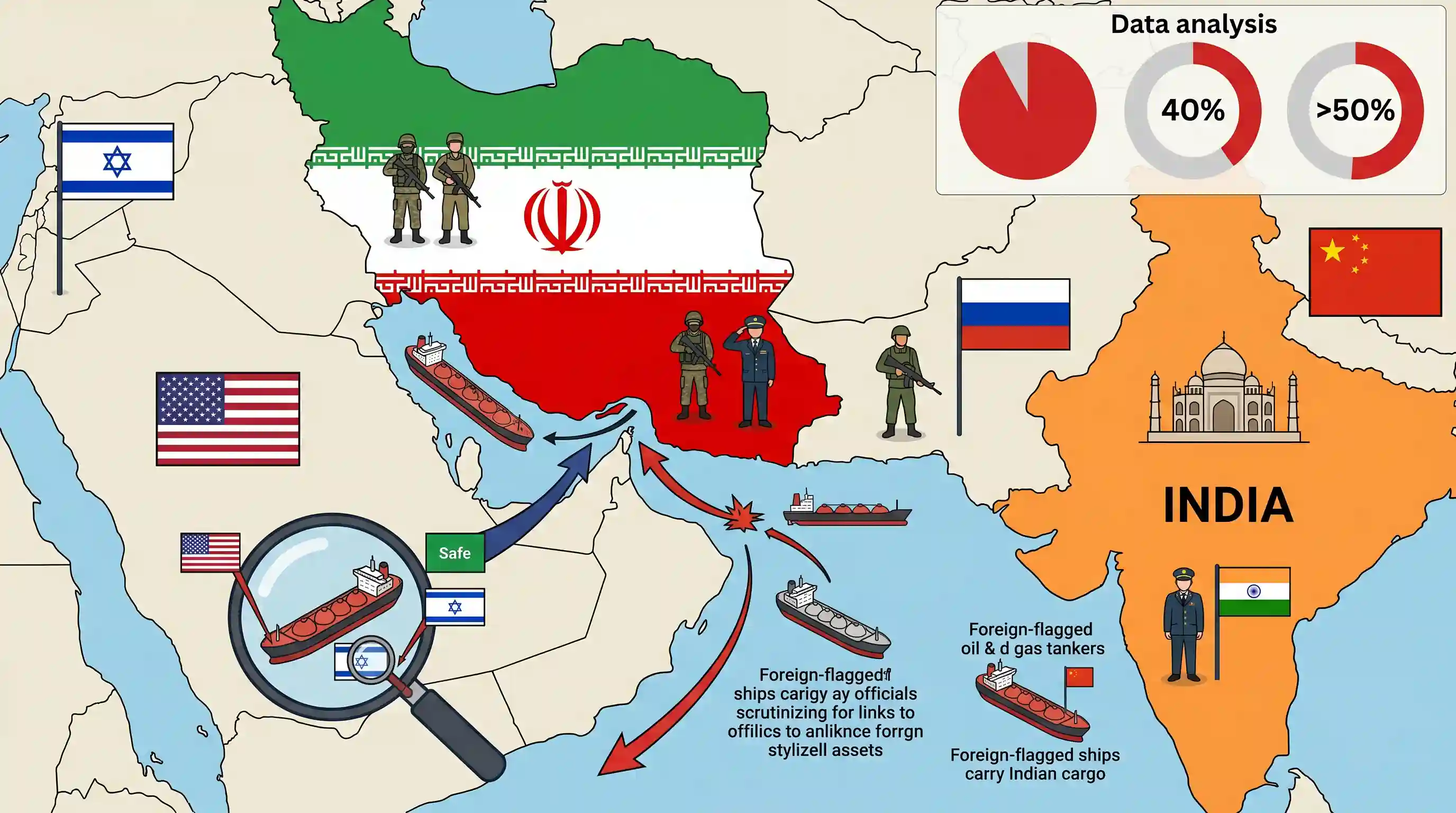
Geopolitical escalations between Iran and Israel have led to severe maritime bottlenecks in the Persian Gulf, leaving at least 10 foreign-flagged oil and gas tankers bound for India stranded. Iran is heavily regulating passage through the Strait of Hormuz—a vital maritime chokepoint—treating the region as a war zone and allowing unrestricted transit only to vessels flagged to "friendly" nations like India, China, and Russia. Although 18 India-flagged vessels were permitted safe passage, foreign-flagged ships carrying Indian fuel cargo are facing intense scrutiny to ensure they have no links to the US, Israel, or their allies. This bottleneck exposes the fragility of India's energy security, as the country relies on the Strait of Hormuz for 90% of its LPG, 40% of its crude oil, and over 50% of its LNG imports. In response, New Delhi is utilizing diplomatic channels to secure the release and safe passage of the stranded assets.
Key Points
- At least 10 foreign-flagged oil and gas tankers bound for India are currently stranded in the Persian Gulf due to heightened geopolitical tensions between Iran and Israel.
- Iran has effectively classified the Strait of Hormuz as a war zone, stringently regulating maritime traffic and only permitting vessels flagged to "friendly" or "non-hostile" nations to pass.
- While 18 India-flagged vessels received safe passage, foreign-flagged vessels carrying Indian energy imports face extensive background checks to ensure no ties to the US or Israel.
- The disruption severely highlights India's energy vulnerability; the Strait of Hormuz route accounts for 90% of India's LPG imports, 40% of its crude oil, and over 50% of its LNG imports.
- Indian diplomatic and maritime authorities are actively negotiating with regional counterparts to secure the safe transit of these stranded critical energy supplies.
Important Terms
Strait of Hormuz

A strategic waterway between Iran and Oman connecting the Persian Gulf to the Gulf of Oman; it handles approximately 20% of the world's total oil and gas trade.
UPSC context
GS-2 (International Relations) & GS-1 (Geography). Vital for mapping and analyzing India's energy import dependence and maritime trade routes.
Directorate General of Shipping (DGS)
The apex regulatory body for Indian shipping, functioning under the Ministry of Ports, Shipping and Waterways to handle maritime administration, safety, and training.
UPSC context
GS-2 (Statutory Bodies) & GS-3 (Infrastructure). Tests understanding of India's maritime regulatory framework and the Merchant Shipping Act, 1958.
Maritime Chokepoint
A narrow, strategic geographical passage (strait or canal) through which a disproportionately large volume of global seaborne trade and energy supplies must pass.
UPSC context
GS-1 (Geography) & GS-3 (Economy). Focuses on global supply chain vulnerabilities and geopolitical flashpoints affecting international trade stability.
Energy Security
Ensuring the continuous availability of energy sources at an affordable price; essential for India, which imports over 85% of its crude oil requirements.
UPSC context
GS-3 (Energy). Evaluates strategies like Strategic Petroleum Reserves (SPR) and import diversification to mitigate West Asian geopolitical risks.
Flag of Convenience
The practice of registering a commercial ship in a country other than the owner's to benefit from lower taxes, reduced costs, or lenient regulations.
UPSC context
GS-3 (Security). Explains why Indian cargo often moves on "foreign-flagged" vessels, creating diplomatic hurdles during maritime crises.
Merchant Shipping Act, 1958
The principal legislation governing the registration, safety, and labor standards of the Indian merchant fleet and foreign vessels in Indian waters.
UPSC context
GS-2 (Governance/Laws). The legal basis for DG Shipping’s statutory powers and India’s maritime jurisdiction on the high seas.
Prelims Trap
The Strait of Hormuz is a critical maritime chokepoint connecting the Persian Gulf to the Red Sea.
Hormuz connects the Persian Gulf to the Gulf of Oman/Arabian Sea. The Red Sea is connected via the Bab el-Mandeb strait. UPSC frequently swaps these chokepoints.
Static Concepts Connected
What are the key maritime chokepoints in the Middle East?
- Strait of Hormuz: Connects the Persian Gulf to the Gulf of Oman and the Arabian Sea. It is bordered by Iran, Oman, and the UAE.
- Bab el-Mandeb: Connects the Red Sea to the Gulf of Aden. It is bordered by Yemen on the Arabian Peninsula, and Djibouti and Eritrea in the Horn of Africa.
What is a 'Flag of Convenience' (FoC) in maritime shipping?
- Definition: A business practice where merchant ships are registered in a sovereign state different from that of the ship's actual owners (e.g., Panama, Liberia).
- Economic Purpose: Ship owners use FoCs to reduce operating costs, avoid stringent labor/environmental regulations, or obscure true ownership for tax purposes.
- Strategic Vulnerability: During conflicts, FoC vessels can face strict blockades or scrutiny because their obscured ownership makes it hard for hostile states to verify their neutrality.
Cross-Topic Patterns
Chokepoints and Strategic Petroleum Reserves
Hormuz disruptions underscore the necessity of India's Strategic Petroleum Reserves (Visakhapatnam, Mangaluru, Padur) to buffer against sudden crude oil supply shocks from the Middle East.
Chabahar Port's strategic geography
Unlike Bandar Abbas, Iran's Chabahar port is located on the Gulf of Oman, allowing India's transit routes to Central Asia to bypass the highly vulnerable Strait of Hormuz chokepoint entirely.

Strait of Hormuz mapping + the economic concept of 'Flags of Convenience' is a highly probable multi-statement Prelims question for 2026.
Linked PYQs · 4
Linked PYQs · 4
- 2025MainsGS2
"Energy security constitutes the dominant kingpin of India's foreign policy, and is linked with India's overarching influence in Middle Eastern countries.” How would you integrate energy security with India's foreign policy trajectories in the coming years?
- 2017MainsGS2
The question of India's Energy Security constitutes the most important part of India's economic progress. Analyze India's energy policy cooperation with West Asian countries.
- 2025MainsGS3
Why is maritime security vital to protect India's sea trade? Discuss maritime and coastal security challenges and the way forward.
- 2024PrelimsGS1
Consider the following statements : Statement-I : Sumed pipeline is a strategic route for Persian Gulf oil and natural gas shipments to Europe. Statement-II : Sumed pipeline connects the Red Sea with the Mediterranean Sea. Which one of the following is correct in respect of the above statements?
