Diplomatic Efforts Ease Crisis Following Hormuz Blockade
Source:Indian Express ↗
Why It Matters
The Strait of Hormuz is a critical global energy chokepoint, and its blockade directly threatens India's energy security and macroeconomic stability through imported inflation. The evolving diplomatic alignments—such as China's concessions, Pakistan's role as a mediator, and the proposed US-Iran nuclear moratorium—will reshape the strategic calculus of West Asia, a region vital to India's diaspora and trade.
Summary
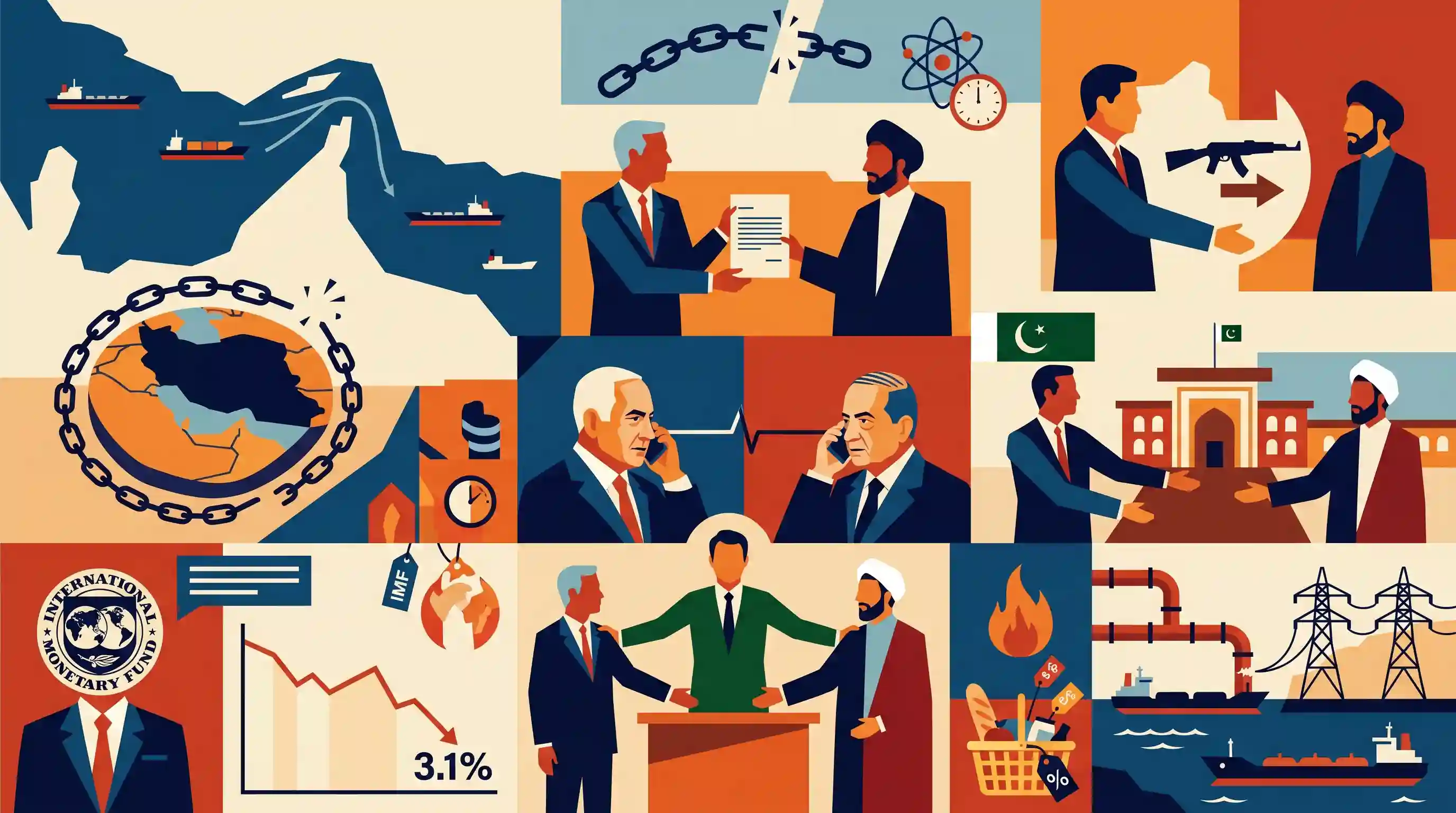
The crisis surrounding the Strait of Hormuz is de-escalating following diplomatic breakthroughs, with US President Donald Trump claiming the vital shipping lane is reopened and China agreeing to halt weapons supplies to Iran. The US and Iran are negotiating a ceasefire ahead of an April 22 deadline, centering on lifting the US naval blockade in exchange for a 20-year moratorium on Iranian uranium enrichment. The blockade severely disrupted global energy markets, causing the IMF to downgrade global growth forecasts to 3.1% amid inflation concerns. Additionally, the regional diplomatic push facilitated an unprecedented direct phone call between Israeli Prime Minister Benjamin Netanyahu and Lebanese leader Joseph Aoun, while Pakistan positions itself as a mediator for direct US-Iran talks in Islamabad.
Key Points
- Easing of the Strait of Hormuz Crisis: Following a US naval blockade on Iran, diplomatic efforts have reopened the strategic chokepoint, which handles roughly 20% of global oil and LNG shipments.
- US-Iran Ceasefire Draft: A proposed ceasefire with an April 22 deadline involves lifting the US naval blockade in exchange for Iran adopting a 20-year moratorium on uranium enrichment.
- Geopolitical Realignments & Mediation: China agreed to halt weapons shipments to Iran to avoid US secondary sanctions. Pakistan has emerged as a potential host and mediator for upcoming US-Iran talks in Islamabad.
- Macroeconomic Impact: The crisis disrupted global energy markets, prompting the IMF to downgrade its global growth outlook to 3.1% and raise inflation forecasts to 4.4%.
- Israel-Lebanon De-escalation: Capitalizing on the broader diplomatic momentum, Israeli PM Benjamin Netanyahu and Lebanese leader Joseph Aoun held the first direct leader-level phone call in 30 years.
Important Terms
Strait of Hormuz

A narrow, strategically vital waterway connecting the Persian Gulf and the Gulf of Oman, through which approximately 20% of the world's daily oil supply transits.
UPSC context
GS-I Geography & GS-II IR; tests knowledge of maritime chokepoints and India's high energy dependency on Persian Gulf imports.
Uranium Enrichment Moratorium
A temporary legal suspension of refining uranium; in diplomatic contexts, used to halt progress toward weapons-grade (90%+) material in exchange for sanctions relief.
UPSC context
GS-II IR & GS-III Science; relevant for nuclear non-proliferation treaties and India's stance on regional nuclear stability.
US Secondary Sanctions
Extraterritorial US measures that penalize foreign entities (including Indian firms) for trading with a primary-sanctioned target, effectively forcing global compliance with US foreign policy.
UPSC context
GS-II IR; tests understanding of unilateral vs multilateral sanctions and their impact on India’s strategic autonomy.
International Monetary Fund (IMF)
An international organization of 190 countries that monitors global financial health and publishes the 'World Economic Outlook,' projecting growth and inflation trends.
UPSC context
GS-II International Institutions; tests knowledge of global economic governance and the impact of geopolitical shocks on emerging economies.
Hezbollah
An Iran-backed Shiite militant group and political party in Lebanon, forming a key part of the 'Axis of Resistance' against Israeli and Western interests.
UPSC context
GS-II IR; involves West Asian geopolitics, non-state actors, and regional security dynamics affecting India's diaspora and energy links.
Naval Blockade
An act of war where a belligerent power uses naval forces to prevent ships from entering or leaving specific coastal areas or ports.
UPSC context
GS-II IR/International Law; tests awareness of coercive diplomacy, maritime security, and international humanitarian law during conflicts.
Prelims Trap
"The Strait of Hormuz connects the Persian Gulf directly to the Red Sea, facilitating Suez Canal shipping."
Hormuz connects the Persian Gulf to the Gulf of Oman/Arabian Sea. Bab-el-Mandeb connects the Red Sea to the Gulf of Aden. Aspirants frequently confuse these two vital chokepoints.
Static Concepts Connected
What are the key Middle Eastern maritime chokepoints and the water bodies they connect?
- Strait of Hormuz: Connects the Persian Gulf to the Gulf of Oman and the Arabian Sea, bordered by Iran, Oman, and the UAE.
- Bab el-Mandeb: Connects the Red Sea to the Gulf of Aden, acting as the strategic southern gateway to the Suez Canal.
How does the IMF officially track and project global macroeconomic growth?
- World Economic Outlook: The IMF's flagship World Economic Outlook (WEO) report is published biannually, providing comprehensive growth and inflation forecasts.
- GFSR: The Global Financial Stability Report (GFSR) accompanies the WEO, assessing vulnerabilities in the global financial system triggered by geopolitical shocks.
Cross-Topic Patterns
Secondary Sanctions & CAATSA echoes
US secondary sanctions forcing China to halt weapons to Iran mirrors the CAATSA framework. This highlights the concept of extraterritorial jurisdiction and weaponization of the dollar in international relations.
Pakistan's mediator role & India's dilemma
Pakistan mediating US-Iran talks revives its historical geopolitical utility. This directly impacts India's regional calculus regarding the Chabahar port and its strategic balancing act between Washington and Tehran.
Chokepoints, inflation & energy security
The Hormuz crisis directly ties Middle Eastern maritime geography to India's energy inflation. Expect map-based questions to be paired with the macroeconomic impacts of supply-side oil shocks.

Middle East chokepoints (Hormuz, Bab el-Mandeb) matched with bordering nations will likely form a paired-statement Prelims question in 2026.
Linked PYQs · 4
Linked PYQs · 4
- 2025MainsGS2
"Energy security constitutes the dominant kingpin of India's foreign policy, and is linked with India's overarching influence in Middle Eastern countries.” How would you integrate energy security with India's foreign policy trajectories in the coming years?
- 2018MainsGS2
In what ways would the ongoing US-Iran Nuclear Pact Controversy affect the national interest of India? How should India respond to this situation?
- 2012MainsGS2
How have the US sanctions against Iran affected India's bilateral relations with Iran?
- 2018MainsGS2
“India’s relations with Israel have, of late, acquired a depth and diversity, which cannot be rolled back.” Discuss.
