Patna High Court Rules on Pandemic Relief Claims
Source:lawtrend ↗
Why It Matters
This ruling underscores the accountability of state governments in welfare administration, highlighting the protective role of High Courts under Article 226 against bureaucratic red tape during public health crises.
Summary
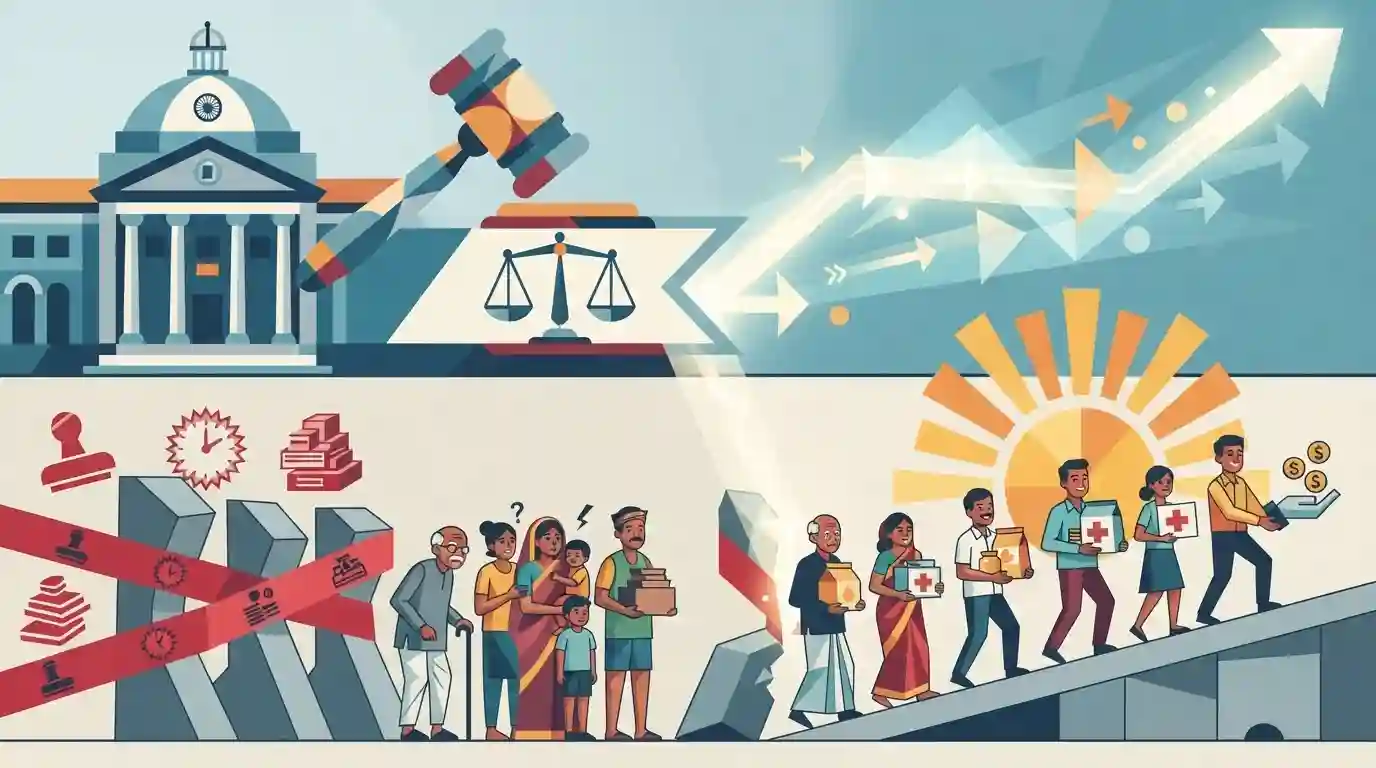
The Patna High Court held that the State cannot deny COVID-19 relief or welfare benefits to citizens on technicalities or procedural delays, reinforcing the concept of a welfare state and holding that humanitarian relief must be administered pragmatically.
Key Points
- The Patna High Court ruled that the State cannot deny COVID-19 relief or ex-gratia compensation on technical grounds or procedural delays.
- The court emphasized the welfare character of the state, noting that welfare measures must be administered with empathy rather than rigid technicality during unprecedented humanitarian crises like the pandemic.
- State authorities are directed to process genuine claims pragmatically, ensuring that distressed families are not deprived of rightful assistance due to minor documentation issues.
Important Terms
Patna High Court

The apex state-level judiciary in Bihar, possessing constitutional powers under Article 226 to issue writs protecting citizens' fundamental and legal rights against state executive action.
UPSC context
Important for Polity and Constitution (Structure and functioning of the Indian Judiciary, High Court writs under Article 226).
Disaster Management Act
A legislative framework establishing institutional mechanisms at national, state, and district levels for the systematic management and mitigation of disasters, including mandatory statutory ex-gratia relief.
UPSC context
Important for Governance, Disaster Management, and statutory executive liabilities during public health emergencies.
Welfare State
A governance model wherein the state assumes primary responsibility for safeguarding the social, economic, and physical well-being of its citizens, fulfilling binding duties under Article 21.
UPSC context
Core concept in Indian Polity, Directive Principles of State Policy (DPSP), and fundamental rights jurisprudence.
Static Concepts Connected
What are the key writ jurisdictions of High Courts under Article 226 of the Constitution?
- Broad Scope: Wider scope than Article 32, issuing writs for enforcement of fundamental rights and any other legal purpose.
- Types of Writs: Writs issued include Habeas Corpus, Mandamus, Prohibition, Certiorari, and Quo-Warranto.
- Against Authorities: Can be issued against any person or authority, including the government, within the territorial jurisdiction.
Cross-Topic Patterns
Judicial Activism vs Executive Discretion
High Court interventions under Article 226 mirror Supreme Court directives on disaster relief, linking judicial review with executive accountability in public health crises.
Disaster Management Act and Welfare State
The Disaster Management Act 2005 sets statutory mandates for ex-gratia payments, intersecting welfare administration with federal fiscal duties.

Patna HC welfare state/disaster management rulings frequently feature in BPSC Polity and Judiciary mains questions. Keep notes handy.
Linked PYQs · 2
Linked PYQs · 2
- 2025BPSC_PRELIMSGS1
Which one of the following subjects fall within the jurisdiction of both High Court and Supreme Court?
- 2024-IBPSC_PRELIMSGS1
The power of the Supreme Court of India to decide disputes between the Centre and the State falls under its
