India-Bangladesh Ties and Ganga Water Treaty Renewal Stasis
Source:The Hindu ↗
Why It Matters
Transboundary river water sharing is a critical element of India's neighborhood first policy and bilateral diplomacy, carrying significant weight for regional security and cooperative federalism/international relations under GS Paper II.
Summary
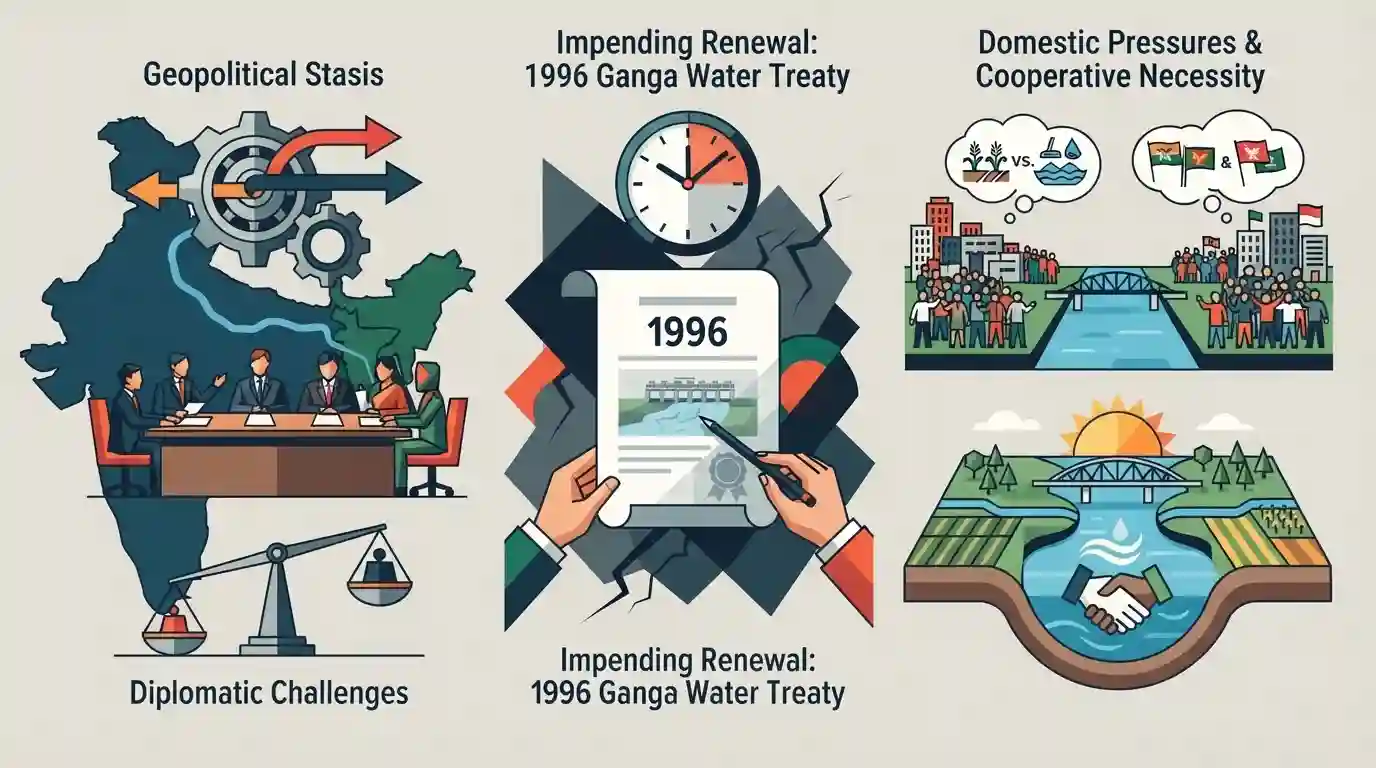
The article examines the geopolitical stasis in India-Bangladesh relations and its implications for the impending renewal of the 1996 Ganga Water Treaty. It underscores the challenges of transboundary water diplomacy, domestic political pressures, and the necessity of cooperative water resource management for regional stability.
Key Points
- The 1996 Ganga Water Treaty between India and Bangladesh is up for renewal, but political transitions and stasis in bilateral relations have left it in limbo.
- Transboundary water diplomacy is facing challenges due to shifting geopolitical dynamics, domestic political sensitivities in both nations, and ecological concerns over water flow management at Farakka.
- Effective management of shared river basins is crucial for regional stability, agricultural security, and trust-building in South Asia.
Important Terms
Ganga Water Treaty 1996

A 30-year bilateral agreement signed in 1996 between India and Bangladesh governing the sharing of the Ganges River's dry-season waters at the Farakka Barrage, set to expire in 2026.
UPSC context
UPSC GS Paper II (International Relations - India's Neighborhood). Tests understanding of transboundary water diplomacy, bilateral treaties, and hydro-politics in South Asia.
Static Concepts Connected
What are the key institutional mechanisms and provisions governing the 1996 Ganga Water Treaty between India and Bangladesh?
- Thirty-Year Term: Duration of agreement is set for 30 years, expiring in 2026, creating the current imperative for diplomatic renewal negotiations.
- Dry-Season Focus: Governs dry-season water sharing from January 1 to May 31 annually based on historical 40-year flow data at Farakka Barrage.
- Equal Sharing Formula: Establishes a 50:50 equal sharing arrangement when incoming water availability at Farakka is 70,000 cusecs or less.
- Guarantee Clause: Includes a guarantee clause ensuring that respective downstream flows are protected during critical lean periods.
Cross-Topic Patterns
Transboundary Water Diplomacy meets Indian Federalism
Transboundary water sharing negotiations like the Ganga treaty are increasingly linked with domestic federalism, as upstream states like West Bengal demand a direct voice in interstate or international river diplomacy.
River Basins and Delta Ecology Linkages
Bilateral river treaties intersect with maritime security and ecological sustainability in the Bay of Bengal, where upstream flow alterations impact the Sundarbans delta ecosystem.

Expect a multi-statement question on the 1996 Ganga Water Treaty's 30-year framework, Farakka sharing formula, and lower-riparian rights.
Linked PYQs · 1
Linked PYQs · 1
- 2012MainsGS2
The situation today is far different to that prevalent fifty years back when the Indus Water Treaty was signed." Highlight the complexity of the current challenges on both sides of the border in this regard. Do you think that a review of the Treaty is in India's best interests?
