Sree Narayana Guru Teachings and Social Reform Legacy in Modern India
Source:The Hindu ↗
Why It Matters
Sree Narayana Guru was a monumental figure in Kerala's socio-religious renaissance. His philosophy of universal brotherhood, anti-caste activism, and spiritual humanism are directly relevant to GS Paper 1 (Modern Indian History - Social Reform Movements) and GS Paper 4 (Human Values - lessons from the lives and teachings of great leaders, reformers and administrators).
Summary
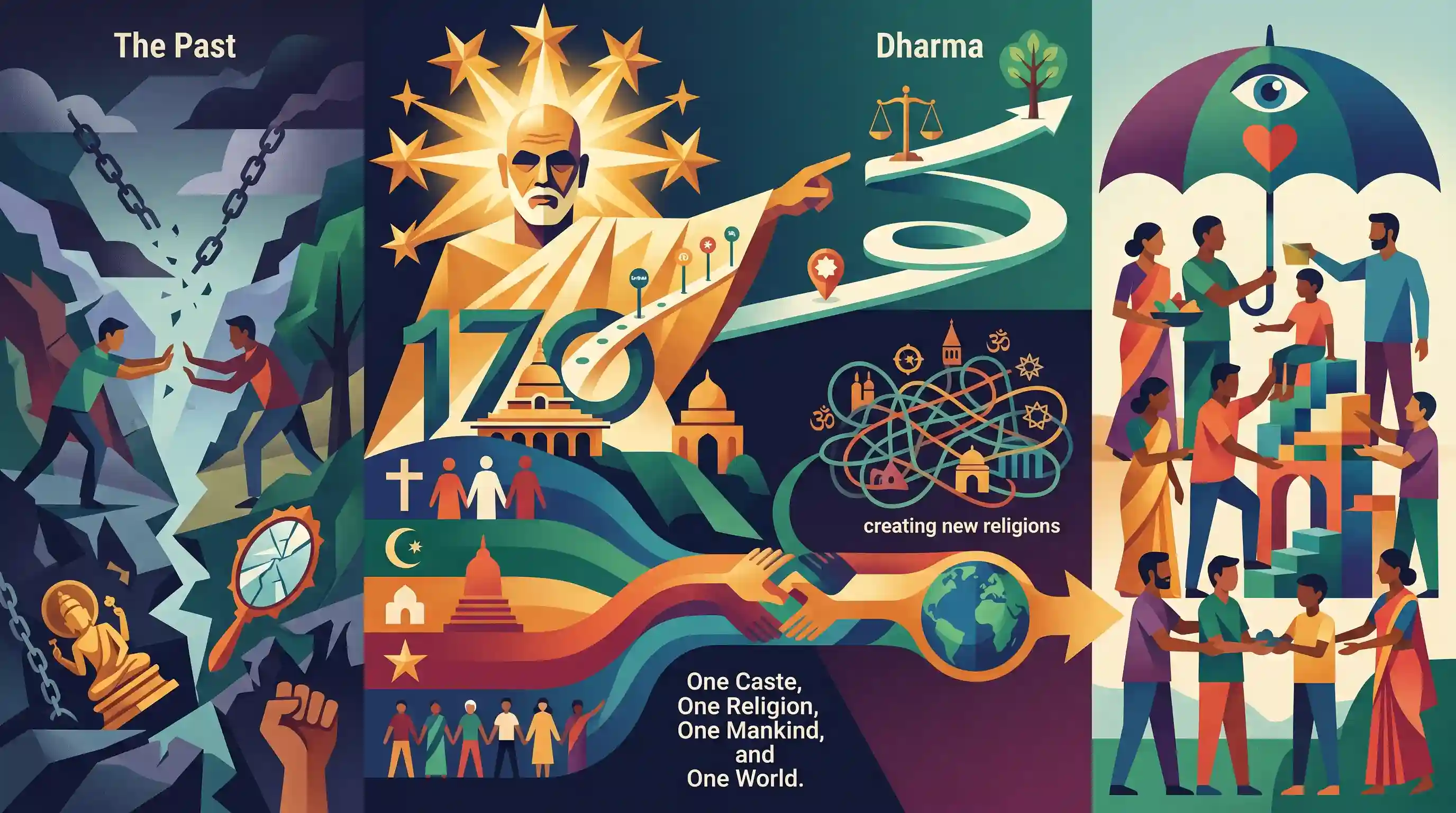
Kerala Governor Rajendra Vishwanath Arlekar recently inaugurated the 170th Sree Narayana Guru Jayanthi celebrations at Sivagiri, emphasizing the enduring relevance of the social reformer's teachings. He noted that the Guru's core message of "One caste, one religion, one mankind, one world" and his focus on universal brotherhood and equality continue to inspire generations. The Governor stressed that Sree Narayana Guru advocated for 'Dharma' or right conduct over creating a new religion, and his fight against superstition, discrimination, and injustice provides a framework for building an inclusive, tolerant, and compassionate society today.
Key Points
- Kerala Governor Rajendra Vishwanath Arlekar highlighted the timeless relevance of Sree Narayana Guru's teachings on unity, equality, and compassion during his 170th Jayanthi celebrations at Sivagiri.
- The Guru's core philosophy, famously encapsulated as 'One caste, one religion, one god for mankind,' was emphasized as a powerful unifying force against societal divisions.
- Sree Narayana Guru did not aim to establish a new religion but advocated for 'Dharma'—the right conduct—as the fundamental principle that unites humanity.
- His lifelong struggle against injustices, superstitions, and caste discrimination continues to inspire the creation of an inclusive, tolerant, and compassionate 'live and let live' society.
Important Terms
Sree Narayana Guru

A 19th-century Kerala social reformer and philosopher who famously advocated "One Caste, One Religion, One God for Mankind" to dismantle the rigid caste system through spiritual and educational empowerment.
UPSC context
GS Paper I: Socio-religious reform movements. Tests knowledge of 19th-century reformers and their impact on Indian society.
SNDP Yogam
Formed in 1903 by Sree Narayana Guru, Dr. Palpu, and Kumaran Asan, this organization worked for the social, educational, and economic upliftment of the marginalized Ezhava community.
UPSC context
GS Paper I: Modern Indian history. Focuses on regional reform movements and the role of organizations in social transformation.
Sivagiri Mutt
The spiritual headquarters of Sree Narayana Guru’s mission in Varkala, Kerala, established in 1904. It houses the Guru's samadhi and the Sarada Mutt temple.
UPSC context
GS Paper I & IV: Indian Culture/Ethics. Represents centers of social awakening and rational spirituality.
Sree Narayana Dharma Sangham Trust
An order of monks (sanyasis) founded by Sree Narayana Guru to maintain his spiritual legacy and manage the institutional properties, distinct from the social/political SNDP Yogam.
UPSC context
GS Paper I: Modern History. Tests understanding of the institutional structure of reform movements.
Aravippuram Movement
Initiated in 1888 when Sree Narayana Guru consecrated a Shivalinga at Aravippuram, a revolutionary act that challenged the Brahminical monopoly on religious rituals and temple entry.
UPSC context
GS Paper I: Modern Indian History. Key event in the history of anti-caste movements and temple entry reforms.
Vaikom Satyagraha
A 1924-25 non-violent protest in Travancore demanding temple entry and road access for "lower castes," which was supported by Sree Narayana Guru and Mahatma Gandhi.
UPSC context
GS Paper I: Freedom Struggle. Tests the intersection of social reform and the national independence movement.
Prelims Trap
"Sree Narayana Guru established a new syncretic religion to counter orthodox Brahminical dominance in Kerala."
The Guru never sought to establish a new religion. He utilized Advaita Vedanta principles to advocate for 'Dharma' and right conduct within the existing societal framework.
Static Concepts Connected
What were the key institutional contributions of Sree Narayana Guru?
- Aravippuram Movement: Consecrated a Shiva idol in 1888, directly challenging the orthodox Brahmin monopoly over temple consecration rituals.
- SNDP Yogam: Established in 1903 to organize the depressed classes, specifically the Ezhava community, for educational and socio-economic upliftment.
- Advaita Ashram: Founded in 1913 at Aluva with the motto 'Universal Brotherhood,' hosting India's first All Religions Conference in 1924.
What is the timeline of major temple entry movements in Kerala?
- Vaikom Satyagraha (1924-25): Mass movement demanding the right of lower castes to walk on public roads adjacent to the Vaikom Shiva temple. Supported by Narayana Guru.
- Guruvayur Satyagraha (1931): Led by K. Kelappan (the 'Kerala Gandhi'), this satyagraha explicitly demanded the entry of untouchables into the Guruvayur temple.
- Temple Entry Proclamation (1936): Issued by the Maharaja of Travancore, officially opening all government-controlled temples to all Hindus, marking a historic victory.
Cross-Topic Patterns
Practical Advaita vs. Philosophical Advaita
While Adi Shankara codified philosophical Advaita (non-dualism), Sree Narayana Guru applied it practically to reject caste hierarchies, forming a high-yield link between GS1 History and GS4 Ethics.
Pan-India Temple Entry Parallels
Compare Kerala's Vaikom Satyagraha (backed by the Guru) with B.R. Ambedkar’s Kalaram Temple Satyagraha (1930). Both mark a pan-India wave of asserting subaltern rights over public and religious spaces.

Expect a 2026 Prelims statement contrasting Sree Narayana Guru's 'One Religion' stance with Sahodaran Ayyappan's 'No Religion' amendment.
Linked PYQs · 5
Linked PYQs · 5
- 2016PrelimsGS1
Satya Shodhak Samaj organized
- 2025PrelimsGS1
Who among the following was the founder of the 'Self-Respect Movement?
- 2021MainsGS1
Trace the rise and growth of socio-religious reform movements with special reference to Young Bengal and Brahmo Samaj.
- 2025MainsGS1
Mahatma Jotirao Phule's writings and efforts of social reforms touched issues of almost all subaltern classes. Discuss.
- 2020MainsGS4
What teachings of Buddha are most relevant today and why? Discuss.
