सांकेतिक भाषा की गवाहियों ने दिव्यांगों के लिए उत्पीड़न के मामले में सजा सुनिश्चित की
स्रोत:इंडियन एक्सप्रेस ↗
क्यों मायने रखता है
The article provides a practical case study for GS-2 (Social Justice & Judiciary) on how legal frameworks can be adapted to overcome communication barriers for Persons with Disabilities, ensuring access to justice and accountability in institutional care.
सारांश
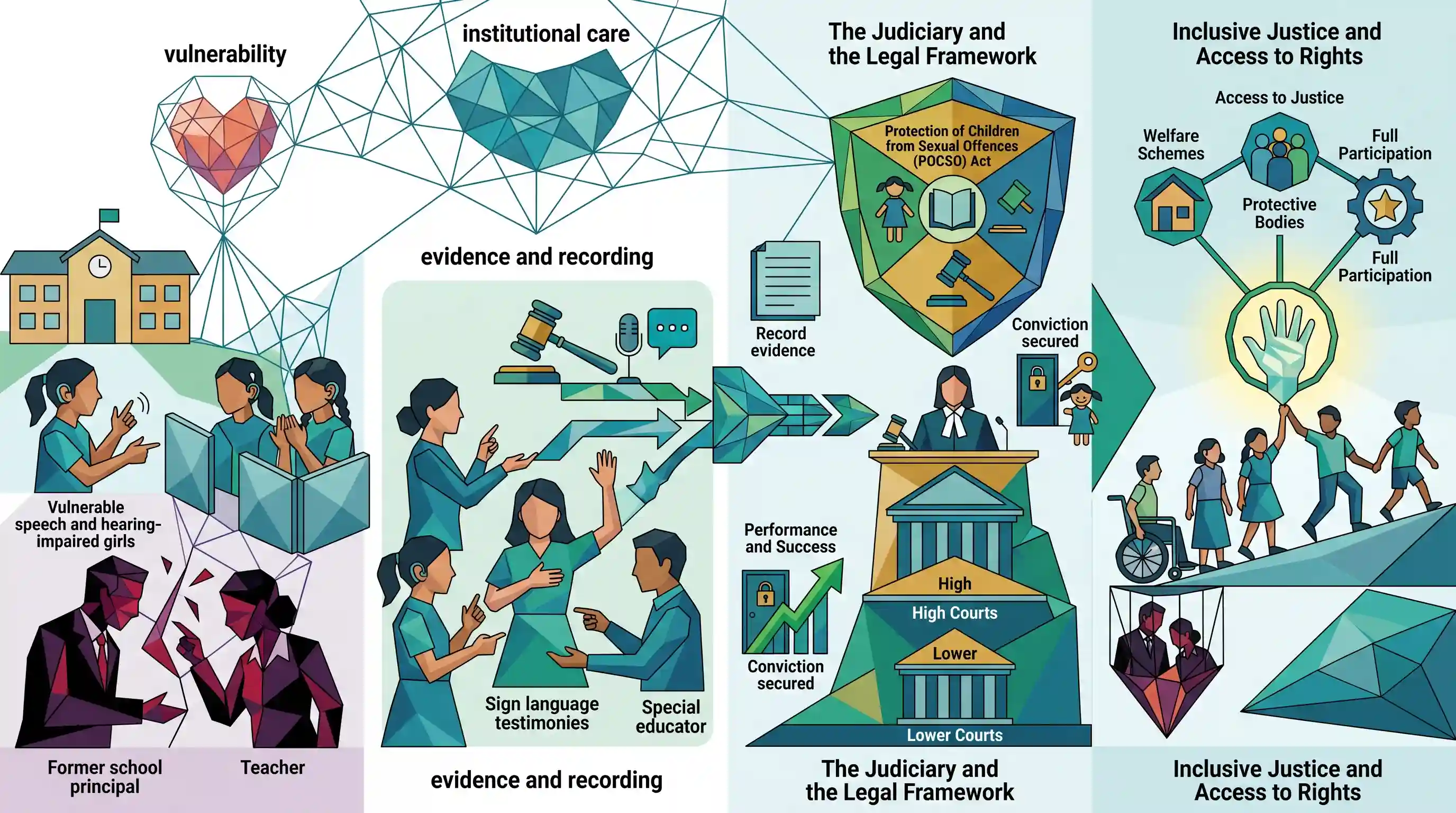
A recent judicial conviction involving the sexual assault of speech and hearing-impaired girls by a former school principal and a teacher was successfully secured through the critical use of sign language testimonies. This case highlights the heightened vulnerability of children with disabilities, especially in institutional care, and underscores the vital role of the POCSO Act. Furthermore, it demonstrates the necessity of an inclusive justice system where special educators and interpreters enable accurate evidentiary recording, ensuring that Persons with Disabilities (PwDs) are not denied their right to access justice due to communication barriers.
मुख्य बिंदु
- The conviction of school authorities for sexually assaulting speech and hearing-impaired girls highlights severe vulnerabilities within institutional care settings for children with disabilities.
- सांकेतिक भाषा के साक्ष्यों की सफल स्वीकार्यता और उन पर निर्भरता, दिव्यांग व्यक्तियों (PwDs) को समायोजित करने की कानूनी प्रणाली की क्षमता को प्रदर्शित करती है, जिससे न्याय तक पहुँच के उनके मौलिक अधिकार को सुनिश्चित किया जा सके।
- यह मामला न्यायिक कार्यवाहियों में विशेष शिक्षकों और प्रमाणित सांकेतिक भाषा दुभाषियों (sign language interpreters) के अत्यधिक महत्व को रेखांकित करता है ताकि उन गवाहों के बयानों को सटीक रूप से दर्ज किया जा सके जो मौखिक रूप से संवाद करने में असमर्थ हैं (जैसे, भारतीय साक्ष्य अधिनियम की धारा 119 के तहत)।
- यह POCSO Act के तहत एक दिव्यांग बालिका होने की बहुआयामी भेद्यताओं को संबोधित करते हुए, प्रतिच्छेदी न्याय (intersectional justice) के लिए एक मिसाल के रूप में कार्य करता है।
महत्वपूर्ण शब्द
Protection of Children from Sexual Offences (POCSO) Act

2012 का एक लिंग-तटस्थ कानून जो नाबालिगों (18 वर्ष से कम) को यौन शोषण, उत्पीड़न और पोर्नोग्राफी से सुरक्षा प्रदान करता है। यह बच्चों के अनुकूल प्रक्रियाओं, विशेष न्यायालयों और गंभीर अपराधों के लिए कठोर दंड का प्रावधान करता है।
UPSC context
GS पेपर II: सामाजिक न्याय; कमजोर वर्गों के लिए कल्याणकारी कानूनों और बच्चों के संरक्षण के ज्ञान का परीक्षण करता है।
दिव्यांगजन अधिकार (RPwD) अधिनियम, 2016
UNCRPD को लागू करने के लिए अधिनियमित कानून, जिसने दिव्यांगता की श्रेणियों को बढ़ाकर 21 कर दिया है। यह सभी क्षेत्रों में दिव्यांग व्यक्तियों के लिए गैर-भेदभाव, सुगम्यता और समान कानूनी अधिकारों को अनिवार्य बनाता है।
UPSC context
GS Paper II: Governance and Social Justice; relevant for mechanisms protecting vulnerable populations.
भारतीय साक्ष्य अधिनियम (BSA)
The 2023 law replacing the Indian Evidence Act, 1872. It modernizes evidence rules by incorporating electronic records and allowing remote or digitally-assisted testimonies to ensure fair trials.
UPSC context
GS पेपर II: न्यायपालिका/कानूनी सुधार; यह विकसित होती आपराधिक न्याय प्रणाली और साक्ष्य संबंधी मानकों की समझ का परीक्षण करता है।
न्याय तक पहुँच
A fundamental principle ensuring that all citizens, regardless of physical or communication barriers, can effectively utilize legal mechanisms to seek remedies and protect their rights.
UPSC context
जीएस पेपर II: संविधान और न्यायपालिका; वंचित समूहों के लिए कानूनी सशक्तिकरण और प्रणालीगत समावेशिता की अवधारणाओं का परीक्षण करता है।
विशेष न्यायालय
POCSO अधिनियम के तहत स्थापित नामित न्यायिक निकाय, जो पीड़ितों के लिए एक संवेदनशील वातावरण बनाए रखते हुए बाल शोषण के मामलों की त्वरित सुनवाई सुनिश्चित करते हैं।
UPSC context
GS पेपर II: न्यायपालिका; भारत में विशेष न्यायिक तंत्रों की संरचना और कार्यप्रणाली पर केंद्रित है।
प्रारंभिक ट्रैप
किसी वाक्-अक्षम साक्षी द्वारा लिखित रूप में या सांकेतिक भाषा में दिए गए बयानों को कानूनी रूप से दस्तावेजी साक्ष्य के रूप में वर्गीकृत किया जाता है।
Under Section 119 of the IEA (Section 125 of Bharatiya Sakshya Adhiniyam), evidence given by a witness unable to speak via writing or signs in open court is explicitly deemed oral evidence.
संबंधित अवधारणाएँ
How does the Bharatiya Sakshya Adhiniyam (BSA) treat testimony from a speech-impaired witness?
- विधिक सक्षमता: एक साक्षी जो मौखिक रूप से संवाद करने में असमर्थ है, वह अदालत में गवाही देने के लिए कानूनी रूप से सक्षम है।
- साक्ष्य का माध्यम: वे किसी भी ऐसे तरीके से साक्ष्य दे सकते हैं जिससे उसे समझने योग्य बनाया जा सके, जैसे कि लिखकर या खुली अदालत में सांकेतिक भाषा के माध्यम से।
- मौखिक के रूप में वर्गीकृत: इस प्रकार के साक्ष्यों को स्पष्ट रूप से 'मौखिक साक्ष्य' (oral evidence) के रूप में वर्गीकृत किया गया है और इनका साक्ष्य मूल्य (evidentiary value) बोलकर दिए गए साक्ष्य के समान ही होता है।
- Expert assistance: Special educators or certified interpreters can be legally mandated to assist the court in accurately recording this evidence.
What are the key provisions for PwDs in the justice system under the RPwD Act?
- न्याय तक पहुँच: Section 12 mandates the State to ensure PwDs can exercise the right to access courts and judicial bodies without discrimination.
- सहायता उपाय: पसंदीदा प्रारूपों और भाषाओं में बयान दर्ज करने की आवश्यकता है, जिसमें सांकेतिक भाषा (sign language) दुभाषियों जैसी विशेषज्ञ सहायता का उपयोग किया जाए।
- Intersectionality recognized: विशेष रूप से दिव्यांग महिलाओं और बच्चों द्वारा सामना की जाने वाली जटिल संवेदनशीलता (compounded vulnerabilities) को स्वीकार करता है, जिसके लिए विशेष रूप से तैयार सुरक्षात्मक उपायों की आवश्यकता होती है।
अंतर-विषय पैटर्न
सुगम न्यायालय और न्यायिक अवसंरचना
RPwD अधिनियम के 'Access to Justice' (न्याय तक पहुँच) के अधिदेश को सुप्रीम कोर्ट की हालिया पहलों और e-Courts Phase III के साथ जोड़ता है, जो दिव्यांग वादियों के लिए भौतिक और डिजिटल न्यायिक बुनियादी ढांचे को बाधामुक्त बनाने पर बल देते हैं।
सामाजिक न्याय में प्रतिच्छेदनशीलता (Intersectionality)
Highlights the compounded vulnerabilities of gender, minor status, and disability. This intersectional framework is increasingly critical for GS-I Society and GS-II Social Justice answers regarding institutional care abuses.

Expect a Prelims question testing the Bharatiya Sakshya Adhiniyam's explicit classification of sign-language testimony as oral evidence.
संबद्ध PYQ · 2
संबद्ध PYQ · 2
- 2017MainsGS2
Does the Rights of Persons with Disabilities Act, 2016 ensure effective mechanism for empowerment and inclusion of the intended beneficiaries in the society? Discuss.
- 2022MainsGS4
Apart from intellectual competency and moral qualities, empathy and compassion are some of the other vital attributes that facilitate the civil servants to be more competent in tackling the crucial issues or taking critical decisions. Explain with suitable illustrations.
