Species Adaptation Mechanisms and Limits under Climate Change
Source:The Hindu ↗
Why It Matters
Understanding species' adaptive mechanisms is crucial for GS-3 Environment and Ecology. It informs policy-making for biodiversity conservation, helps in assessing the impact of global warming on ecosystems, and highlights the urgent need for mitigating anthropogenic climate drivers.
Summary
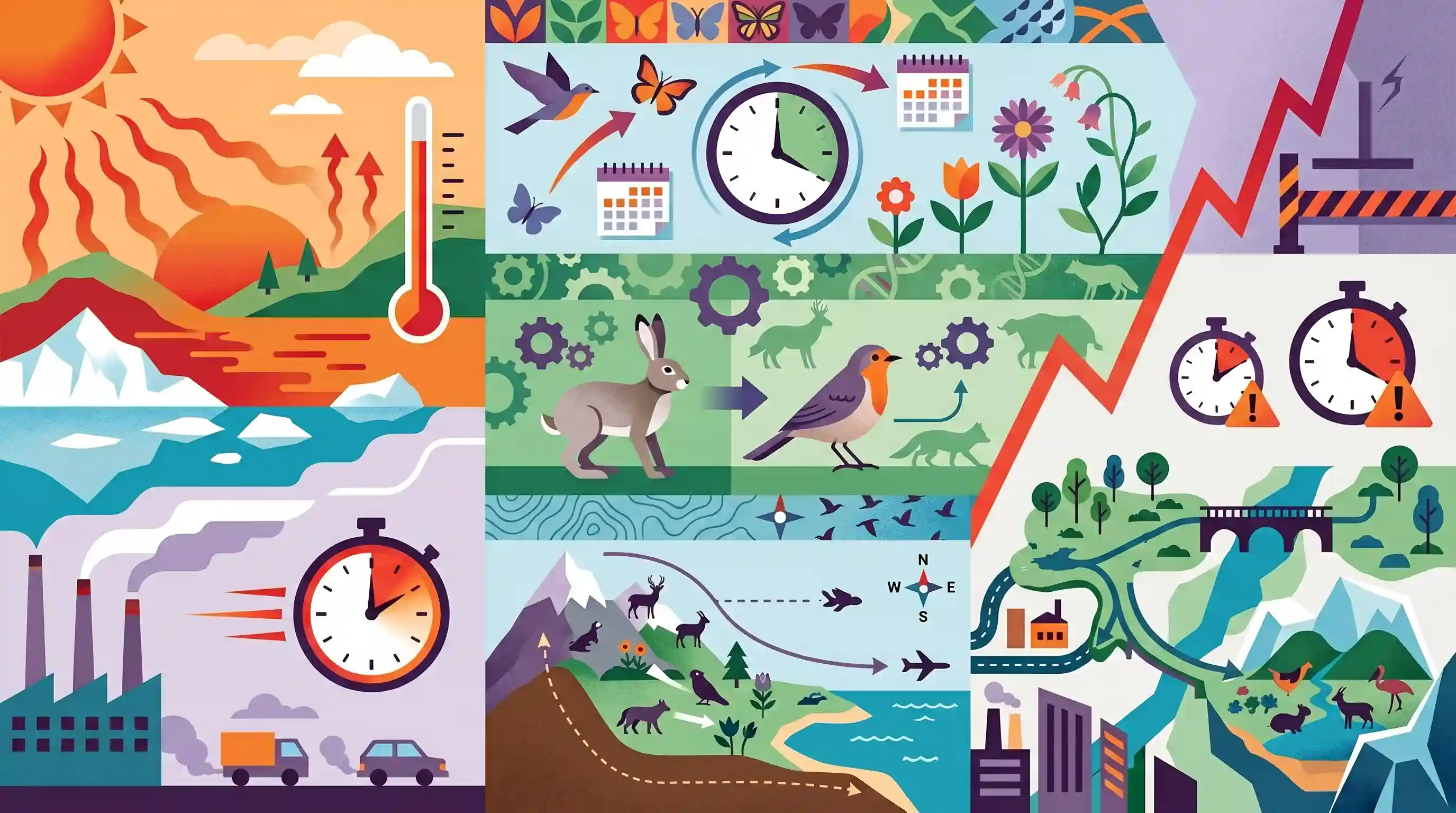
The article highlights how various species are exhibiting remarkable flexibility to cope with climate change through phenotypic plasticity, phenological adjustments, and geographic range shifts. Flora and fauna are altering their breeding times, migration patterns, and physical traits to survive shifting environmental norms. However, scientists caution that this inherent adaptability has its limits. The rapid pace of modern, human-induced climate change threatens to outstrip these natural coping mechanisms, underscoring the urgent need for comprehensive conservation strategies, such as habitat connectivity and protecting climate refugia, to prevent mass biodiversity loss.
Key Points
- Species are utilizing phenotypic plasticity to rapidly adjust their behavioral and physical traits in response to changing climatic conditions without immediate genetic alterations.
- Widespread phenological shifts are occurring, with many species altering the timing of critical life events such as flowering, breeding, and migration.
- Geographical range shifts are evident as populations migrate toward higher altitudes and latitudes to remain within their optimal temperature niches.
- Despite these adaptive flexibilities, the unprecedented speed of anthropogenic global warming threatens to outpace the adaptive limits of many species, risking localized and global extinctions.
- Effective conservation requires strategies that bolster ecosystem resilience, including the establishment of wildlife corridors and the protection of climate refugia.
Important Terms
UNFCCC

Adopted in 1992, this primary multilateral treaty provides a framework for global efforts to stabilize greenhouse gas concentrations and prevent dangerous human interference with the climate system.
UPSC context
GS Paper III: Environment. Fundamental for understanding global climate governance, Conference of Parties (COP), and international environmental agreements.
Paris Agreement
A legally binding 2015 treaty under the UNFCCC aiming to limit global warming to well below 2°C, preferably 1.5°C, through Nationally Determined Contributions (NDCs).
UPSC context
GS Paper III: Ecology. Tests climate finance, India’s NDCs, and the shift from top-down to bottom-up climate action.
IPCC
The United Nations body (est. 1988) responsible for assessing the science related to climate change, providing policymakers with regular reports on risks and adaptation options.
UPSC context
GS Paper III: Environment. Crucial for scientific evidence in environmental policy-making and reports like the Sixth Assessment (AR6).
IUCN
A global authority (est. 1948) composed of governments and civil society that assesses the conservation status of species through its authoritative Red List of Threatened Species.
UPSC context
GS Paper III: Biodiversity. Essential for extinction risk categories and international conservation strategies for flora and fauna.
Climate Refugia
Areas that remain relatively buffered from contemporary climate change over time, enabling species to persist even as surrounding conditions become inhospitable.
UPSC context
GS Paper III: Conservation. Important for ecosystem resilience and strategic habitat protection in climate adaptation plans.
Phenotypic Plasticity
The ability of an individual organism to change its physical or behavioral traits in response to environmental shifts without altering its genetic code.
UPSC context
GS Paper III: Environment & Ecology. Relevant for understanding how species adapt naturally to rapid anthropogenic climate change.
Phenology
The study of cyclic and seasonal natural phenomena, such as the timing of animal migration or plant flowering, which is increasingly disrupted by climate change.
UPSC context
GS Paper III: Environment. Tested as a biological indicator of climate change impacts on biodiversity and ecosystem synchronization.
Prelims Trap
Phenotypic plasticity involves rapid genetic mutations that allow species to survive climate stressors.
Phenotypic plasticity is explicitly non-genetic. It allows an organism to change physical or behavioral traits based on environmental cues without altering its underlying DNA sequence.
Static Concepts Connected
What is a phenological mismatch in ecology?
- Phenology: The study of periodic biological life-cycle events (flowering, breeding, migration) and how they are driven by seasonal and interannual variations in climate.
- Mismatch: Occurs when interdependent species (e.g., a plant and its pollinator) shift their timings at unequal rates due to climate change, severely disrupting food webs.
What distinguishes 'climate refugia' in biodiversity conservation?
- Micro-habitat stability: Specific micro-habitats that remain naturally buffered and relatively stable despite broader regional or global climate changes (e.g., deep valleys, shaded canopies).
- Conservation value: Unlike standard protected areas which may still suffer warming, refugia act as critical safe havens, helping vulnerable wildlife survive extreme climatic anomalies.
Cross-Topic Patterns
Phenological shifts in Indian agriculture
Just as wild species alter biological timings, shifting monsoon patterns force changes in agricultural sowing cycles. Crop phenology mismatches with pest emergence cycles pose severe food security risks.
Range shifts exposing fixed PA boundaries
As species migrate poleward or upslope to track thermal niches, they often exit fixed National Park boundaries. This makes static conservation obsolete, demanding dynamic, transboundary wildlife corridors.

Expect a Prelims question contrasting phenotypic plasticity (non-genetic) with natural selection (genetic mutation) in climate adaptation.
Linked PYQs · 4
Linked PYQs · 4
- 2017MainsGS3
'Climate change' is a global problem. How India will be affected by climate change? How Himalayan and coastal states of India will be affected by climate change?
- 2022MainsGS3
Discuss global warming and mention its effects on the global climate. Explain the control measures to bring down the level of greenhouse gases which cause global warming, in the light of the Kyoto Protocol, 1997.
- 2018PrelimsGS1
The term "sixth mass extinction/sixth extinction" is often mentioned in the news in the context of the discussion of
- 2019MainsGS3
Define the concept of carrying capacity of an ecosystem as relevant to an environment. Explain how understanding this concept is vital while planning for sustainable development of a region.
