Species Adaptation Limits and Ecological Resilience to Climate Change
Source:The Hindu ↗
Why It Matters
Understanding species adaptation mechanisms is critical for environmental conservation. It informs ecological policies, helps predict ecosystem responses to climate change, and highlights the limitations of natural resilience without proactive human intervention to curb global warming.
Summary
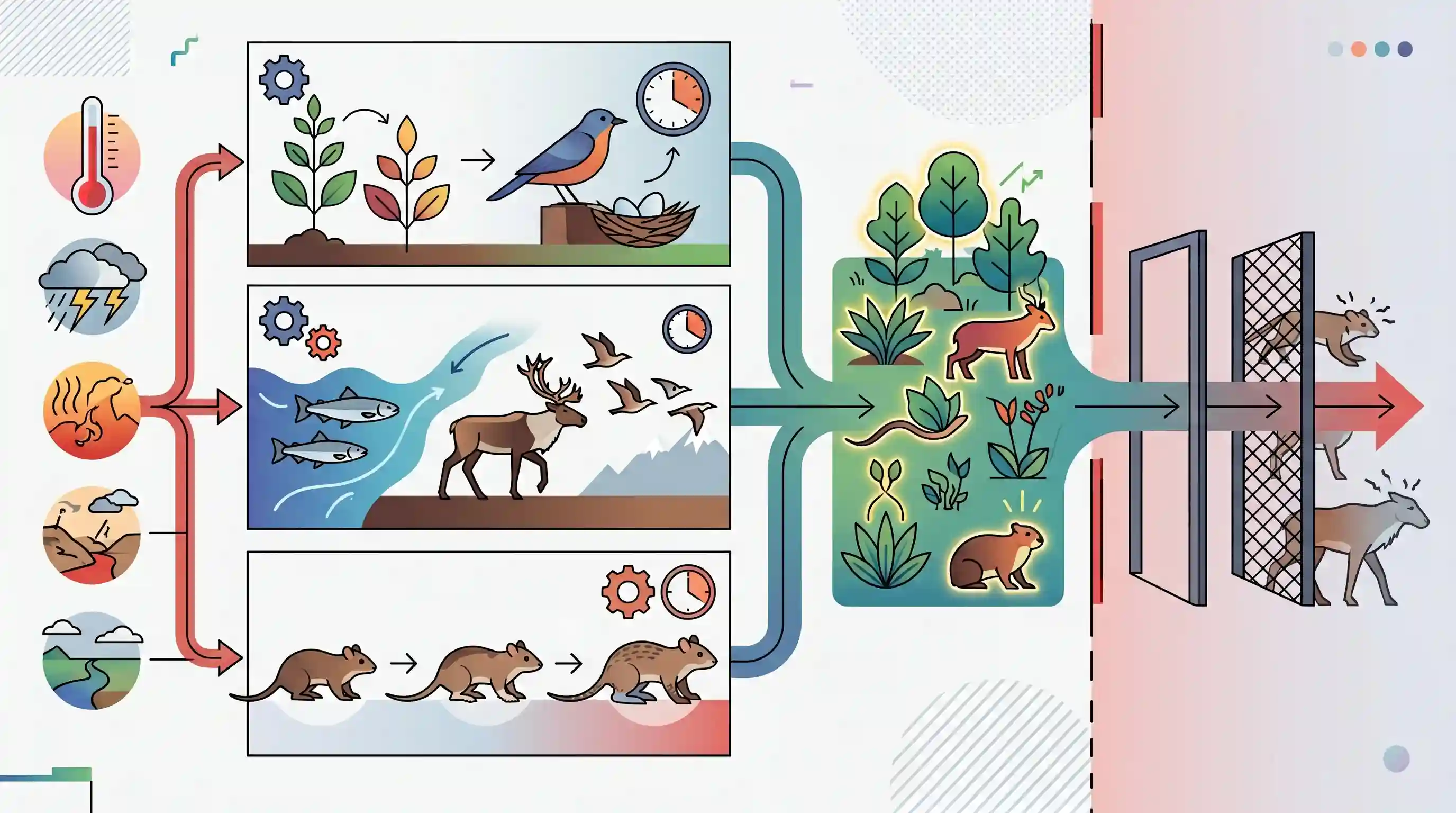
The article highlights the phenomenon of species demonstrating flexibility and resilience in the face of climate change. Through mechanisms like phenotypic plasticity, behavioral adjustments, and potential rapid evolutionary adaptations, various organisms are attempting to cope with changing habitats, temperature shifts, and altered resource availability. While these adaptive capacities offer a buffer against immediate extinction risks, there remain hard biological and ecological limits to how much species can adapt, underscoring the urgent need for continued climate mitigation efforts.
Key Points
- Species are exhibiting increased flexibility, such as phenotypic plasticity, to survive rapidly changing climatic conditions and altered habitats.
- Behavioral adaptations, including altered migration routes, shifted breeding seasons, and changed foraging habits, are becoming more prevalent across different taxa.
- Despite observed resilience, there are strict biological limits to adaptation, meaning unchecked global warming could eventually outpace species' evolutionary and behavioral capacities to adjust.
- These findings highlight that while natural adaptation provides a temporary buffer against extinction, robust climate mitigation and conservation strategies remain essential to protect global biodiversity.
Prelims Trap
"Phenotypic plasticity involves rapid genetic mutations allowing species to quickly adapt to climate change."
Phenotypic plasticity changes traits or behaviors without altering an organism's DNA. Conflating this flexibility with permanent genetic mutation or evolution is a classic UPSC trap.
Static Concepts Connected
How does Phenotypic Plasticity differ from Evolutionary Adaptation?
- Phenotypic Plasticity: Changes in physical traits or behavior within a single organism's lifetime in response to environment, without altering its DNA.
- Evolutionary Adaptation: Permanent genetic changes occurring over multiple generations, driven by natural selection favoring traits suited to the changing environment.
What distinguishes Generalist from Specialist species in ecological niches?
- Generalist Species: Organisms with broad niches, able to thrive in diverse environments and utilize varied resources. Highly adaptable to changing climates.
- Specialist Species: Organisms with narrow ecological niches, requiring highly specific habitats or food sources (e.g., pandas). They face a disproportionately high risk of extinction.
Cross-Topic Patterns
Phenological mismatches & agricultural security
Shifting breeding or flowering seasons due to climate change disrupt natural pollinator cycles, linking biodiversity conservation directly to agricultural productivity and global food security.
Treeline shifts & Himalayan geography
The upward migration of vegetation (treeline shift) in the Himalayas squeezes alpine ecosystems, forcing high-altitude endemic species into geographical 'dead ends' with nowhere left to migrate.

Expect a multi-statement Prelims question testing definitions of ecological terms like 'phenotypic plasticity' and 'climate refugia'.
Linked PYQs · 3
Linked PYQs · 3
- 2018PrelimsGS1
Which of the following statements best describes "carbon fertilization"?
- 2017MainsGS3
'Climate change' is a global problem. How India will be affected by climate change? How Himalayan and coastal states of India will be affected by climate change?
- 2022MainsGS3
Discuss global warming and mention its effects on the global climate. Explain the control measures to bring down the level of greenhouse gases which cause global warming, in the light of the Kyoto Protocol, 1997.
