South Western Railway plans freight infrastructure along new lines
Source:The Hindu ↗
Why It Matters
Provides a practical case study for GS-3 answers on infrastructure-led growth, the shift from road to rail freight, multimodal logistics integration, and addressing bottlenecks in agricultural supply chains.
Summary
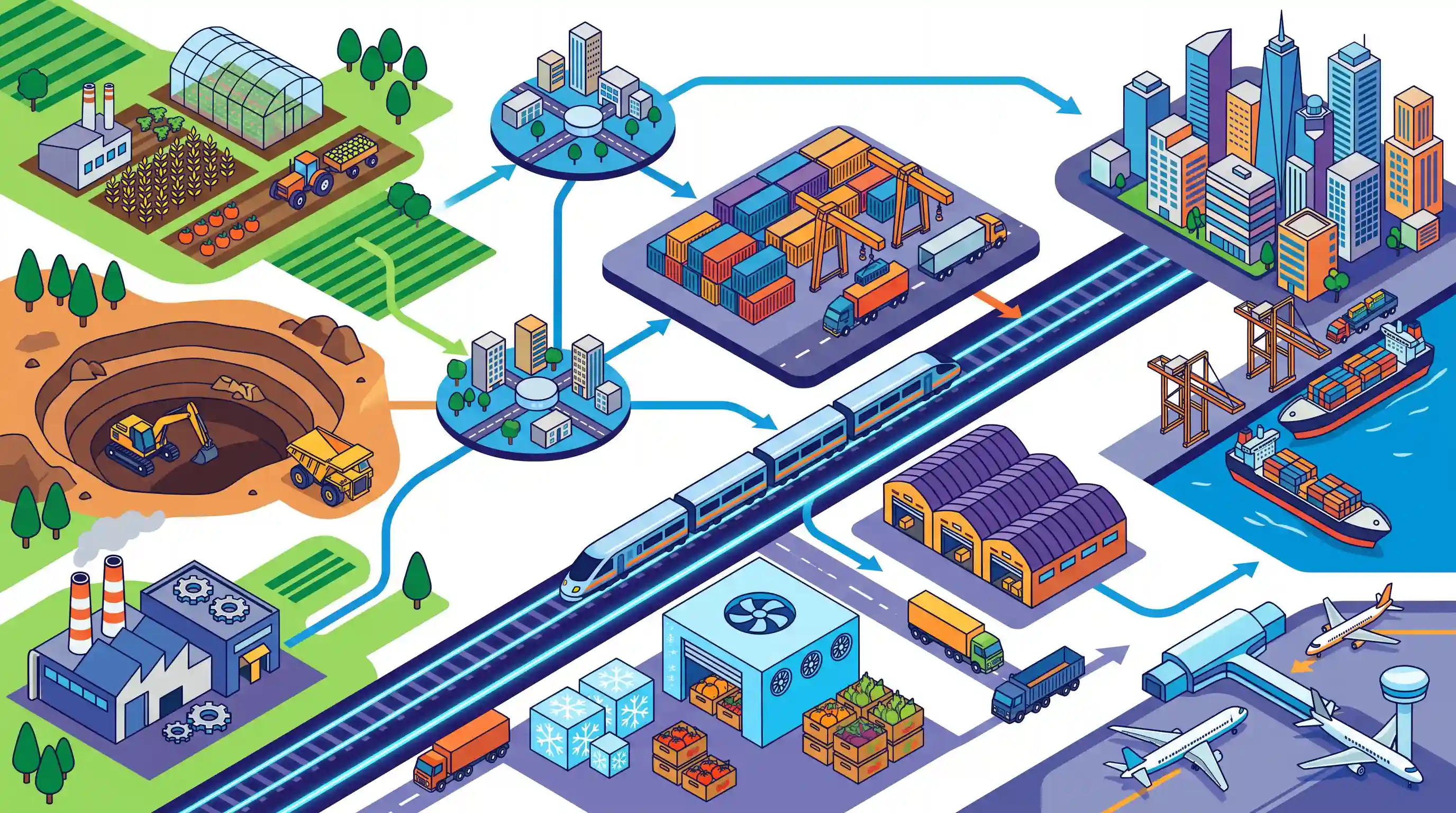
To strengthen Karnataka's logistics backbone, South Western Railway (SWR) is integrating dedicated goods sheds and specialized freight infrastructure into newly proposed rail corridors. By creating decentralized economic nodes, the initiative directly connects regional agricultural, mining, and industrial production centers to consumption markets. Alignments are tailored to local commodities, with dedicated facilities like cold storages for horticulture and multi-modal logistics parks designed to shift bulk transport from road to rail, thereby cutting logistics costs and improving market access.
Key Points
- South Western Railway (SWR) is establishing dedicated goods sheds and freight-handling infrastructure along new rail corridors in Karnataka to connect production centers directly with consumption markets.
- The initiative spans several lines (e.g., Gadag-Wadi, Bagalkot-Kudachi) focusing on specific regional commodities like iron ore, cement, paddy, cotton, and plantation crops like coffee and timber.
- Specialized infrastructure, including multi-modal logistics parks, cold-chain facilities for horticulture, and cement handling terminals, is being proposed to maximize supply chain efficiency.
- By shifting bulk cargo from road to rail, the project aims to reduce logistics costs, alleviate pressure on road networks, and create decentralized economic nodes.
Important Terms
Gati Shakti Cargo Terminal (GCT)

A 2021 policy for developing rail-freight terminals through private investment to enhance cargo capacity and simplify approvals without charging land license fees.
UPSC context
GS-III: Infrastructure and Investment Models; crucial for boosting railway freight share and logistics efficiency.
Multi-Modal Logistics Park (MMLP)
Integrated hubs connecting road, rail, and air to provide seamless cargo movement, warehousing, and value-added services like cold storage.
UPSC context
GS-III: Infrastructure; tests knowledge of Bharatmala Pariyojana and supply chain modernization.
PM Gati Shakti
A digital platform and national master plan for integrated infrastructure planning to ensure multi-modal connectivity and reduce logistical bottlenecks.
UPSC context
GS-III: Indian Economy and Infrastructure; a flagship scheme for synchronized project execution.
South Western Railway (SWR)
An Indian Railways zone headquartered in Hubballi, Karnataka, primarily managing rail operations in Karnataka, parts of Goa, and Tamil Nadu.
UPSC context
GS-I/III: Geography and Infrastructure; relevant for regional development and railway administration questions.
National Logistics Policy (NLP)
A 2022 framework aimed at reducing India's logistics cost from 13-14% of GDP to single digits while improving the Logistics Performance Index.
UPSC context
GS-III: Indian Economy; addresses ease of doing business and export competitiveness.
Logistics Cost
The total expenditure involved in the movement, storage, and management of goods across the supply chain.
UPSC context
GS-III: Indian Economy; a key metric for manufacturing efficiency and global trade parity.
Goods Shed
Facilities at railway stations specifically designed for the loading, unloading, and temporary storage of bulk freight and parcels.
UPSC context
GS-III: Agricultural Marketing and Transport; essential for connecting rural production centers to urban markets.
Prelims Trap
"Gati Shakti Cargo Terminals are exclusively funded, owned, and operated by Indian Railways."
The Gati Shakti Cargo Terminal (GCT) policy actively utilizes private sector investment to build and operate multi-modal hubs, minimizing fresh state expenditure.
Static Concepts Connected
What are the core components and functions of Multi-Modal Logistics Parks (MMLPs)?
- Hub-and-Spoke Model: Facilitates centralized freight aggregation, warehousing, and seamless inter-modal transfer to correct transport inefficiencies.
- Value Addition: Provides integrated facilities like customs clearance, quarantine, testing, and cold storage at a single decentralized node.
- Modal Shift: Actively shifts bulk cargo transport from road to rail or waterways, significantly lowering overall national logistics costs.
How does rail freight infrastructure address agricultural marketing bottlenecks?
- Post-Harvest Preservation: Integrating cold-chains at decentralized goods sheds drastically reduces the wastage of perishables like horticulture crops before they reach markets.
- Bypassing Intermediaries: Direct linkage of agrarian hinterlands to terminal markets allows smallholder farmers to bypass fragmented local intermediaries and avoid distress sales.
- Cost Reduction: Railways provide economies of scale for bulk commodities (paddy, cotton), making it significantly cheaper than fragmented road transport for farmers.
Cross-Topic Patterns
PM Gati Shakti + Agrarian distress
Decentralized rail goods sheds act as a bridge between infrastructure investment and agriculture, tackling upstream transport constraints to prevent farmer distress sales and reduce the ₹92,000 crore annual post-harvest loss.
National Logistics Policy + Modal shift
India historically relies on road transport for over 60% of freight. Specialized rail integration is essential to achieve the National Logistics Policy target of reducing logistics costs below 10% of GDP.

Expect a multi-statement Prelims question merging Gati Shakti Cargo Terminals, private participation rules, and NLP logistics targets.
Linked PYQs · 4
Linked PYQs · 4
- 2022MainsGS3
Why is Public Private Partnership (PPP) required in infrastructural projects ? Examine the role of PPP model in the redevelopment of Railway Stations in India.
- 2021MainsGS3
“Investment in infrastructure is essential for more rapid and inclusive economic growth.” Discuss in the light of India's experience.
- 2025MainsGS3
Elaborate the scope and significance of supply chain management of agricultural commodities in India.
- 2020MainsGS3
What are the main constraints in transport and marketing of agricultural produce in India?
