SaaS Companies Leverage Proprietary Data Against AI Disruption
Source:The Hindu ↗
Why It Matters
The interaction between legacy enterprise software and emerging AI models highlights the critical economic value of proprietary data in the modern digital economy. For civil servants, understanding how disruptive technologies like generative AI impact major industries (like IT and SaaS) is vital for grasping broader shifts in automation, the future of work, and data governance policies.
Summary
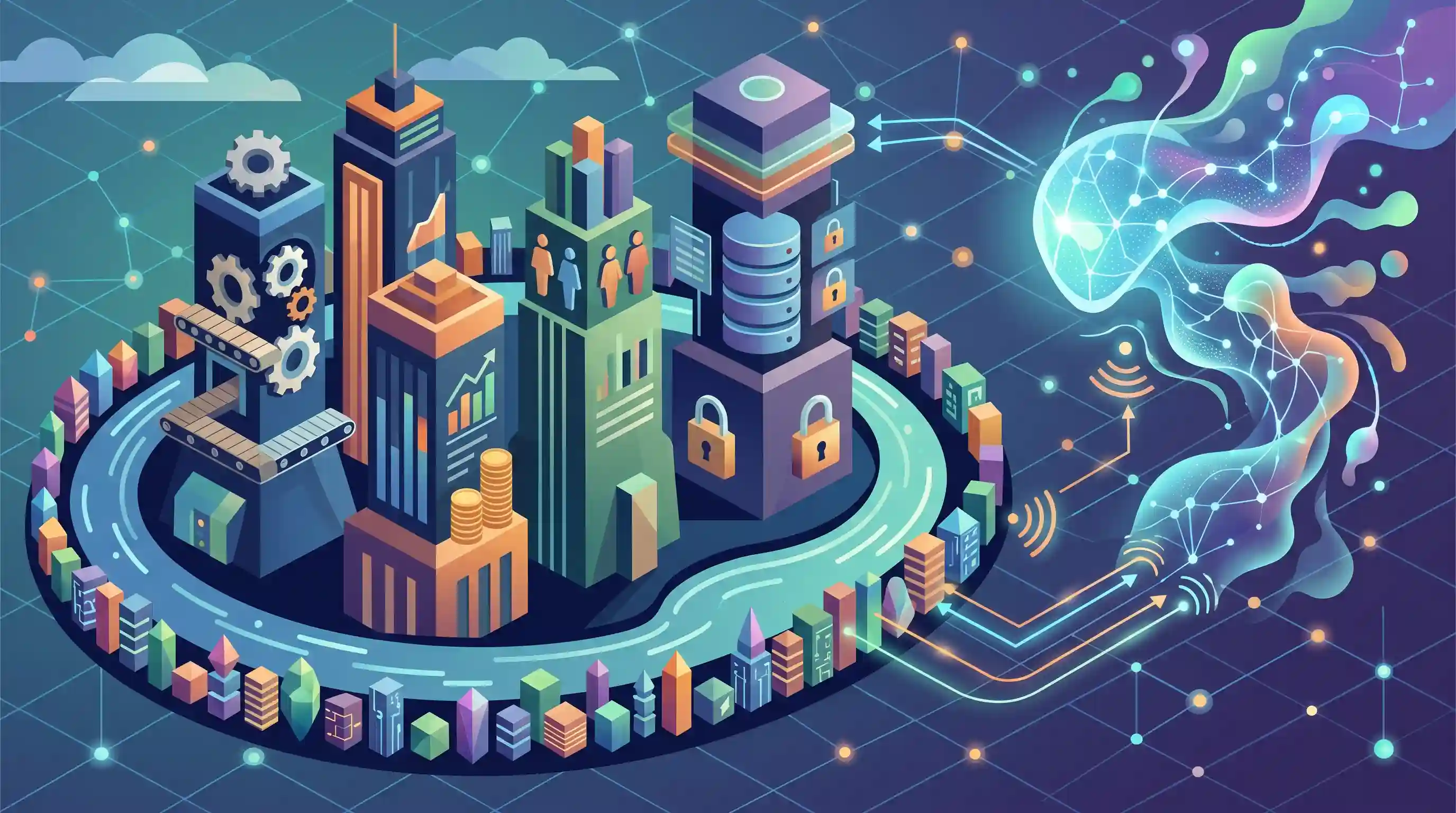
The article examines the strategic response of traditional Software as a Service (SaaS) companies like Oracle, Salesforce, and Workday to the perceived existential threat posed by generative AI and autonomous agents like Anthropic's Claude. These enterprise software providers argue that their deeply integrated, proprietary customer data—spanning critical functions like human resources, finance, and supply chain management—acts as an impregnable 'moat.' Rather than replacing core enterprise software, AI agents currently function as an advanced interface or capability layer that fundamentally relies on this structured legacy data to operate accurately. Consequently, major software firms are actively embedding AI into their ecosystems to enhance their utility, positioning themselves as indispensable partners in the AI revolution rather than casualties of it.
Key Points
- Advancements in generative AI, such as autonomous AI agents like Anthropic's Claude, have raised concerns about the potential obsolescence of traditional Software as a Service (SaaS) business models.
- Enterprise software giants like Salesforce, Oracle, and Workday assert that their deeply embedded proprietary customer data (HR, finance, supply chain) serves as a defensive 'moat' against AI displacement.
- Currently, generative AI functions primarily as an augmentation layer that relies on the structured, factual data housed within SaaS platforms to avoid hallucinations and provide accurate enterprise insights.
- SaaS companies are adapting to the AI revolution by integrating AI capabilities directly into their existing platforms, aiming to enhance workflow efficiency rather than being replaced by standalone AI agents.
Important Terms
Software as a Service (SaaS)

A cloud-based delivery model where software is hosted by a provider and accessed via the internet on a subscription basis, removing the need for local installation or maintenance.
UPSC context
GS Paper 3: Digital Economy. Tests knowledge of cloud computing and India’s growing role in the global SaaS market.
Generative AI
AI systems capable of generating new, original content—such as text, code, or images—by identifying patterns learned from massive existing datasets.
UPSC context
GS Paper 3: Science & Technology. Important for understanding disruptive technologies and their socio-economic and ethical implications.
Autonomous Agents
Advanced AI systems that can independently perceive environments, plan multi-step workflows, and execute actions to achieve specific goals with minimal human oversight.
UPSC context
GS Paper 3: Science & Technology. Relevant for Industry 4.0, next-gen automation, and future labor market challenges.
Anthropic
An American AI safety and research company, founded by former OpenAI employees, recognized for developing the Claude series of Large Language Models (LLMs).
UPSC context
GS Paper 3: Science & Technology. Crucial for tracking global AI developments, ethics, and corporate competition.
Data Moat
A strategic competitive advantage derived from owning unique, high-quality, and proprietary datasets that are difficult for competitors to replicate or access.
UPSC context
GS Paper 3: Economy. Relevant for discussions on "Data as the New Oil" and digital market dominance.
Salesforce
A global leader in Customer Relationship Management (CRM) software, pioneering the SaaS model and now integrating generative AI into its enterprise ecosystem.
UPSC context
GS Paper 3: Economy/IT Sector. Important for understanding global corporate influence on India's digital service exports.
ServiceNow
A major SaaS platform specializing in digital workflows and IT Service Management (ITSM), focused on automating complex business operations through AI.
UPSC context
GS Paper 3: Economy/S&T. Tests knowledge of digital infrastructure and enterprise-level digital transformation.
Prelims Trap
Autonomous AI agents can independently replace enterprise SaaS platforms by generating their own operational data.
AI agents lack validated corporate data. They act as an augmentation layer that must read from traditional enterprise databases to function securely and avoid hallucinations.
Static Concepts Connected
How does Software as a Service (SaaS) differ from other cloud computing models?
- SaaS: Delivers ready-to-use software applications over the internet (e.g., Salesforce), managed entirely by the vendor.
- PaaS: Provides a platform allowing customers to develop, run, and manage custom applications.
- IaaS: Provides basic computing infrastructure like servers and storage over the internet for the user to manage.
What causes 'AI hallucinations' in Large Language Models?
- Definition: Occurs when an AI system confidently presents fabricated, false, or nonsensical information as absolute fact.
- Core Cause: Arises from statistical word-prediction errors, missing context, or flawed training data rather than a genuine understanding of truth.
- Mitigation: Connecting models to structured, proprietary databases (like enterprise SaaS records) grounds the AI in factual realities.
Cross-Topic Patterns
DPDP Act + SaaS AI integration
As AI's value shifts to the structured data it reads, India's Digital Personal Data Protection Act will strictly govern how enterprise SaaS platforms feed employee or customer data to AI agents.
IT sector employment transition
The shift of AI from text-generators to workflow-executing agents threatens routine IT support roles, altering the BPO/ITeS export landscape vital to India's service economy.

Prelims 2026 may feature a statement distinguishing AI agents from LLMs, specifically testing their reliance on structured legacy data.
Linked PYQs · 4
Linked PYQs · 4
- 2023MainsGS3
Introduce the concept of Artificial Intelligence (AI). How does Al help clinical diagnosis? Do you perceive any threat to privacy of the individual in the use of Al in healthcare?
- 2023MainsGS3
What is the status of digitalization in the Indian economy? Examine the problems faced in this regard and suggest improvements.
- 2015MainsGS3
What are the areas of prohibitive labour that can be sustainably managed by robots ? Discuss the initiatives that can propel research in premier research institutes for substantive and gainful innovation.
- 2022PrelimsGS1
With reference to "Software as a Service (SaaS)", consider the following statements: 1. SaaS buyers can customise the user interface and can change data fields. 2. SaaS users can access their data through their mobile devices. 3. Outlook, Hotmail and Yahoo! Mail are forms of SaaS. Which of the statements given above are correct?
