SoftBank US Power Plant Project for AI Data Infrastructure
Source:The Hindu ↗
Why It Matters
The development highlights the massive energy requirements of AI data centres and how geopolitical trade negotiations (tariffs vs. foreign direct investment) are shaping global tech infrastructure. Furthermore, the reliance on a massive new gas-fired plant highlights the growing tension between rapid AI development and the global clean energy transition.
Summary
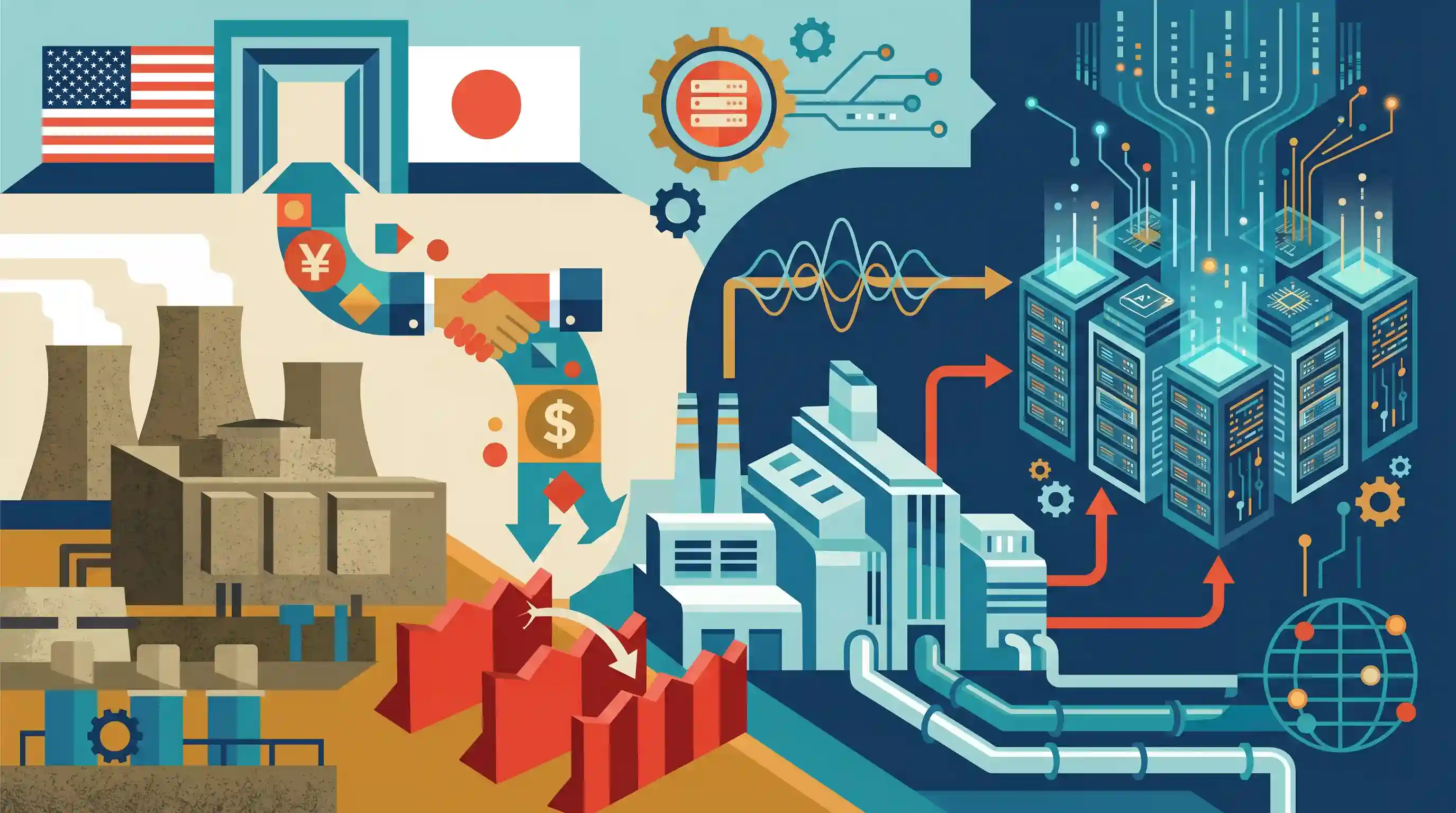
SoftBank plans to build a 9.2 GW gas-fired power plant in Ohio to power AI data centres, as part of a $550 billion Japanese investment deal with the US to reduce trade tariffs. The facility will repurpose a Cold War-era uranium enrichment site, illustrating both the massive energy and infrastructure demands of the AI boom, and the complex geopolitical economic diplomacy shaping global technology investments.
Key Points
- Japan\'s SoftBank announced plans to construct a massive 9.2 GW gas-fired power plant in Ohio, US, to meet the surging energy demands of AI data centres.
- The project is part of a broader $550 billion Japanese investment package in the United States, negotiated in exchange for reduced US trade tariffs.
- The power plant will be located at the US Department of Energy\'s Portsmouth site, strategically repurposing a Cold War-era uranium enrichment facility for AI infrastructure.
- The initiative highlights the immense energy requirements of the global AI boom, raising concerns about the continued reliance on fossil fuels like natural gas amid climate transition goals.
Important Terms
SoftBank Group

A Japanese multinational conglomerate that, through its subsidiary SB Energy, leads large-scale infrastructure projects like the 9.2 GW Portsmouth power plant to support global AI expansion.
UPSC context
GS-III (Economy); significant for Foreign Direct Investment (FDI) and corporate-led infrastructure development in bilateral relations.
OpenAI
A leading AI research organization collaborating with SoftBank and Oracle on the 'Stargate' initiative, a $500 billion project to build massive data center campuses for advanced computing.
UPSC context
GS-III (Science & Technology); highlights the transition from software-based AI to massive hardware and energy infrastructure needs.
US Department of Energy
The US federal department managing energy policy and nuclear safety; it facilitates the repurposing of federal land, like former uranium enrichment sites, for private-sector AI and energy development.
UPSC context
GS-II (International Institutions/Agencies); relevant for bilateral energy cooperation and strategic infrastructure management.
Economic Diplomacy
The use of a state's economic power—such as Japan's $550 billion investment pledge to the US—to achieve strategic foreign policy goals and negotiate trade concessions.
UPSC context
GS-II (International Relations); crucial for understanding how investment and trade are used as levers in bilateral negotiations.
Data Centres
Large-scale facilities housing computing hardware for data processing and storage; their immense energy requirements are currently driving a global surge in power plant construction and grid modernization.
UPSC context
GS-III (Infrastructure); essential for digital economy discussions, particularly concerning the 'bottleneck' of energy supply for technology.
Energy Security
The continuous and reliable availability of energy sources at an affordable price; in the AI era, this includes balancing massive industrial load growth with grid stability.
UPSC context
GS-III (Energy/Infrastructure); tests understanding of the strategic risks posed by rapid technological demand on national power grids.
Prelims Trap
Repurposing legacy infrastructure and abandoned sites for new power projects is classified as Greenfield FDI.
Building on abandoned or pre-existing industrial sites constitutes Brownfield investment. Greenfield FDI strictly refers to building brand-new facilities from scratch on previously undeveloped land.
Static Concepts Connected
What distinguishes Greenfield from Brownfield Foreign Direct Investment (FDI)?
- Greenfield FDI: Involves building new operational facilities from the ground up on previously undeveloped land.
- Brownfield FDI: Involves purchasing, leasing, or repurposing existing infrastructure or facilities (like old industrial sites).
- Key Difference: Brownfield offers faster operational timelines but may entail legacy environmental liabilities, whereas Greenfield avoids past liabilities but takes longer to build.
What is a Captive Power Plant (CPP) in India?
- Definition: A power plant set up by an entity primarily to generate electricity for its own industrial or commercial use rather than for the public grid.
- Statutory Conditions: Under the Electricity Act 2003, the captive user must hold at least 26% ownership, and at least 51% of generated power must be consumed for captive use.
Cross-Topic Patterns
AI baseload demands vs Net Zero targets
The exponential power needs of LLMs are reviving fossil-fuel baseloads (like massive gas plants), contradicting global net-zero commitments and pushing tech firms to build captive power setups.
Tariff Diplomacy and shifting FDI patterns
Leveraging trade tariffs to force localized capital investment (tariff jumping) merges trade protectionism with strategic friendshoring between allied nations to secure critical tech supply chains.

Expect a 2026 prelims question linking AI's massive baseload energy footprint to captive power plant regulations and net-zero targets.
Linked PYQs · 3
Linked PYQs · 3
- 2023MainsGS3
Introduce the concept of Artificial Intelligence (AI). How does Al help clinical diagnosis? Do you perceive any threat to privacy of the individual in the use of Al in healthcare?
- 2018MainsGS2
What are the key areas of reform if the WTO has to survive in the present context of "Trade War', especially keeping in mind the interest of India?
- 2018MainsGS3
“Access to affordable, reliable, sustainable and modern energy is the sine qua non to achieve Sustainable Development Goals (SDGs).” Comment on the progress made in India in this regard.
