Chinese Envoy Condemns Unilateral United States Protectionist Tariffs
Source:The Hindu ↗
Why It Matters
The article provides insight into global trade dynamics, specifically the repercussions of the US-China trade war, and China's diplomatic messaging towards India. It is highly relevant for understanding global protectionism, multilateralism, and the geopolitical pressures India must navigate between major powers.
Summary
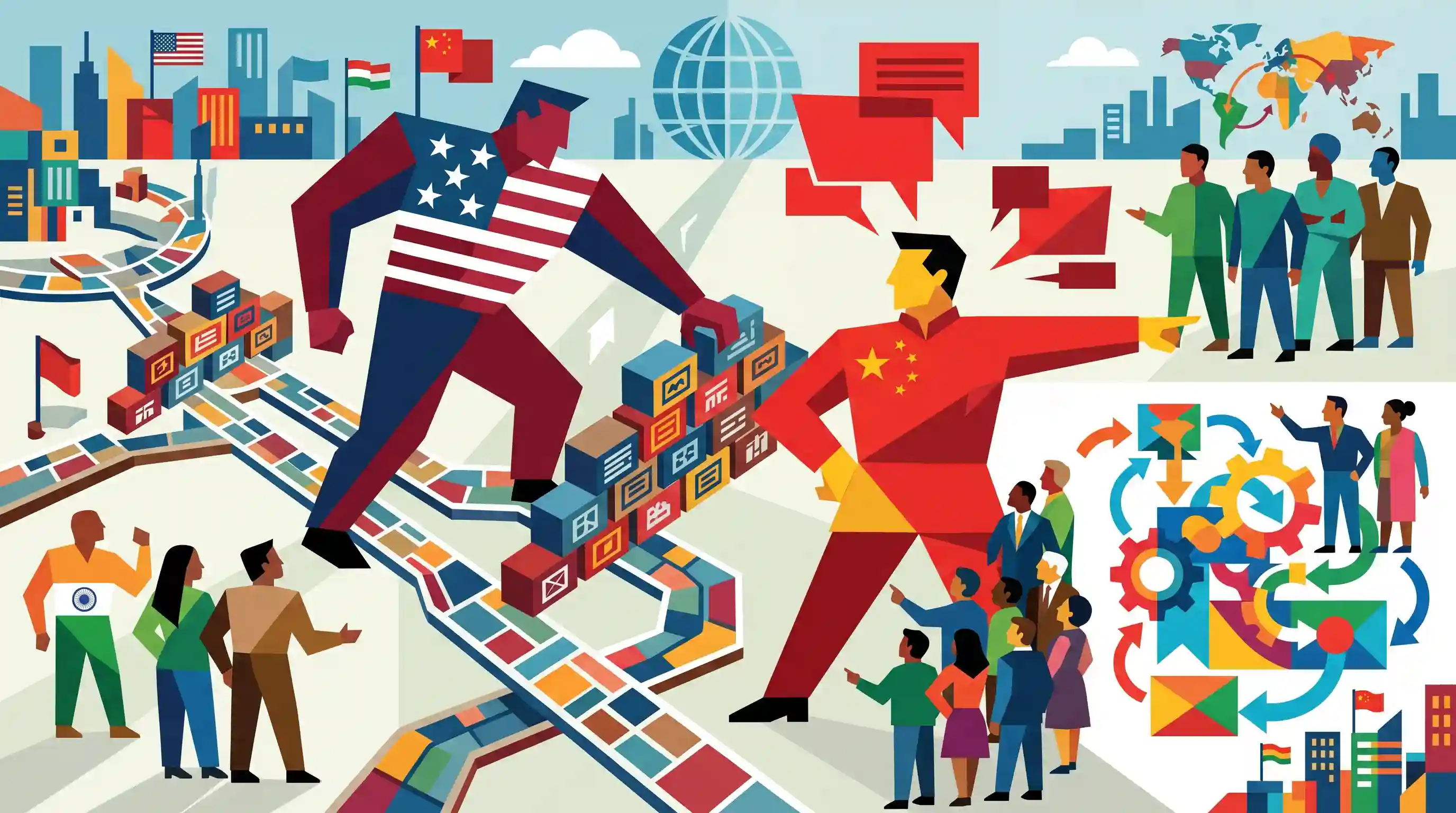
The Chinese Ambassador to India has strongly criticized the United States for its imposition of unilateral tariffs, describing the U.S. as a 'bully'. He cautioned that international silence regarding these protectionist policies will only encourage further aggressive economic measures from Washington. The comments reflect China's broader strategy to oppose U.S. trade unilateralism and appeal to developing nations to collectively defend the multilateral trading system.
Key Points
- The Chinese Ambassador to India condemned U.S. unilateral tariffs, characterizing the U.S. as a 'bully' in international trade.
- He warned that global silence in response to such protectionist trade measures will only embolden Washington to take further aggressive actions.
- The remarks highlight China's diplomatic efforts to rally developing nations, potentially including India, against U.S. economic unilateralism.
- The issue underscores ongoing US-China trade tensions and challenges facing the multilateral trading system and WTO norms.
Important Terms
World Trade Organization (WTO)

A global intergovernmental organization (est. 1995) that regulates and facilitates international trade between nations through a rules-based, consensus-driven framework based on the Marrakesh Agreement.
UPSC context
GS Paper 2: International Institutions; GS Paper 3: Effects of liberalization on the economy.
Protectionism
Economic policy of restricting imports from foreign countries through tariffs, quotas, and subsidies to shield domestic industries and workers from international competition.
UPSC context
GS Paper 3: Issues relating to planning, mobilization of resources, and growth; international trade.
Unilateralism
A foreign policy approach where a state acts independently, without seeking international consensus or cooperation, often disregarding existing multilateral agreements or the interests of other parties.
UPSC context
GS Paper 2: Effect of policies and politics of developed countries on India's interests.
Section 301 (Trade Act of 1974)
A U.S. legal provision authorizing the Trade Representative to investigate and take retaliatory action (like tariffs) against foreign trade practices deemed unfair, unreasonable, or discriminatory.
UPSC context
GS Paper 2: Bilateral relations involving India; GS Paper 3: International trade disputes.
Multilateral Trading System
A global framework for trade among multiple countries based on agreed-upon rules, non-discrimination principles, and dispute-settlement mechanisms, primarily anchored by the WTO.
UPSC context
GS Paper 2: Important International institutions and global trade governance.
Global South
Broad term referring to developing, less developed, or underdeveloped nations primarily in Africa, Asia, and Latin America, often collaborating to balance the influence of developed nations.
UPSC context
GS Paper 2: Bilateral, regional and global groupings involving India and affecting India's interests.
Prelims Trap
Unilateral tariff hikes by the US are legally recognized as valid trade remedy measures under the WTO.
Unilateral tariffs bypass WTO rules and violate the MFN principle. Genuine trade remedies (anti-dumping, countervailing, safeguards) require formal investigations and proof of injury, not geopolitical motives.
Static Concepts Connected
What are the three recognized trade remedies allowed under WTO rules?
- Anti-dumping duties: Taxes applied when a country exports goods at a price lower than their normal value in its own domestic market.
- Countervailing duties: Tariffs levied to neutralize the negative effects of unfair production or export subsidies provided by the exporting country's government.
- Safeguard measures: Emergency, temporary import restrictions (tariffs or quotas) applied against sudden, unforeseen import surges that threaten serious injury to a domestic industry.
How does the Most-Favored-Nation (MFN) principle apply to tariff impositions?
- Core MFN Rule: Under WTO rules, countries cannot normally discriminate between trading partners. A trade favor (like a tariff reduction) granted to one must be extended to all.
- Security Exception: Article XXI allows members to breach WTO obligations to protect essential security interests. This is increasingly invoked by great powers to justify unilateral tariffs.
Cross-Topic Patterns
Protectionism & the 'China Plus One' strategy
As the US and China bypass the WTO with retaliatory tariffs, global supply chains fragment, giving India a strategic window to capture relocated manufacturing investments under the 'China Plus One' strategy.
Developing Nation Status paradox at the WTO
China appeals to the Global South to fight US hegemony, yet faces backlash from the West for retaining special 'developing country' perks at the WTO despite its massive economic scale.

WTO dispute mechanism crisis + Article XXI security exceptions + unilateral tariffs will likely form a multi-statement Prelims question.
Linked PYQs · 3
Linked PYQs · 3
- 2014MainsGS2
With respect to the South China sea, maritime territorial disputes and rising tension affirm the need for safeguarding maritime security to ensure freedom of navigation and over flight throughout the region. In this context, discuss the bilateral issues between India and China.
- 2023MainsGS3
What are the direct and indirect subsidies provided to farm sector in India? Discuss the issues raised by the World Trade Organization (WTO) in relation to agricultural subsidies.
- 2021MainsGS2
Critically examine the aims and objectives of SCO. What importance does it hold for India?
