Mahalaya Paksham Rituals and Ancestral Worship in Indian Tradition
Source:The Hindu ↗
Why It Matters
Provides foundational context on traditional Indian practices (ancestor worship) and moral philosophies derived from epics, useful for GS1 Art & Culture and as case-study material for GS4 Ethics regarding the spirit of charity (Annadanam) and human values.
Summary
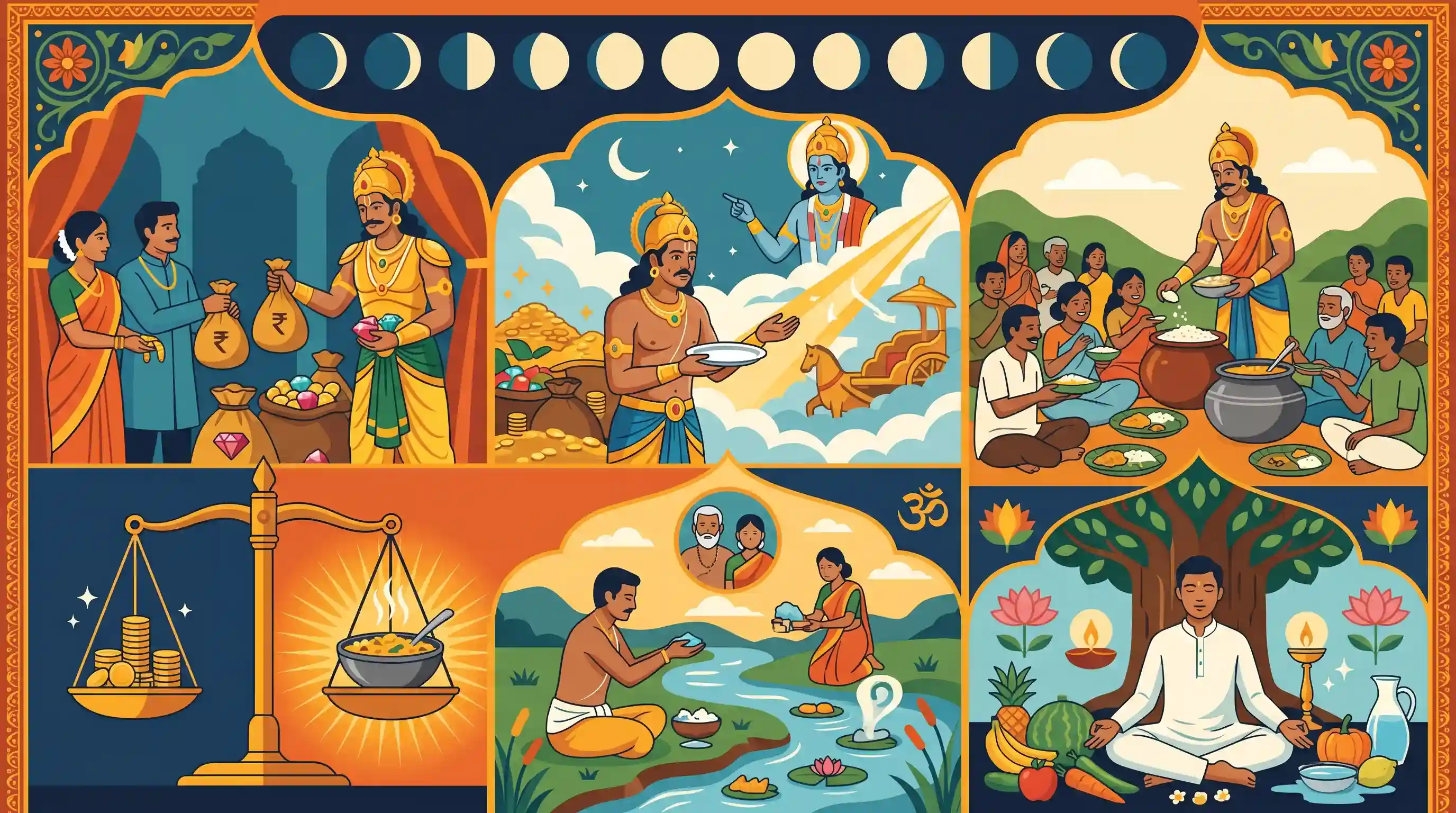
The article details the cultural and spiritual significance of Mahalaya Paksham, a 16-day lunar period in the Hindu calendar devoted to honoring ancestors through rituals like Tarpanam and Shraddham. It highlights a narrative from the Mahabharata wherein Karna, despite his vast material charity, was denied food in heaven because he failed to perform Annadanam (food donation) for his ancestors. He was allowed to return to earth to fulfill this duty, demonstrating that feeding the hungry holds higher ethical and spiritual value than donating wealth. The period also underscores the importance of maintaining physical and mental purity through satvik living.
Key Points
- Mahalaya Paksham is a 16-day period starting from the full moon in the Tamil month of Purattasi (Bhadrapada), dedicated to ancestral worship.
- During this time, it is considered auspicious to perform rituals like Tarpanam and Shraddham, as Yama allows ancestors to visit earth and receive offerings.
- The tradition is tied to a Mahabharata myth where Karna, known for his generosity with wealth, was denied food in heaven because he had never donated food (Annadanam) to his ancestors.
- Yama permitted Karna to return to earth for 14 days to perform Annadanam, establishing the spiritual and ethical primacy of food charity over material wealth.
- The observance emphasizes purity of mind and body, encouraging devotees to consume only satvik food and maintain spiritual discipline.
Prelims Trap
"Arya Samaj and other Vedic revival movements actively promoted Shraddha rituals as essential pillars of ancient Hindu tradition."
Dayanand Saraswati and the Arya Samaj vehemently opposed Shraddha rituals, viewing them as Puranic corruptions, not authentic Vedic practices. They advocated serving living elders instead.
Static Concepts Connected
What was the Arya Samaj's philosophical stance on traditional ancestral rituals like Shraddha?
- Rejection of Shraddha: Dayanand Saraswati explicitly opposed ancestral rituals like Shraddha and Tarpanam, viewing them as post-Vedic Puranic corruptions.
- Focus on Living: The Samaj advocated respecting and serving living parents and elders, rather than offering food to the deceased.
- Vedic Infallibility: They promoted rationalism based strictly on the original Vedas, rejecting myths and epics that mandated ancestral offerings.
How is charity (Dana) categorized according to traditional Indian ethics?
- Satvik Dana: Given strictly out of duty, without any expectation of a return, at the right time and place to a worthy person.
- Rajasik Dana: Charity given reluctantly, or with a clear expectation of some return, future reward, or public recognition.
- Tamasik Dana: Wealth or food given at an inappropriate time or place, to unworthy recipients, or with disrespect and contempt.
Cross-Topic Patterns
GS4 Ethics + Epic Literature
The Karna narrative illustrates the ethical primacy of fulfilling basic human needs (Annadanam) over mere wealth donation, providing a strong philosophical hook for GS-4 answers on philanthropy and altruism.
Article 25 + Traditional Charity
Annadanam traditions are frequently evaluated by courts to balance the fundamental right to freely practice religion (Article 25) with secular state welfare and temple administration regulations.

Expect a GS-4 Mains question asking to evaluate the ethical hierarchy of charity (food vs material wealth) using Epic literature narratives.
Linked PYQs · 4
Linked PYQs · 4
- 2017PrelimsGS1
Consider the following pairs: Traditions Communities 1. Chaliha Sahib Festival - Sindhis 2. Nanda Raj Jaat Yatra - Gonds 3. Wari-Warkari - Santhals Which of the pairs given above is/are correctly matched?
- 2020MainsGS1
Customs and traditions suppress reason leading to obscurantism. Do you agree?
- 2016MainsGS4
Explain how ethics contributes to social and human well-being.
- 2022MainsGS4
It is believed that adherence to ethics in human actions would ensure in smooth functioning of an organization/system. If so, what does ethics seek to promote in human life? How do ethical values assist in the resolution of conflicts faced by him in his day-to-day functioning?
